
Currencies January 16, 2026

South Korea's $350 Billion US Investment Likely Delayed Beyond First Half of 2026, Finance Minister States

Plans for strategic U.S. sector investments face initial delays amid won depreciation concerns and ongoing procedural requirements

By Maya Rios
South Korea's $350 Billion US Investment Likely Delayed Beyond First Half of 2026, Finance Minister States

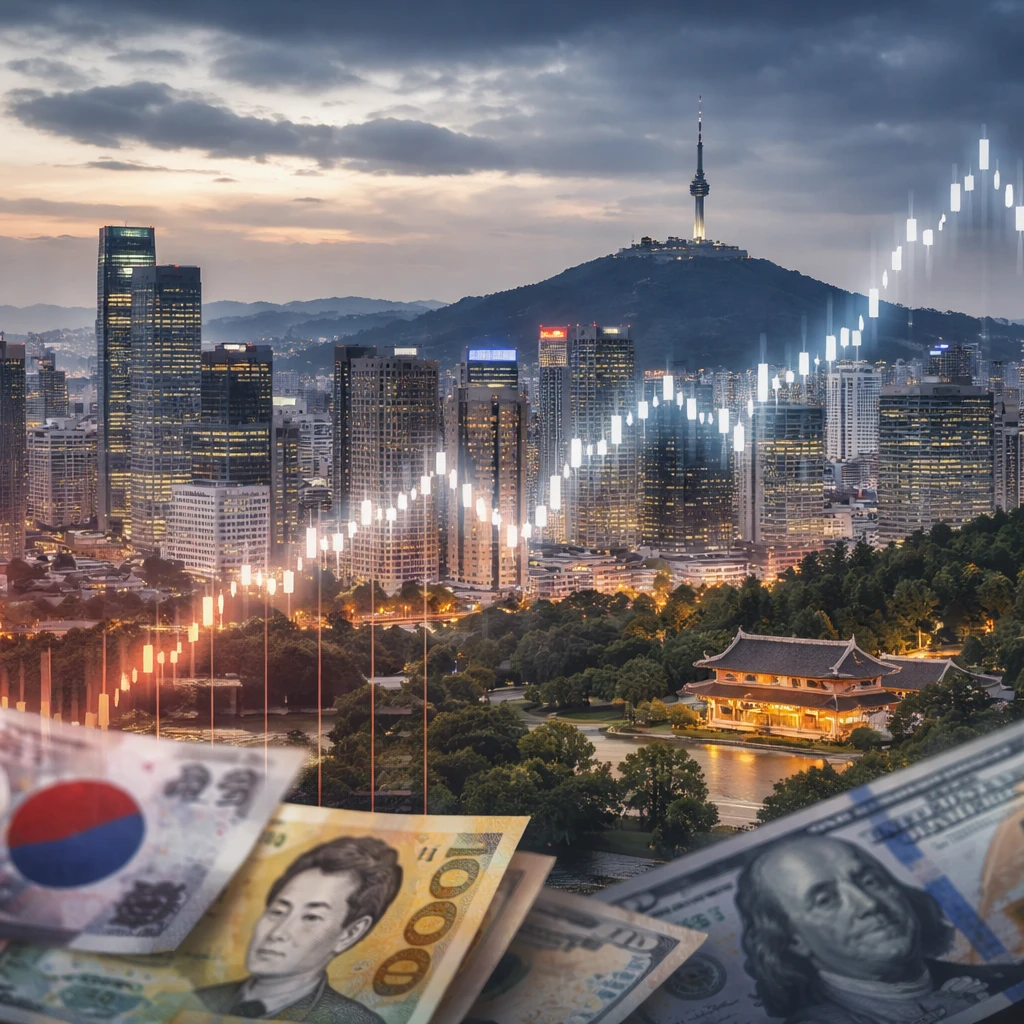
South Korea's promised $350 billion investment in strategic U.S. industries, part of a bilateral trade agreement, is not expected to commence within the first half of 2026. Finance Minister Koo Yun-cheol indicated slower initial outflows due to required procedural steps and expressed concerns over the weakening won's impact on currency stability. The government's efforts to manage foreign exchange pressures and coordinate with U.S. officials emphasize the delicate balance in executing the investment plan amid economic uncertainties.

Key Points

  • The $350 billion investment in U.S. strategic sectors by South Korea is unlikely to start in the first half of 2026, largely due to logistical and procedural preparations.
  • South Korea’s currency, the won, is weakening towards multi-year lows, prompting government concern over market volatility and potential large dollar outflows.
  • An agreed annual cap of $20 billion limits the scale of dollar outflows from South Korea’s investments under the new trade deal with the U.S.

South Korea’s substantial investment initiative, amounting to $350 billion targeting strategic sectors in the United States, is projected to start later than initially anticipated, with no significant activity expected within the first half of 2026. Finance Minister Koo Yun-cheol shared these insights during a recent interview, highlighting the complexity in launching such expansive projects and the accompanying financial implications.

Under a trade agreement reached last November, the United States and South Korea agreed to mutually implement investment and tariff adjustments. South Korea committed to investing a total of $350 billion in U.S. strategic industries. In return, the U.S. agreed to impose an annual cap of $20 billion on dollar outflows to Korea. Despite these arrangements, Koo underscored that initial investment disbursements would likely be modest due to the necessary procedural steps involved before full-scale deployment.

“Even if nuclear power facilities are among the selected projects, the process encompassing site selection, design, and construction will extend over time, resulting in relatively smaller initial capital movements,” Koo elaborated. This slower pace of investment rollout aligns with the currency agreements and the current foreign exchange dynamics.

The declining strength of the South Korean won has emerged as a significant concern for policymakers navigating the timing and scale of dollar flows tied to these investments. The won, approaching exchange levels unseen since the financial crisis period of 2007-2009, hovered near a sixteen-year low of 1,473.8 to the dollar as of recent trading sessions. The currency has depreciated more than two percent in the current calendar year alone, intensifying governmental apprehensions.

Koo warned market participants against testing government resolve amid what he described as

Risks

  • Continued depreciation of the South Korean won may create pressure on financial markets and complicate large-scale foreign investment flows.
  • Delays in project approvals and construction processes, such as nuclear plant development, prolong the timeline before substantial investment outflows can materialize.
  • Uncertainty surrounding a pending U.S. court decision on President Trump’s tariffs adds potential complexity to the trade agreement implementation and related investments.

More from Currencies

Apollo Economist Flags Risk of Rapid Yen Carry Trade Unwind Feb 2, 2026 Dollar Extends Post-Nomination Rally as Markets Weigh Fed Direction Feb 2, 2026 Bitcoin Slides Below $80,000 as Ether Drops Sharply; Dollar Firm on Fed Chair Pick Jan 31, 2026 UBS Urges Caution as Dollar’s Slide Meets Political Headwinds and Mixed Economics Jan 30, 2026 Morgan Stanley Sees EUR/USD Reaching 1.23 in Q2 2026 as Dollar Faces Unconventional Pressure Jan 30, 2026