
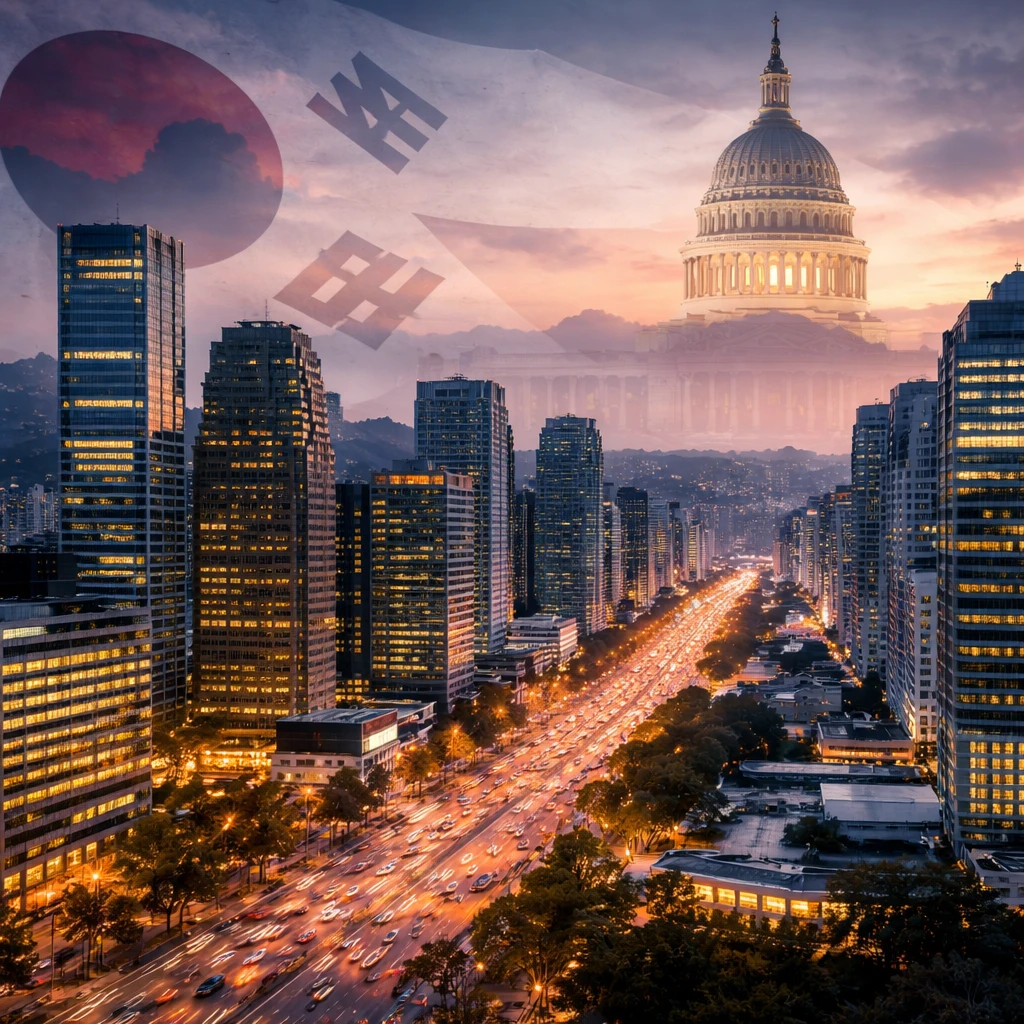
South Korea’s extensive plan to inject $350 billion into strategic sectors of the United States economy, as established under their bilateral trade deal, will likely not commence during the first half of 2026. Finance Minister Koo Yun-cheol relayed this forecast in a recent interview, pointing to the multifaceted processes involved in executing large-scale investments and the current state of the won, South Korea’s national currency.
The trade accord, solidified in November, was negotiated to curb the tariffs imposed by former U.S. President Donald Trump on South Korean imports. In return, South Korea agreed to substantial investments capped at $20 billion annually in U.S. strategic industries, signifying a major economic collaboration between the two allies.
Responding to an inquiry about the potential kickoff of these investments within the early months of 2026, Koo expressed skepticism. He cited complex factors such as project site selection, design, and construction timelines, which naturally delay large investments. For example, if a nuclear power facility is chosen as part of the plan, extensive preparatory work will be required before capital flows accelerate.
Despite robust export figures and a 76% rise in the South Korean stock market over the last year, the won continues to weaken and approach levels unseen since the global financial crisis spanning 2007 to 2009. This depreciation places the currency under intense pressure, a matter of concern for officials who must manage such substantial outbound capital movements.
Koo warned the financial markets against provoking regulators’ tolerance regarding the won’s value, which has recently hovered close to 1,474 won per U.S. dollar—marking a 16-year low. Early in 2023, the won depreciated by more than 2%, underscoring the challenging environment for currency stability.
Recognizing the pronounced depreciation pressures exceeding initial expectations, Seoul is prepared to promptly enact recently announced market stabilization initiatives. These measures aim to counteract herd-like behavior among investors that could further undermine the won, a scenario authorities deem unacceptable.
Diplomatic communication between South Korea and the United States confirms mutual concern over currency fluctuations. The U.S. Treasury Secretary Scott Bessent indicated that the won’s depreciation conflicts with the country’s underlying economic fundamentals, a point discussed with Minister Koo. Washington appreciates Seoul’s efforts to stabilize the currency, which align with both nations’ economic interests.
Looking ahead, the South Korean government intends to advance the investment scheme swiftly by urging the national legislature to review a proposed bill from the previous year. This legislation would establish a dedicated fund to facilitate the investments starting as early as February. However, progress may be hindered by anticipated U.S. court decisions related to existing tariffs, adding a layer of uncertainty to the timeline.
No formal agreements on specific ventures within the $350 billion framework have yet been reached. Nonetheless, indicators from U.S. officials suggest that projects such as nuclear energy infrastructure could be prioritized.
Despite active intervention attempts, including encouraging the National Pension Service to sell U.S. dollars and motivating exporters to convert foreign earnings back to won, currency depreciation remains near critical thresholds. This situation reflects deeper forces at play, including the widening interest rate differential between South Korea and the United States. Currently, this gap stands at two percentage points, the widest in over two decades, driving Korean investors to increase overseas stock acquisitions and heightening dollar demand.
This complex interaction of trade commitments, currency volatility, and regulatory actions shapes a challenging environment for South Korean outflows and U.S. investments under the existing trade deal.