
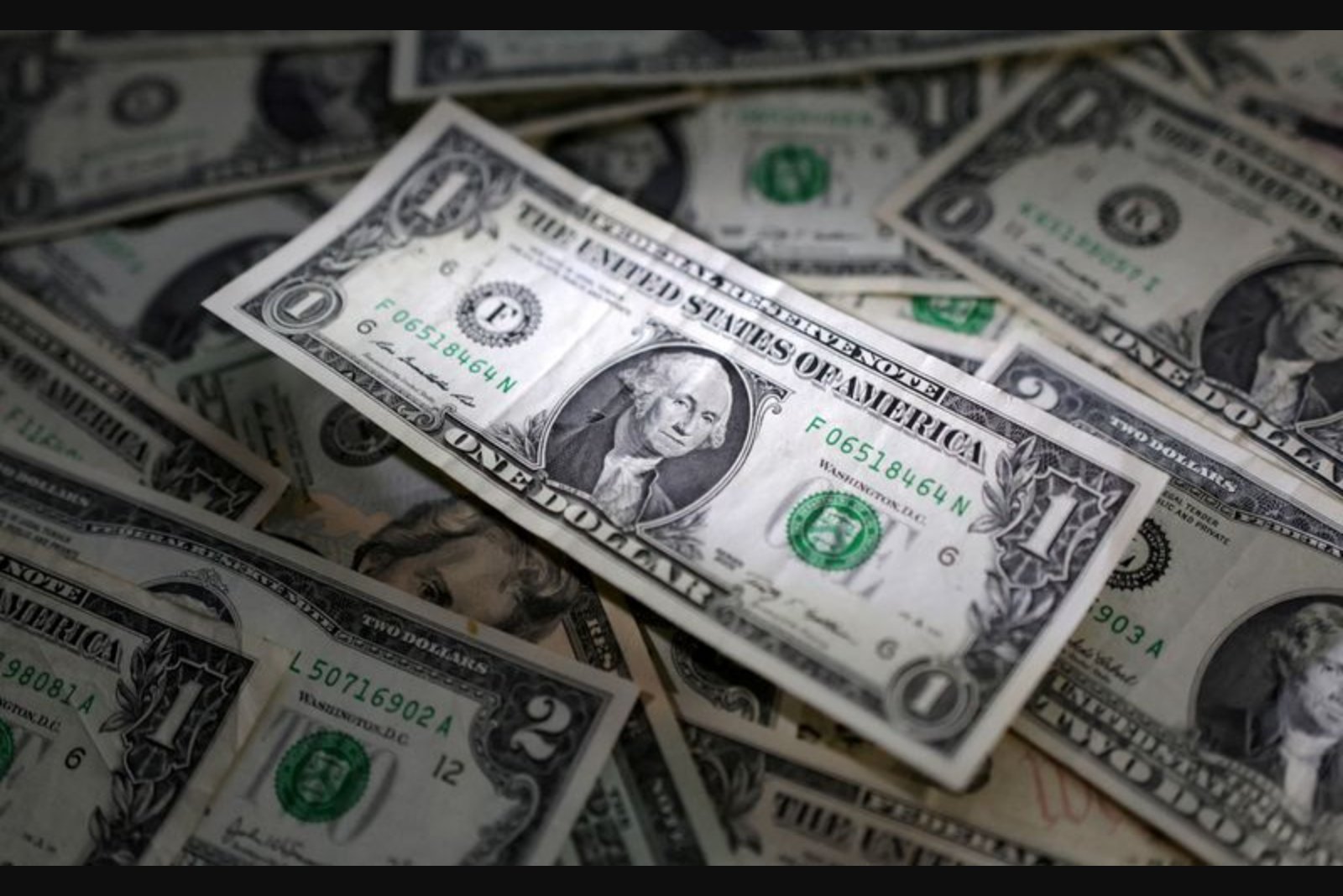
Currency strategists polled between January 30 and February 4 agree the U.S. dollar's recent bounce will not mark a durable turnaround. The dollar, which has slid nearly 11% since U.S. President Donald Trump took office a little over a year ago, steadied after the White House nominated former Fed governor Kevin Warsh for the Fed chair role - a move many interpreted as potentially limiting the number of rate cuts this year relative to other candidates. Even so, the consensus view from the survey is that the recovery will peter out, with the greenback resuming a broader decline later in the year as markets hang on to bets for rate reductions and remain concerned about the Federal Reserve's independence.
The euro is expected to hold roughly where it is now against the dollar, with strategists' median forecasts pointing to $1.18 at the end of February and $1.185 in three months. Looking further ahead, the six-month and one-year median euro projections - $1.20 and $1.21 respectively - were the joint-highest levels in Reuters polls since September 2021, last matched in October 2025.
"For most of the year, including the next few weeks, the dollar is likely to be choppy," said Jane Foley, head of FX research at Rabobank. "We still don’t think the market has fully put to bed concerns about Fed independence and credibility." That caution underpins a view that the dollar's path will be marked by volatility rather than a steady rally.
Positioning in the currency market remains skewed against the dollar. When asked how the net-short dollar trade would evolve by the end of February, all but two of 50 respondents in the poll said the positioning would remain net-short - a stance they have maintained since at least April of last year. This persistent net-short exposure exists even as inflation in the United States has run above 2% for nearly five years, the longest stretch since the early 1990s.
Despite that prolonged period of inflation, interest rate futures markets are pricing in two rate reductions this year. That expectation sits at odds with some analysts' warnings about upside inflation risks and the possibility that policy could be eased too aggressively.
"The administration has been very vocal about their desire for lower rates despite the fact inflation remains quite sticky and above target. Our concern is the Fed dismisses those upside inflation risks and potentially looks to cut policy even below what may be appropriate at the time," said Alex Cohen, FX strategist at Bank of America. "We see that risk pushing real interest rates lower, making the yield curve steeper and the dollar to continue to gradually depreciate over the course of the year." Adding to that dynamic is an expectation that the European Central Bank will hold its deposit rate steady throughout the year.
The Japanese yen, which fell to a near 18-month low of roughly 159 per dollar in January, has come under renewed pressure following public remarks by Prime Minister Sanae Takaichi that appeared to promote the advantages of a weaker currency through higher spending and tax cuts. Japan is due to hold national elections on Sunday. While Takaichi later walked back those comments, strategists say lingering uncertainty about the tenor of fiscal policy could complicate efforts to support a fragile yen.
Even with recent weakness, FX strategists predicted the yen would strengthen versus the dollar over time, forecasting about a 4% appreciation to 151.33 per dollar in six months and to 148 per dollar in a year. "Markets are clearly not keen on the Prime Minister’s policies. She has mentioned in a very Trump-like fashion the benefits of a weak yen in terms of being able to export more. But markets are very dubious about her credibility in terms of fiscal policy," Foley said. She added that Takaichi has offered some reassurance on fiscal matters, yet markets still worry that higher spending could stoke inflation and prompt the already-hawkish Bank of Japan to accelerate interest-rate hikes. "The yen should then have a counterbalance," she said.
Overall, the survey paints a picture of a currency market anticipating slower U.S. policy easing than previously feared in the immediate term, but still leaning toward rate cuts later in the year. That dissonance - between near-term stabilization and medium-term depreciation for the dollar - appears driven by central bank signaling, political developments, and market positioning.
Key points
- The U.S. dollar's recent rebound following the Fed chair nomination is expected to be short-lived, with strategists forecasting a return to a broader decline later in the year.
- Euro forecasts are stable near-term and modestly higher in six to 12 months, with median six-month and one-year targets at $1.20 and $1.21 respectively.
- The Japanese yen is projected to strengthen against the dollar to about 151.33 in six months and 148 in a year despite recent weakness and political noise from Tokyo.
Risks and uncertainties
- Doubts over the Federal Reserve's independence and credibility could influence market expectations and the dollar's trajectory - a factor that affects bond markets and global financial conditions.
- A decision by the Fed to cut rates prematurely or to cut more than markets expect in response to political pressure could push real interest rates lower, steepen the yield curve, and put further downward pressure on the dollar - with implications for fixed-income yields and risk assets.
- Unclear fiscal signals from Japan, including the prospect of higher spending that could stoke inflation, may force the Bank of Japan into faster rate hikes, complicating currency outlooks and export sector dynamics in Japan.
Impacted sectors: Financial markets (FX, fixed income), exporters and trade-sensitive sectors, and central bank policy monitoring.