
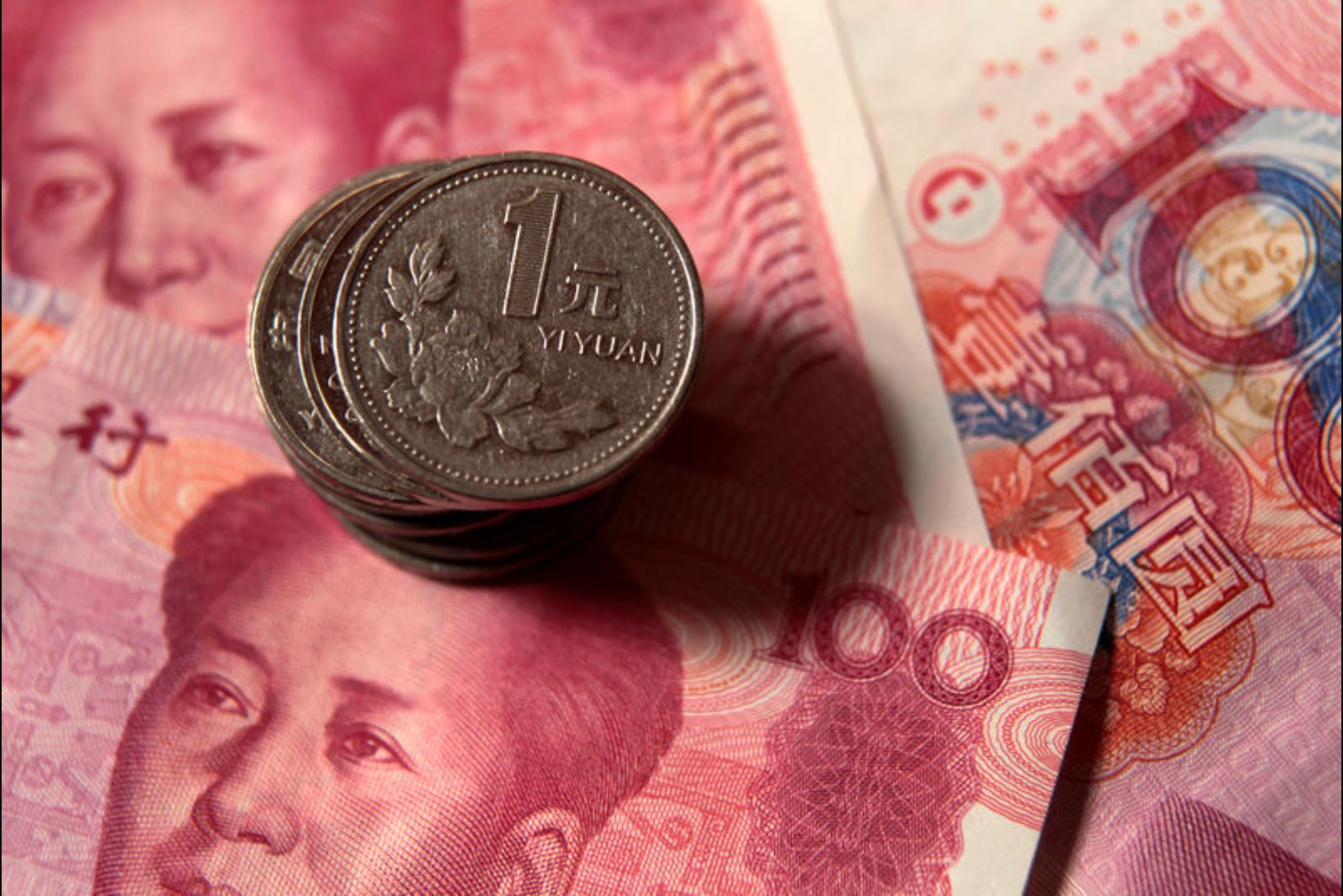
Most Asian currencies were little changed on Thursday after a pronounced rally in the previous trading session, as market participants took a more cautious stance on whether a temporary U.S.-Iran ceasefire would prove durable in the face of renewed hostilities in the Middle East.
The US Dollar Index eased about 0.1% after having dropped to a four-week low on Wednesday. US Dollar Index Futures were also down roughly 0.1% as of 00:09 ET (04:09 GMT).
Geopolitical headlines keep markets on edge
Markets were unsettled by a sharp escalation of Israeli strikes on Lebanon on Wednesday, with heavy bombardments reported against Hezbollah positions. Those attacks continued even after President Donald Trump announced a two-week U.S.-Iran ceasefire on Tuesday, producing mixed signals about whether Lebanon fell under the scope of the truce.
In reaction to the continuing violence, Iran signalled a tougher stance, saying that peace talks with the U.S. would be "unreasonable" under current conditions. Reports also indicated that Tehran had again closed the Strait of Hormuz, a critical maritime chokepoint for global oil shipments.
The initial announcement of the ceasefire had lifted risk appetite and weighed on the dollar, supporting higher-yielding Asian currencies. But uncertainty over the ceasefire's scope and ongoing military action has clouded the outlook for risk assets and FX.
As MUFG analysts observed in a note: "We continue to think that given the big gaps in expectation between different parties and not just the US, the chance of a durable ceasefire and agreement remains very narrow, and as such the risk of a flare up and continued volatility is very substantial."
Currency moves across Asia
- The South Korean won's USD/KRW pair inched up about 0.2% on Thursday after the won had strengthened 1.2% in the prior session.
- The Japanese yen's USD/JPY pair ticked up roughly 0.1% following a 0.7% decline on Wednesday.
- The Indian rupee's USDINR rose around 0.3%; the rupee had strengthened 0.5% on Wednesday after the Reserve Bank of India left its key policy rate unchanged.
- The onshore Chinese yuan's USD/CNY pair moved up about 0.1% after hitting a three-year low in the previous session.
- The Australian dollar (AUD/USD) and the Singapore dollar (USD/SGD) were largely flat in early trading.
The Reserve Bank of India reiterated its intent to curb excessive volatility in the rupee and described recent foreign exchange measures as temporary.
Oil rebound adds pressure on importers
Oil prices bounced back by more than 2% on Thursday after a sharp decline the day before, as concerns persisted about potential supply disruptions via the Strait of Hormuz. Higher crude prices tend to weigh on oil-importing Asian economies and their currencies, adding another source of downside risk for those markets should prices continue to climb.
What markets are watching next
Investors are turning their focus to U.S. consumer inflation data due on Friday for additional clues about the Federal Reserve's policy path. With geopolitical uncertainty still prominent and energy prices sensitive to developments in the Strait of Hormuz, inflation readings may play an outsized role in guiding FX and interest rate expectations in the near term.