
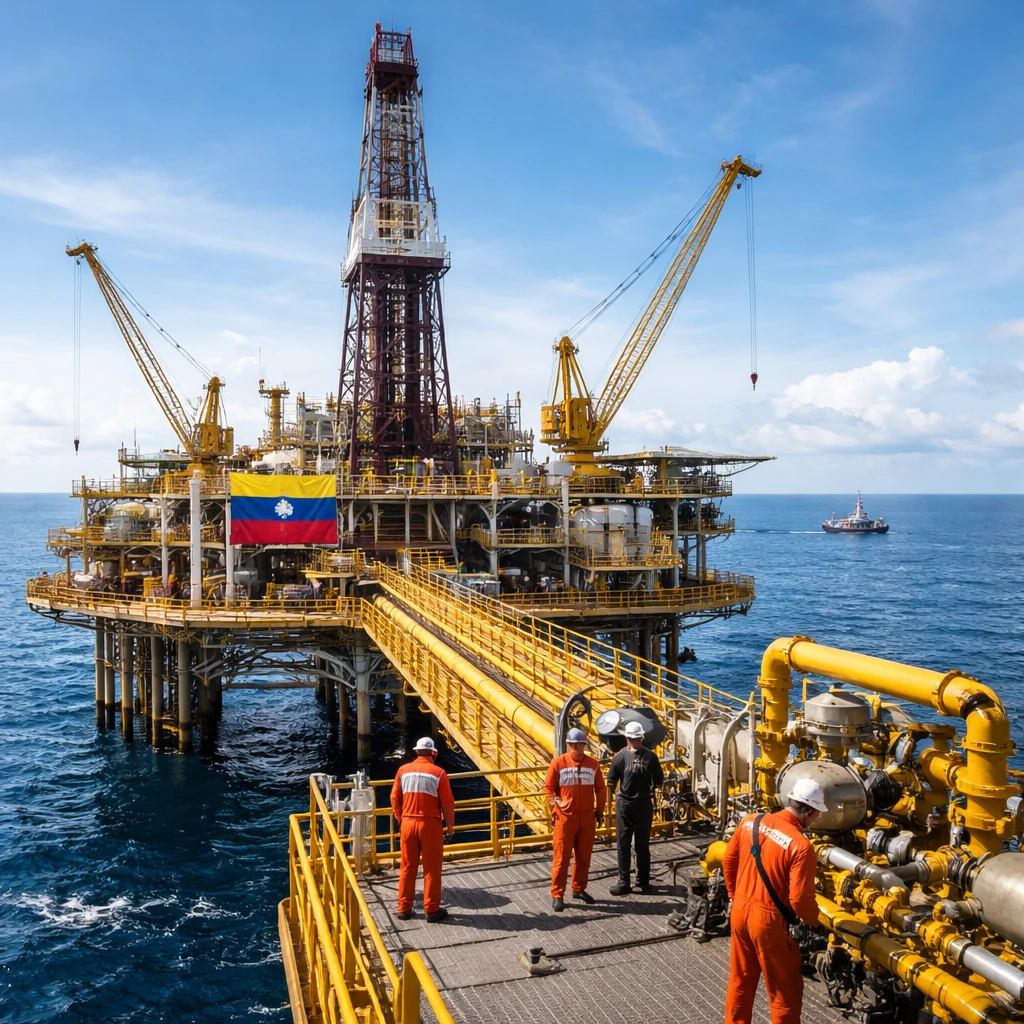
Venezuela's proposed overhaul of its hydrocarbons legislation intends to grant both foreign and domestic companies unprecedented operational autonomy, enabling them to manage oilfields independently and commercialize production even as minority partners with state-owned PDVSA. The reform, submitted by interim President Delcy Rodriguez to the National Assembly, significantly revises the nation's oil framework by introducing new contractual terms, reducing royalty rates for select projects, and permitting independent arbitration to resolve disputes. This initiative coincides with ongoing diplomatic developments between Caracas and Washington, and is part of wider efforts to revitalize the country's energy sector.
Key Points
- The reform permits foreign and local oil companies to independently operate oilfields and manage commercial sales, even as minority partners with PDVSA.
- Royalties on certain special projects may be lowered from 33% to 15%, signaling an effort to encourage large investment projects.
- The introduction of independent arbitration offers a new avenue for resolving legal disputes, potentially increasing investor confidence.
In a significant legislative initiative, Venezuela has introduced a proposal to fundamentally amend its hydrocarbons law, which governs the country's oil industry. The draft documents reviewed reveal that the reform aims to grant companies, whether foreign or Venezuelan, the ability to independently operate oilfields under a novel contract structure. This would allow them not only to produce oil independently but also to sell the output directly and receive the resulting financial proceeds, even when participating as minority partners alongside the state-owned enterprise, Petróleos de Venezuela S.A. (PDVSA).
This reform proposal was formally presented last week by Venezuela’s interim President, Delcy Rodriguez, to the National Assembly. The upcoming legislative discussions, scheduled to begin shortly, mark an anticipated departure from the oil legislation originally enforced under the late President Hugo Chavez. The original statutes had established comprehensive state control over oil operations, significantly limiting private sector autonomy.
The timing of this reform follows a landmark 50-million-barrel oil supply agreement between Venezuela and the United States, brokered earlier this month amid notable political tensions including the U.S. capture of President Nicolas Maduro. The proposed legislative changes form part of a larger strategic vision to attract investment and revitalize Venezuela's oil production capabilities.
Crucially, the draft law reduces maximum royalties that oil companies must pay to the government from the existing 33% to as low as 15% for projects deemed ‘special’ or those requiring substantial capital expenditures. This reduction is designed to incentivize both foreign and local investments by enhancing potential returns.
Additionally, the proposal introduces mechanisms for resolving disputes through independent arbitration. This feature aims to provide greater legal certainty and trust for investors wary of the traditional judicial processes.
The reform aligns with demands from oil executives and prospective investors, particularly those involved in Washington’s ambitious $100 billion reconstruction plan targeting Venezuela’s energy infrastructure. Their call for operational independence, rights to export, and direct access to sale revenues stems from historical grievances related to the nationalizations and expropriations undertaken under Chavez’s administration two decades ago.
As the National Assembly reviews the legislation, the outcomes remain closely watched by stakeholders in the oil sector and broader economic markets, given the potential implications for the structure of Venezuela's oil industry and the geopolitics of energy supply.
Risks
- The legislative approval process and implementation timeline remain uncertain, which may delay potential investments or operational changes.
- Political instability surrounding Venezuela's government and relations with the U.S. could impact the reform's effectiveness and execution.
- Despite lower royalties, risks tied to Venezuela’s historical nationalization practices may still deter external investors.