
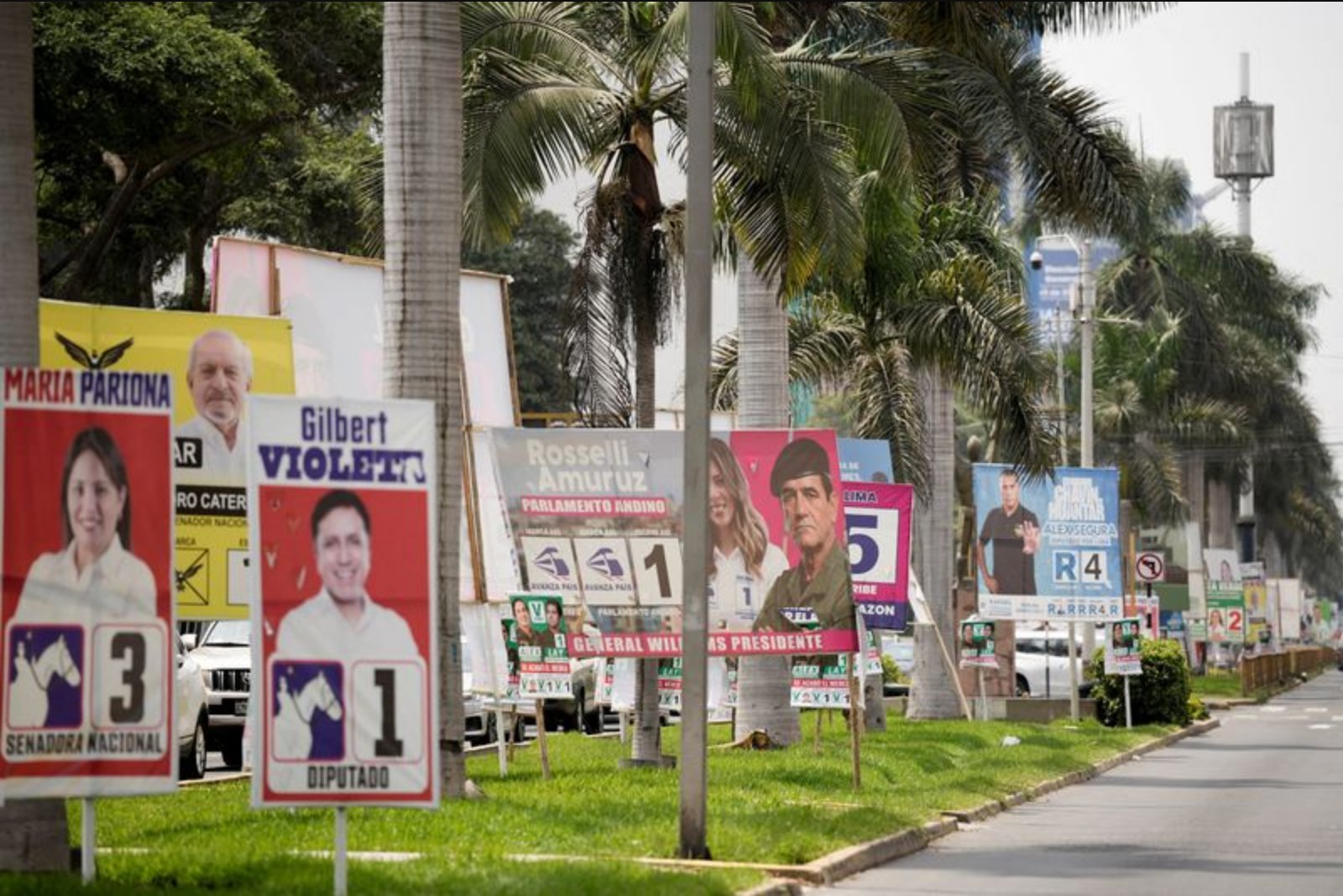
Washington has increased its diplomatic presence in Lima in recent months as Peru prepares for the first round of a presidential election marked by fragmentation and uncertainty. The outreach, driven by newly appointed U.S. ambassador Bernie Navarro, represents a more assertive push to revitalize ties with a country that has emerged as a crucial supplier of copper and other minerals at the center of global supply chains.
Business leaders and senior officials say the effort signals a shift after a decade in which China became Peru’s primary trade partner, particularly in mining and infrastructure projects. Trade between Peru and China reached a record $50 billion last year, eclipsing the roughly $19 billion in commerce with the United States.
With more than 30 candidates vying for the presidency and no single contender polling above 15%, observers expect a June runoff after the initial vote. The fractured contest has prompted Washington to press for deeper engagement now, seeking to protect access to critical minerals used across semiconductors, defense platforms and renewable energy technologies.
Government and industry interactions coordinated around Navarro have included a working group on boosting trade and investment. "The relationship with the U.S. is really strengthening," said Felipe James, head of Peru’s manufacturing industry chamber, after meeting the ambassador in February.
In a series of policy moves earlier this year, the White House designated Peru a major non-NATO ally in January, a status that broadens potential defense cooperation and access to certain trade and security programs. The State Department also approved an equipment package aimed at modernizing a naval base near the port of Callao, the gateway to Lima.
Peruvian officials took part in a recent Florida meeting with U.S. President Donald Trump and regional partners that launched a new coalition to confront Latin American drug cartels. At the same time, U.S. defense firm Lockheed Martin is competing with manufacturers from Sweden and France to sell fighter jets to Peru.
Representatives of the U.S. State Department characterized Navarro’s outreach as reflecting a commitment to strengthen cooperation with Peru on shared priorities including economic growth and security. Companies and trade groups say the emphasis from Washington has not been solely on trade volumes but on the perceived transparency and reliability of U.S. firms operating in Peru.
Ambassador Navarro has repeatedly urged Peruvian leaders to improve legal certainty and public security to make the country more attractive for international investment. "He has clearly called for legal certainty and stronger public security to attract investment," said Julia Torreblanca, head of mining and energy association SNMPE and vice president of corporate affairs at Cerro Verde, a Freeport-McMoRan-run copper producer.
Navarro has also drawn attention to Peru’s recent political turbulence as a factor undermining the business climate. The country has experienced eight presidents since 2018, a pace of turnover that has led officials to warn about the difficulty of sustaining consistent geopolitical or economic strategies. "The United States will never interfere in Peruvians’ right to self-determination, but stability is needed," Navarro told local radio station RPP last month.
Analysts say the decade-long political instability has coincided with an expanded Chinese presence in Peru, as investors and state-linked firms from Beijing deepened their role in mining and large-scale infrastructure projects. "There’s a correlation between those last ten years of political instability and more Chinese investments being able to trickle to Peru," said Martin Cassinelli of the Atlantic Council.
One of the most visible symbols of China’s economic reach is the Chancay megaport north of Lima. Built by Chinese entities and operated by Cosco Shipping, the port was inaugurated in late 2024. It shortens sea journey times to Asia and is starting to serve as a transit hub for goods such as electric vehicles destined for regional markets.
The Chancay project has raised concern in Washington about foreign control of strategic infrastructure. Former U.S. Southern Command chief General Laura Richardson warned publicly that the port could potentially function as a gateway for Chinese military and intelligence activity in South America. Peruvian regulatory efforts to increase oversight of the project were stymied earlier this year when a court ruled that Chancay is a private investment, a decision that is now under appeal.
Despite U.S. efforts to reassert influence, Peru’s economic ties to China remain substantial and not easily reversed. Trade imbalances have widened recently, with Peru reverting to a deficit in trade with the United States after a brief surplus in 2024. Officials in Lima are also pressing to remove tariffs imposed by U.S. President Donald Trump, asserting that they violate the bilateral free trade agreement that has been in place since 2009.
Observers expect U.S. policy to prioritize areas where economic engagement intersects with national security, rather than attempting to supplant China’s broader economic footprint in Peru. "China is not leaving," said Margaret Myers of the Inter-American Dialogue, noting that U.S. initiatives are likely to concentrate on strategic sectors.
The election outcome will shape how durable and expansive Washington’s renewed engagement can become. Several leading candidates frame their foreign policy approaches in ways that could alter ties with both Washington and Beijing. Right-leaning Keiko Fujimori, who studied in the United States and is widely regarded as a contender, presents herself as a more predictable partner for the United States than rivals she associates with Beijing. Conservative Carlos Alvarez has balanced endorsements of enhanced U.S. engagement with recognition of the value Chinese investment brings.
In a roadside-style remark reflecting the choice Peru faces between different external partners, Alvarez told Reuters: "They say: do you want a gringo hamburger or some chifa (Chinese fusion)?" He added that he preferred a local specialty: fried guinea pig.
Note: This reporting reflects statements from government officials, business leaders and analysts cited above. It records actions and positions attributed to the parties referenced and does not draw conclusions beyond those statements.