
Commodities January 23, 2026

U.S. Energy Sector Records First Rise in Rig Counts After Three Weeks

Modest uptick in drilling activity contrasts with year-over-year declines amid cautious production strategies

By Hana Yamamoto
U.S. Energy Sector Records First Rise in Rig Counts After Three Weeks

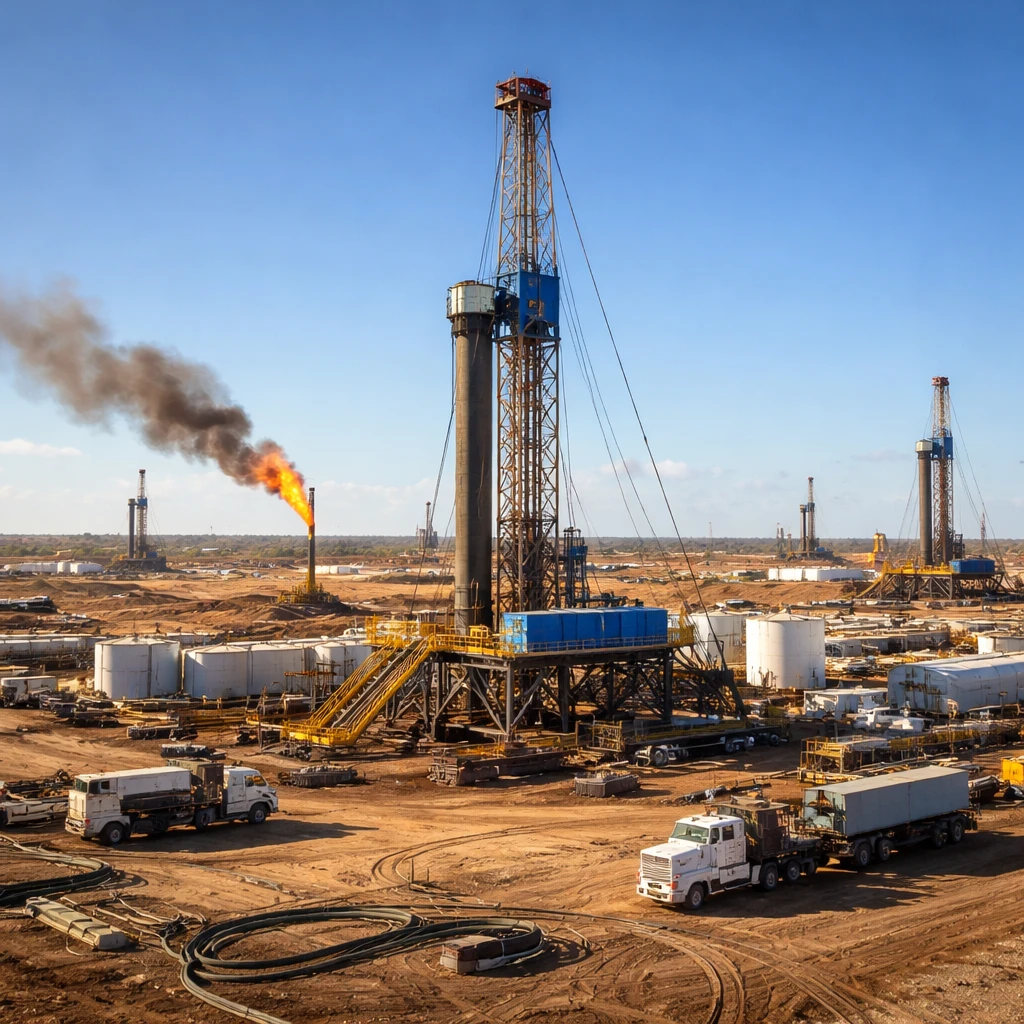
U.S. energy companies have shown a slight increase in their oil and natural gas drilling platforms for the first time in three weeks, with rig counts rising by one unit to 544 in the week ending January 23. Despite this increase, the total rig count remains notably below last year's level. This development appears alongside persistent declines in rig activity over recent years, reflecting industry priorities toward shareholder returns and financial discipline rather than expanded production. Projections suggest U.S. crude output may slightly decrease in 2026, continuing several years of falling spot prices.

Key Points

  • U.S. rig count increased by one to 544 during the week ending January 23, marking the first rise in three weeks.
  • The total rig count remains 5.6% below the count from the same period last year, reflecting an overall downward trend in drilling activity.
  • The industry continues to prioritize shareholder returns and debt reduction over expansion of production amid lower oil price environments.

The latest data from Baker Hughes reveals that U.S. energy firms added one oil and natural gas rig in the week leading up to January 23, marking the first increase in rig count after a three-week period of declines. The current tally of 544 rigs is nevertheless 32 units fewer than the tally recorded at this point last year, representing a 5.6% decrease.

This week, the number of oil-specific rigs rose marginally by 1, reaching 411, while natural gas rigs remained steady at 122. The minimal change suggests a cautious approach to drilling activity by energy companies amid ongoing market conditions.

Over the past several years, the rig count in this sector has steadily declined. Forecasts indicate that the number of rigs will be approximately 7% lower in 2025 and 5% lower in 2024, compared to previous periods. A more significant reduction of around 20% was observed in 2023. These downward trends primarily reflect the industry's focus on enhancing shareholder value and reducing debt loads rather than aggressively pursuing increased production, particularly in light of subdued oil prices in the United States.

Looking forward, the U.S. Energy Information Administration anticipates a slight decrease in U.S. crude oil production from a peak of 13.61 million barrels per day in 2025 to an estimated 13.59 million barrels per day in 2026. This projection aligns with expectations of a continuation in declining U.S. spot crude prices over four consecutive years.

Risks

  • Potential for prolonged lower U.S. spot crude prices following the forecasted slight decrease in production could challenge energy companies’ revenue growth.
  • Persistent reductions in rig counts could constrain future output levels and affect associated market sectors such as energy services and equipment suppliers.
  • Uncertainty remains around the pace of production changes in response to fluctuating market demands, influencing investment and operational decisions in the energy sector.

More from Commodities

Precious Metals Plunge Sends Ripples Through Global Markets Feb 2, 2026 Gold Plunge Intensifies After CME Margin Hikes and Warsh Nomination Spurs Market Reassessment Feb 2, 2026 European Gas Prices Plunge as Forecasts Turn Milder Feb 2, 2026 BCA's MacroQuant Sees Dollar Weakness; Boosts Oil, Copper and Gold Calls Feb 2, 2026 Russian Oil Transit Through Ukraine Falls to Decade Low Amid Pipeline Strikes Feb 2, 2026