
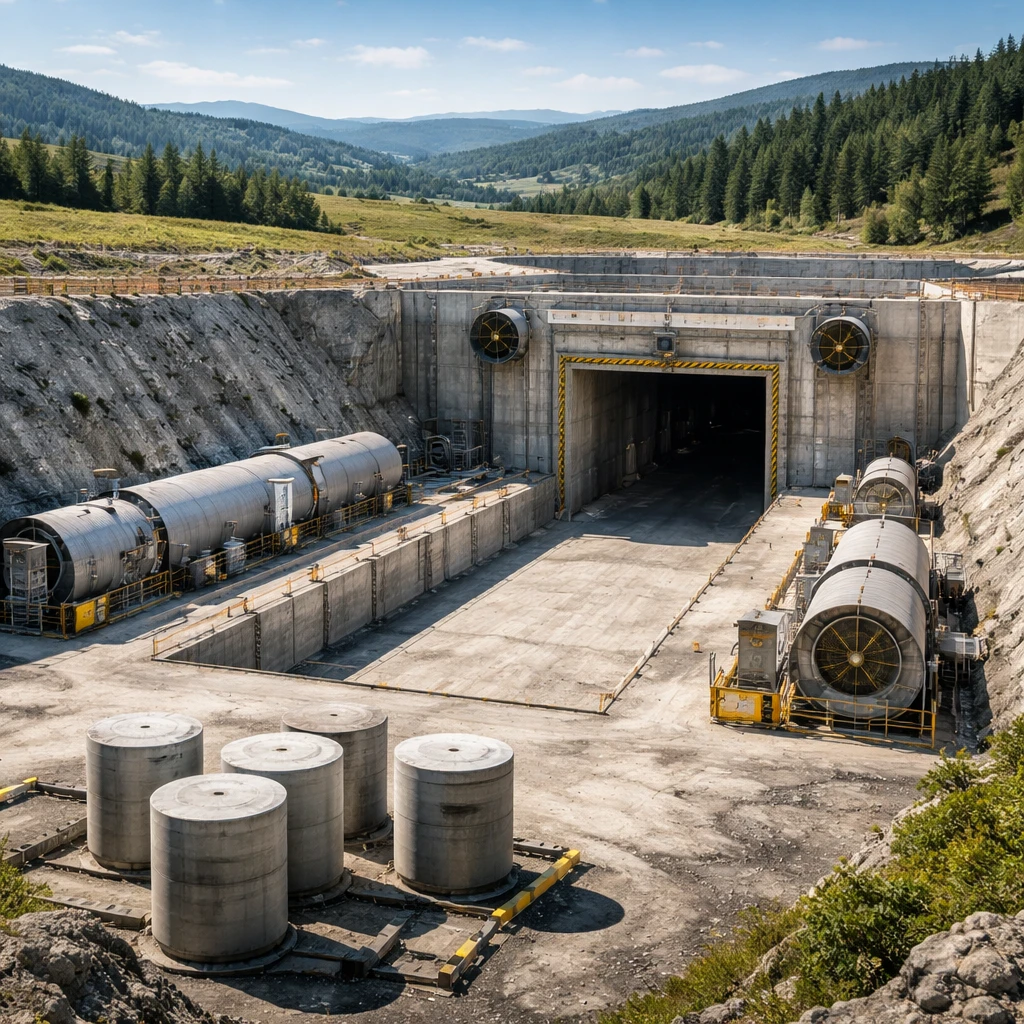
The U.S. Department of Energy (DOE) is preparing to engage with individual states this week to gauge their willingness to host nuclear waste storage facilities. According to an informed source, the federal agency intends to offer states incentive packages linked to the development of new nuclear power plants as part of this proposal.
This policy move aims to address one of the most enduring challenges hindering the expansion of nuclear energy in the United States: the safe and acceptable storage of radioactive waste. The Trump administration has set an ambitious target to quadruple the nation’s nuclear power capacity, aiming to reach 400 gigawatts by 2050 in response to a renewed increase in electricity consumption—driven in part by growth in data centers handling artificial intelligence and cryptocurrency operations.
Resolving community and political resistance to nuclear waste storage installations is seen as pivotal in achieving these expansion goals. Commenting at the World Economic Forum in Davos, President Donald Trump highlighted that nuclear energy can be developed at reasonable costs while maintaining safety, a notable shift from his previous cautious stance on the technology.
The Department of Energy has not provided immediate commentary regarding the specifics of the plan, which could still undergo adjustments. Historically, local opposition related to the hazards of radioactive and toxic materials has impeded the advancement of nuclear power infrastructure. Presently, spent nuclear fuel remains stored onsite at reactor locations, initially in spent fuel pools and subsequently transferred to robust concrete and steel casks.
This emerging plan would represent a substantial change from the prior strategy focused on utilizing Yucca Mountain in Nevada as a single, centralized repository for all U.S. nuclear waste. Since 1987, the DOE had concentrated its efforts exclusively on developing Yucca Mountain for long-term waste storage. However, the project was halted under the Obama administration due to opposition from Nevada’s political leaders. Over the course of multiple administrations, approximately $15 billion was expended on the Yucca Mountain initiative.
Following the shelving of Yucca Mountain, the DOE shifted its approach towards a consent-based siting process for nuclear waste facilities, though no permanent site has been established to date. The current proposal will invite states to signal interest in composite agreements that encompass nuclear power plant construction alongside incentives pertaining to nuclear waste reprocessing and uranium enrichment technologies. Participation in these agreements will be non-binding, and states will have the discretion to accept only certain elements.
Reprocessing of nuclear waste, essentially recycling spent fuel, was previously authorized for development after former President Ronald Reagan lifted a moratorium on the practice. Nonetheless, commercial implementation within the U.S. has been limited due to high costs. The approach also faces criticism from non-proliferation advocates concerned about the potential risks of nuclear materials being diverted from the supply chain for unauthorized weaponization.
This latest plan was initially reported by another news outlet on Wednesday, coinciding with the broader federal initiative to rejuvenate the country’s nuclear energy landscape in response to evolving electricity demands.