
Overview
The United States will not be able to remove its dependence on imported rare earth materials "overnight," but it can reduce the risk posed by that reliance by growing domestic production and processing, Tactical Resources chief executive Ranjeet Sundher said. Sundher said policy attention to these minerals - driven by national security, energy and supply chain concerns - has been rising for several years and is now focused on execution.
From policy to delivery
According to Sundher, the last year marked a transition in U.S. policy on rare earths from high-level focus to more operational priorities, notably improving permitting efficiency and accelerating projects capable of "realistically" increasing U.S. supply. "2026 looks like a year where execution will matter more than ambition. Policy support has been in place for some time, but the next phase is about translating that into tangible progress," he said.
The emphasis on permitting and project acceleration reflects a desire to move beyond declarations of intent and toward concrete outcomes that reduce exposure to concentrated foreign supply sources.
Strategic importance and global concentration
Rare earths are central inputs for a wide range of technologies, from solar panels and high-tech weapons to electric vehicles and mobile phones. China currently dominates global supply chains for these materials. Citing International Energy Agency data referenced by Reuters, the article notes that China refines between 47% and 87% of copper, lithium, cobalt, graphite and rare earths.
Group of Seven advanced economies - apart from Japan - are either heavily or exclusively dependent on China for rare earths. U.S. officials argue that the G7, which accounts for roughly 60% of global critical mineral demand, must reduce exposure to China’s supplies.
Trade tensions and supply volatility
Rare earths featured in recent trade discussions between the United States and China. In October, leaders reached an agreement in which China said it would delay some planned export restrictions on rare earths. China also reportedly issued streamlined licenses to certain businesses to speed critical mineral exports to selected customers.
Sundher warned that "rare earths remain strategically sensitive, and supply conditions can shift quickly based on policy or trade considerations." He said that continuing uncertainty is prompting governments and customers to prioritize domestic and allied supply chains. The objective, he added, is not to eliminate global trade but to "reduce exposure to volatility and concentration risk."
Progress and value-chain differences
Sundher acknowledged that countries such as the United States and Australia have made "real progress" in lowering their dependence on Chinese rare earths, but he emphasized that progress is "uneven across the value chain." He noted that Australia has built strength in mining, while the U.S. is placing increasing emphasis on rebuilding processing and downstream capabilities. That distinction is critical, he said, because China's edge is not solely in extraction but in processing and separation.
He added that "projects that can simplify processing and keep material onshore are particularly important." Sundher said his company is prioritizing geology and mineralogy that permit cleaner, more straightforward extraction that avoids additional steps that have "historically pushed material overseas."
Company strategy and the Peak Project
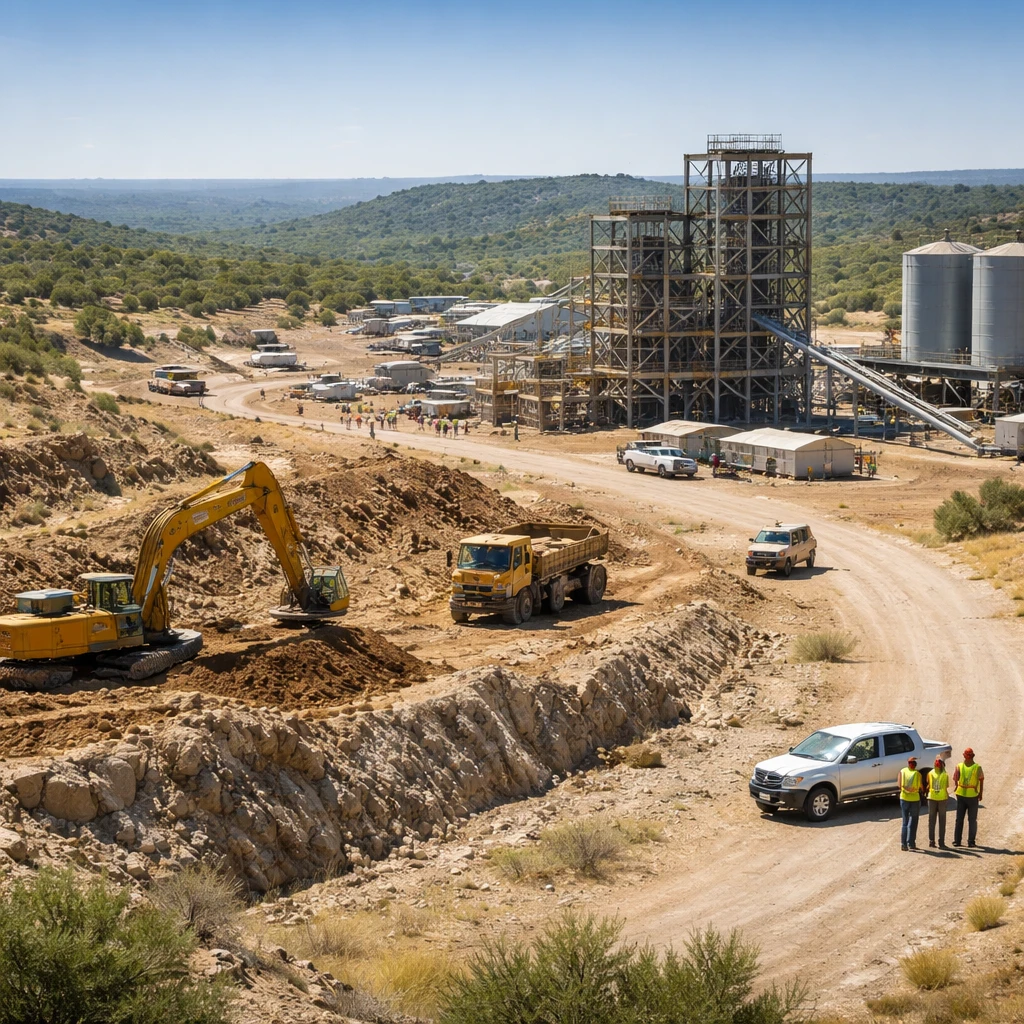
Vancouver-based Tactical Resources has been pursuing a U.S.-focused rare earths platform anchored by its Peak Project in Texas. The company has sought a Nasdaq listing via a blank-check merger as part of its development strategy. Tactical Resources describes the Peak Project as one of the only hard rock, direct-to-leach rare earth opportunities in the United States.
The company’s plan includes advancing permitting for a modular processing facility, continuing metallurgical development, and assessing opportunities to expand its portfolio. Those elements align with the broader industry emphasis Sundher outlined: move beyond policy statements and into projects that can be permitted and built to retain more of the value chain onshore.
Outlook
Sundher framed the near-term agenda as a test of execution. With policy levers already in place, the coming period will assess whether permitting reforms, project acceleration and the development of processing capabilities can materially reduce the United States’ exposure to concentrated foreign supplies of rare earths.