
Commodities March 7, 2026

UAE President Says Nation Is Resilient, Visits Those Injured After Regional Strikes

Mohammed bin Zayed marks first public remarks since Iran launched missiles at its Gulf neighbour, vows protection for all residents

By Ajmal Hussain
UAE President Says Nation Is Resilient, Visits Those Injured After Regional Strikes

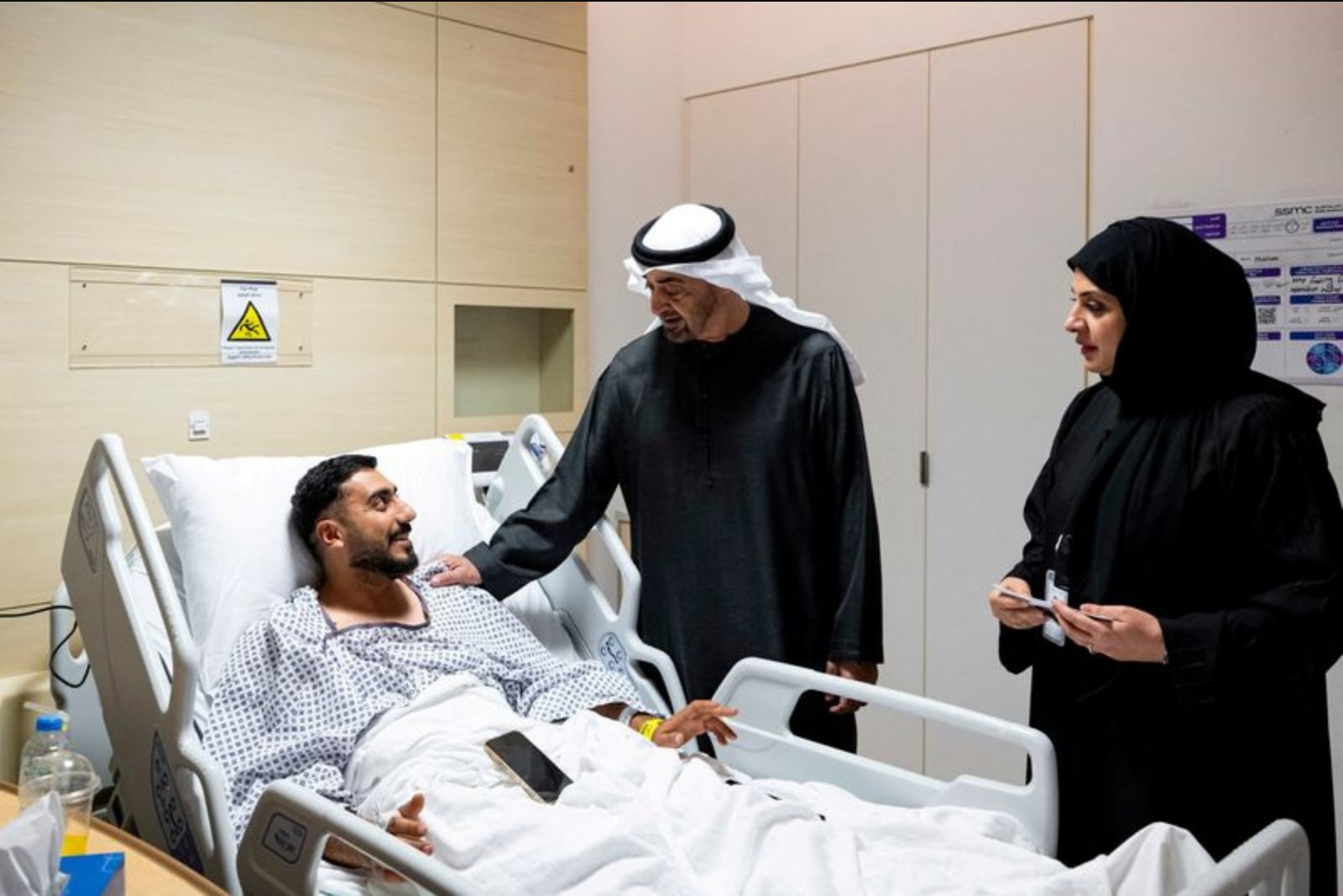
In his first on-camera comments since recent regional strikes, the president of the United Arab Emirates described the country as being in a time of war yet resilient, saying the UAE is "no easy prey" and pledging protection for everyone in the seven-emirate federation. His remarks were delivered while visiting people injured in the strikes and were broadcast on Abu Dhabi TV.

Key Points

  • UAE president described the country as being in a time of war while asserting national resilience and warning that it is "no easy prey" - this affects perceptions of regional security and could influence investor and market sentiment, notably in sectors sensitive to geopolitical risk such as financial markets and energy.
  • He visited people injured in the strikes and made his comments during that visit; his actions signal a leadership focus on civilian protection and public reassurance, which can impact domestic stability and consumer confidence.
  • The president emphasized protection for all residents across the seven emirates, including Dubai, a message relevant to governance, population management, and sectors tied to resident services and local economic activity.

DUBAI, March 7 - The president of the United Arab Emirates made his first public remarks since Iran launched missiles at its Gulf neighbour, saying his country is in a time of war but remains strong and will not be taken lightly.

Speaking while visiting people who were injured in the strikes, his comments were later aired on Abu Dhabi TV. In a remark that underscored a posture of toughness, he said:

"The UAE has thick skin and bitter flesh - we are no easy prey."

He framed the visit and his address as part of a duty to the nation, emphasizing a commitment to protect all who live within the federation. "We will carry out our duty towards our country, our people, and our residents who are also part of our family," he said.

The president, who is also the ruler of Abu Dhabi, reiterated the inclusive nature of that pledge by noting the makeup of the country he leads. The United Arab Emirates consists of seven emirates, including Dubai, and he said that the state would extend protection to everyone in the country.

His public comments come in the wake of a regional escalation described in brief as Iran launching missiles at its Gulf neighbour, and were delivered during a visit to those who sustained injuries in strikes. The broadcast on Abu Dhabi TV brought the remarks to a wider audience on Saturday following the visit on Friday.

The tone of the remarks emphasized resilience and obligation: positioning the leadership as attentive to wounded individuals while asserting that the nation will take necessary steps to safeguard its people and residents. The combination of a visible visit to the injured and a strongly worded declaration of resilience served to communicate both care for those affected and a warning to adversaries.

While the comments did not elaborate on specific responses or measures, they conveyed a clear message of national resolve and an assurance that the responsibilities of the state will include protection of all within its borders.


Clear summary: The UAE president, also ruler of Abu Dhabi, said the country is in a time of war but remains resilient, visited those injured in strikes, and vowed to protect all residents; his remarks, the first since Iran launched missiles at its Gulf neighbour, were aired on Abu Dhabi TV.

Risks

  • Ongoing hostilities: The article states the country is in a time of war and references missile launches, indicating continued security risks that could affect transportation, trade, and energy sectors.
  • Civilian harm and instability: The president visited those injured in strikes, underscoring a risk to civilians that can disrupt local services and consumer-facing industries.
  • Regional escalation: The mention of missiles launched by Iran at a Gulf neighbour points to potential broader regional tensions that can increase market volatility and risk premiums for businesses operating in the area.

More from Commodities

Bahrain Says Patriot System Intercepted Iranian Drone Over Sitra on March 9 Mar 21, 2026 Global energy systems strained as Middle East conflict forces higher prices and lower consumption Mar 21, 2026 Escalation Spreads: Israel Hits Tehran and Beirut as U.S. Sends Marines to the Region Mar 21, 2026 JPMorgan Lowers S&P 500 Year-End Target, Cites Strait of Hormuz Supply Shock Mar 20, 2026 Georgia suspends state gasoline tax for 60 days as Iran conflict pushes pump prices higher Mar 20, 2026