
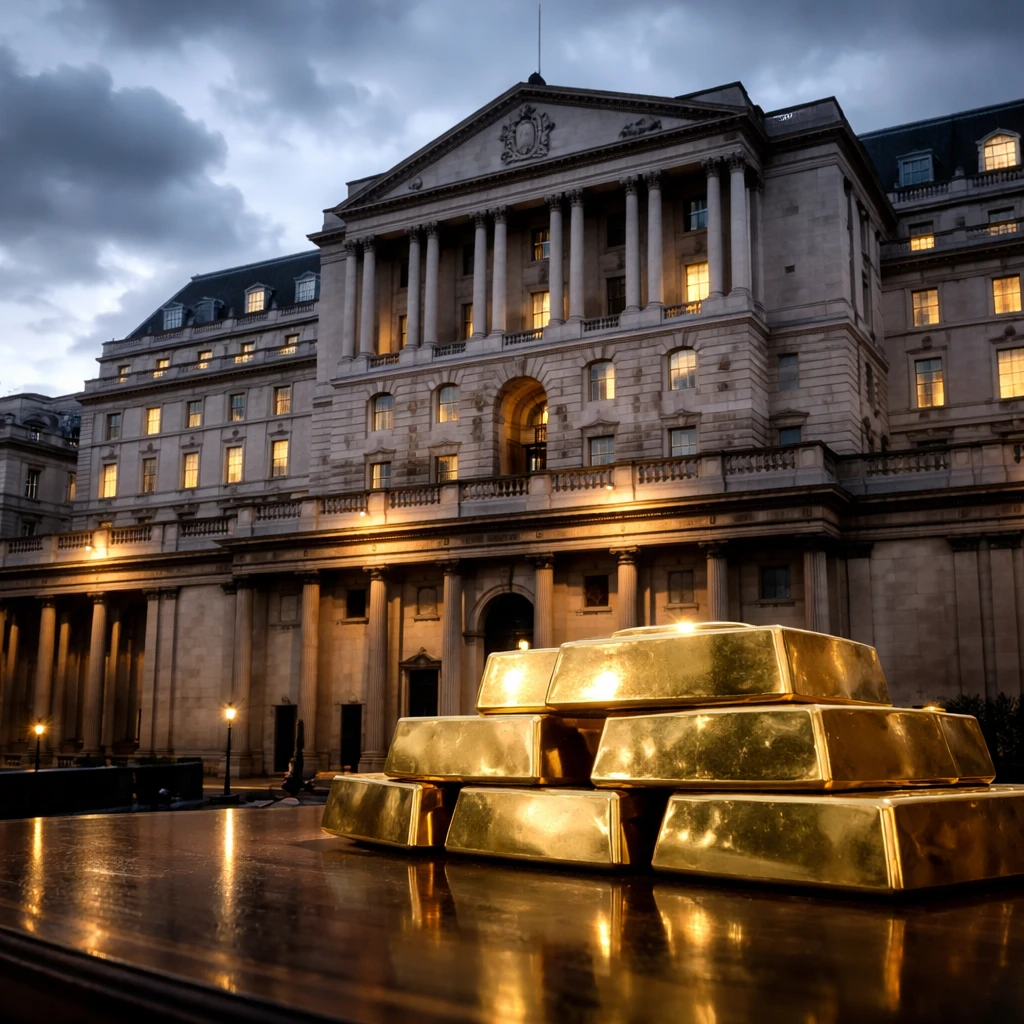
Turkey's central bank is exploring the possibility of using a portion of its sizeable gold holdings to prop up the lira as geopolitical tensions stemming from the war in Iran put renewed pressure on the currency, according to market reports.
Officials have reportedly discussed conducting gold-for-foreign-currency swap transactions in the London market as one potential tool to bolster foreign exchange liquidity and ease downward pressure on the lira. The option would draw on the central bank's expanded gold position built up over the past decade.
Official figures show Turkey holds roughly $135 billion in gold reserves as of early March. Of that total, about $30 billion is stored at the Bank of England. JPMorgan economist Fatih Akcelik noted in a market commentary cited by the reports that the tranche at the Bank of England could be mobilized for foreign-exchange intervention purposes without logistical constraints.
The lira's renewed volatility is linked in the reports to rising energy prices and broader geopolitical uncertainty associated with the conflict in Iran. Turkey is exposed to the fallout because it imports nearly all of its oil and gas, leaving it sensitive to spikes in import bills. That exposure comes at a time when domestic inflation is elevated and policymakers have relied on achieving "real" lira appreciation to help anchor prices.
Inflation was reported at 31.5% in February. Maintaining the real appreciation strategy has become substantially more costly as foreign reserves have fallen and import costs have risen, according to the market coverage.
In recent weeks, authorities have deployed several measures to support the currency. These include tightening liquidity conditions, raising funding costs and directing state-run lenders to provide support. The central bank has also sold roughly $16 billion of foreign-currency bonds in recent weeks, including U.S. Treasuries, according to the reports.
Signs of stress have appeared in local markets as well. Traders in Istanbul's Grand Bazaar have reportedly started selling dollars at a premium to the interbank rate, an indication of rising local demand for hard currency and a potential signal of tightening dollar availability in retail channels.
Despite gold's status as a safe-haven asset, the yellow metal's price has fallen since the onset of the conflict in the Middle East. Spot gold was reported to be trading around the $4,380 mark, down from about $5,419 on March 2.
Summary of measures under consideration and recent actions:
- Potential London-based gold-for-foreign-currency swaps to access FX liquidity.
- Use of roughly $30 billion in gold holdings located at the Bank of England that could be mobilized for intervention.
- Recent policy actions include liquidity tightening, higher funding costs, state-bank support and approximately $16 billion of FX bond sales.