
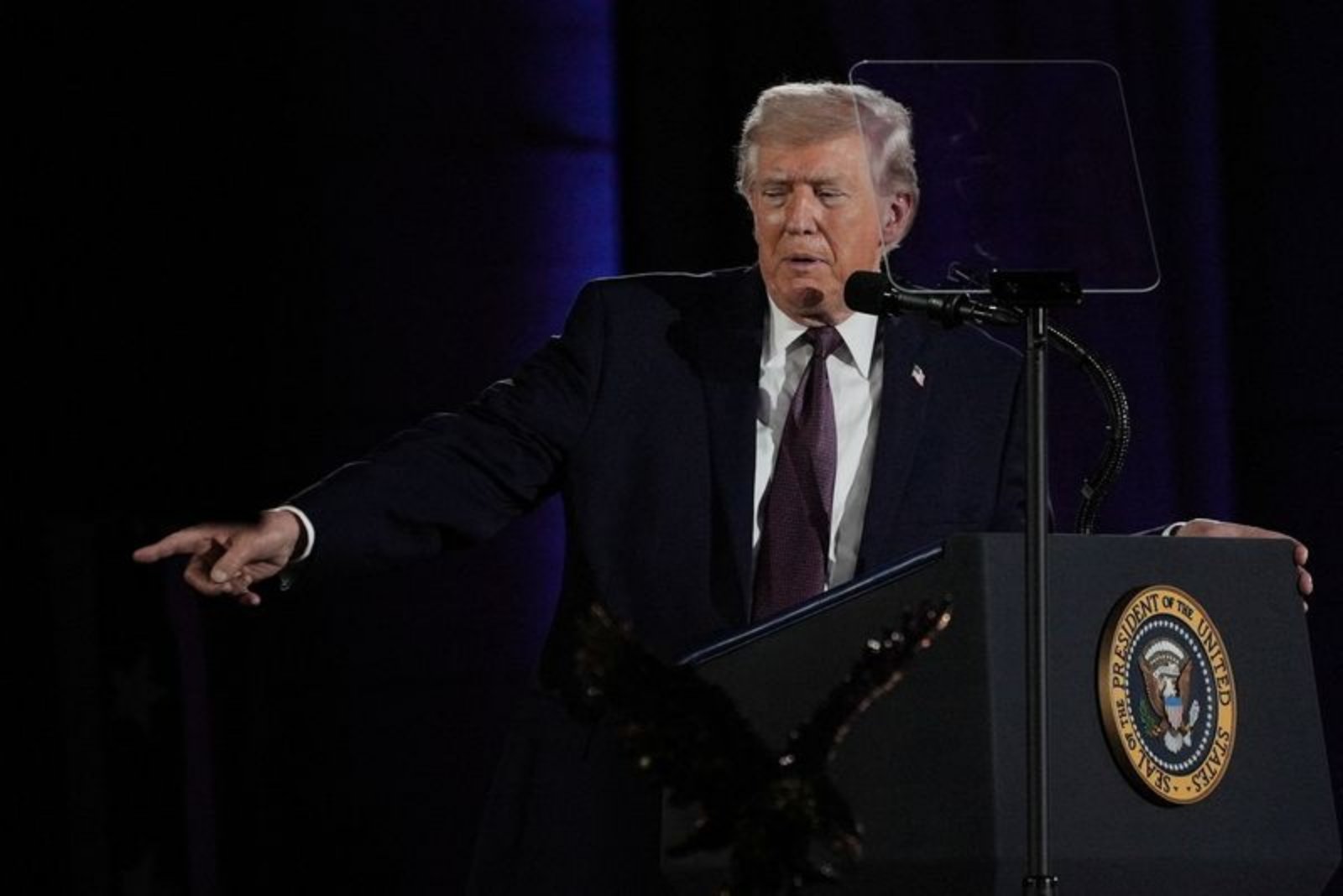
President Donald Trump on Thursday pressed Iran to accept terms that would stop U.S. and Israeli bombing, warning that refusal would bring continued strikes. Speaking at a White House Cabinet meeting, Trump framed the offer as a chance for Iran "to permanently abandon their nuclear ambitions and to join a new path forward."
Trump said he would "see if they want to do it. If they don't, we're their worst nightmare. In the meantime, we'll just keep blowing them away." Those remarks followed comments by a senior Iranian official who told Reuters that Washington's proposal to end nearly four weeks of fighting was "one-sided and unfair," while also indicating that diplomatic channels remained open.
Addressing the state of negotiations, Trump characterized Iranian representatives as engaging in discussions with the United States and described them as "desperate to make a deal," a depiction Tehran has rejected. He also labeled Iranian negotiators as "great negotiators" and said he sought an accord that would reopen the Strait of Hormuz and halt Tehran's military ambitions.
At the same time, Trump acknowledged uncertainty about whether such an agreement can be reached. "I don't know if we'll be able to do that," he said of striking a deal, adding, "I don't know if we're willing to do that." His comments left open the possibility that diplomacy may not succeed and that military pressure could continue.
The president's remarks were delivered in the context of ongoing fighting that has lasted nearly four weeks, according to his statement. They reiterate a U.S. stance that views a diplomatic resolution as preferable but also underscores a readiness to maintain or intensify kinetic pressure should negotiations falter.
Summary
- Trump offered Iran a deal to end U.S. and Israeli strikes, framing it as an opportunity to abandon nuclear ambitions and change course.
- A senior Iranian official called Washington's proposal "one-sided and unfair," while saying diplomacy continues.
- Trump described Iranian negotiators as both "desperate" to make a deal and as "great negotiators," and sought terms to reopen the Strait of Hormuz and stop Tehran's military aims; he also acknowledged the possibility that a deal may not be reached.
Key points
- Diplomatic window - The administration presented a specific offer seeking to end bombing and constrain Iran's military ambitions.
- Military leverage - The president signaled willingness to continue strikes if Iran does not accept terms, emphasizing military pressure as a negotiating tool.
- Strategic chokepoint mentioned - Reopening the Strait of Hormuz was cited as an objective tied to any agreement.
Risks and uncertainties
- Diplomatic breakdown - Trump said a deal may not materialize, leaving open the prospect of continued military action.
- Perception gap - Tehran deemed the U.S. offer "one-sided and unfair," indicating potential obstacles to agreement.
- Messaging dispute - U.S. characterizations of Iranian negotiating intent have been denied by Tehran, creating uncertainty about counterpart positions and intentions.