
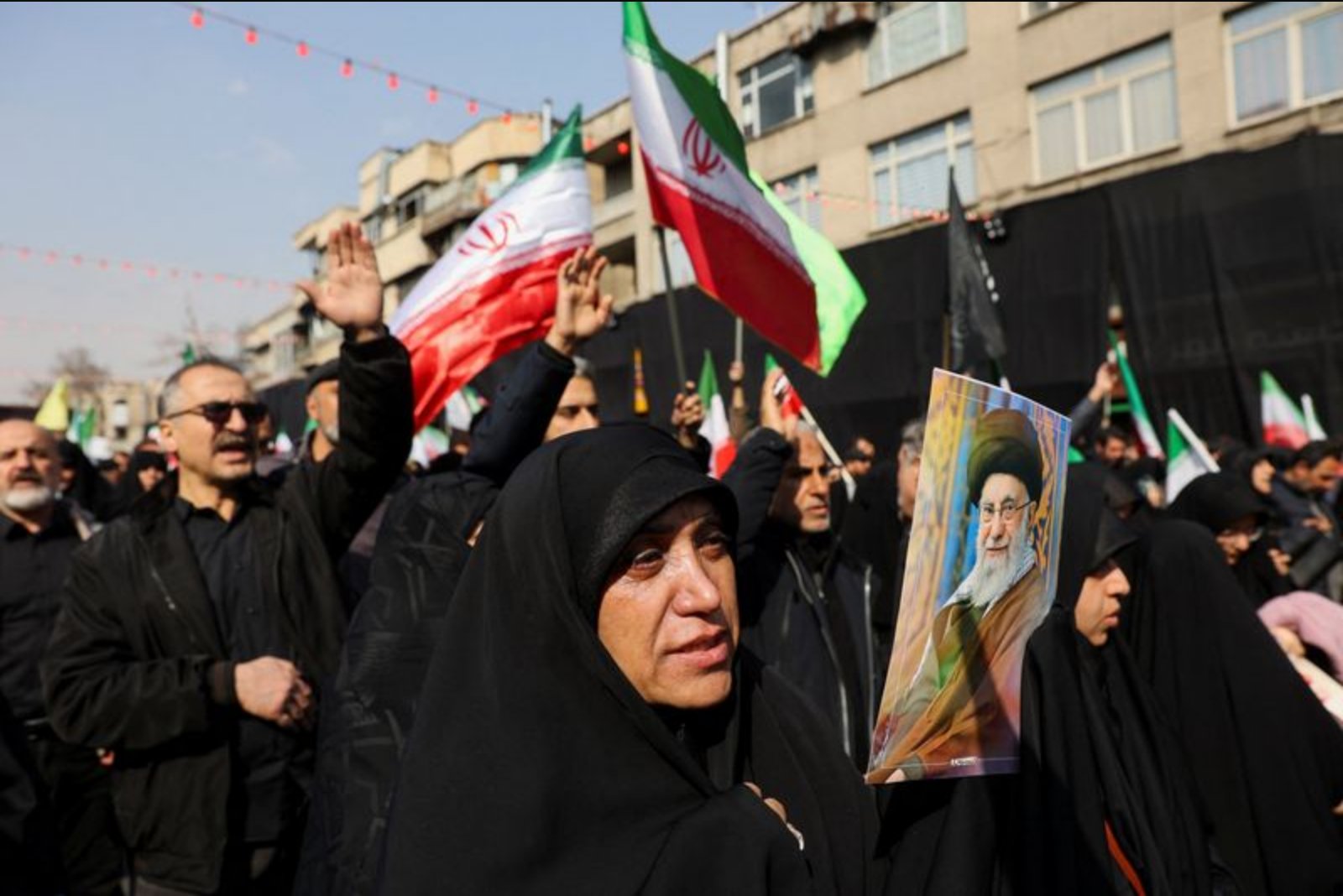
U.S.-Israeli air operations have struck deep into Iran’s leadership, killing a number of senior figures who held central roles in the country’s political, security and military apparatus. The attacks have targeted both Tehran and strategic southern locations, removing officials charged with national-level policy decisions, military planning and control of critical maritime routes.
Supreme Leader
Ayatollah Ali Khamenei - Khamenei, who had served as Iran’s Supreme Leader since 1989 and was 86 years old, was killed on February 28 in a U.S.-Israeli air strike on his compound. During his time as Supreme Leader he consolidated power through Iran’s security institutions and extended the country’s influence in the region, while maintaining an adversarial posture toward the United States and Israel. His rule coincided with recurrent tensions over Iran’s nuclear programme and confrontations with Western powers.
Senior officials
- Ali Larijani - Larijani, 67, served as secretary of the Supreme National Security Council and was described as a veteran powerbroker. He was killed in a U.S.-Israeli air strike in the Pardis area on March 17, along with his son and one of his deputies, according to Iranian media. A former Revolutionary Guards commander and nuclear negotiator, he was a close adviser to the slain Supreme Leader and played a significant role in shaping Iran’s security and foreign policy.
- Esmail Khatib - Iran’s intelligence minister, Khatib, was killed in an Israeli strike on March 18. He was a hardline cleric and politician who had worked in Ayatollah Khamenei’s office and was mentored by him prior to taking charge of the civilian intelligence apparatus in August 2021.
- Ali Shamkhani - A close adviser to Khamenei and a key figure in security and nuclear policymaking, Shamkhani was killed in U.S.-Israeli strikes on Tehran on February 28. He had previously survived an attack on his home during the 12-day June war between Israel and Iran.
Top military commanders
- Mohammad Pakpour - Pakpour, commander-in-chief of the Islamic Revolutionary Guard Corps (IRGC), was killed in the February 28 strikes in Tehran, Iranian state media reported. He had risen through the ranks to lead the Revolutionary Guards after his predecessor, Hossein Salami, was killed during the 12-day war in June.
- Aziz Nasirzadeh - Iran’s defence minister and a career air force officer, Nasirzadeh was killed in the same wave of strikes on February 28 that targeted senior leadership in Tehran, according to sources. He was involved in military planning and defence policy.
- Abdolrahim Mousavi - Mousavi, chief of staff of Iran’s armed forces, was killed in the February 28 strikes. Iranian media reported his death occurred during what it described as a meeting of senior leadership in Tehran. He had responsibilities for coordinating Iran’s military branches and overseeing conventional forces.
- Gholamreza Soleimani - The commander of Iran’s Basij paramilitary force, Soleimani, was killed in U.S.-Israeli strikes on March 17, according to Iranian state media. As a senior Revolutionary Guards officer, he led the force integral to internal security and enforcement of state authority.
- Behnam Rezaei - Rezaei, the Revolutionary Guards’ navy intelligence chief, was killed in an Israeli strike in the port city of Bandar Abbas on March 26. The Israeli military said he was responsible for collecting information on regional countries.
- Alireza Tangsiri - The IRGC navy commander, Tangsiri, died of wounds sustained after being targeted in an Israeli strike in Bandar Abbas on March 26, according to both the Israeli military and Iranian media. A native of Bushehr, he had risen through the ranks to lead the IRGC Navy in 2018 and oversaw what Iran terms the "smart control" of the Strait of Hormuz, a practice described as restricting passage through the vital global oil route.
- Majid Khademi - Khademi, head of intelligence for the IRGC, was killed in an Israeli air strike in Tehran in April, 2026, according to statements from both Iranian and Israeli sources. He was a veteran intelligence and counter-espionage official who took up the role in 2025 after his predecessor was killed in a similar strike. Prior to becoming head of IRGC intelligence, he led the Guards’ Intelligence Protection Organisation and held senior posts within the defence ministry.
These deaths span a broad cross-section of Iran’s ruling architecture, including the Supreme Leader, advisers involved in national security and nuclear policy, the interior intelligence apparatus, and senior commanders responsible for conventional and paramilitary forces as well as naval operations. Reports place the strikes in Tehran and in strategic southern port locations, underscoring a focus on both political command centers and control of maritime routes.
Official accounts and state media have attributed the deaths to U.S.-Israeli air strikes, and the list above is based on the statements and reports released by Iranian and Israeli sources and Iranian state media. The removal of these officials represents a significant reshaping of Iran’s senior leadership layer as described in those sources.