
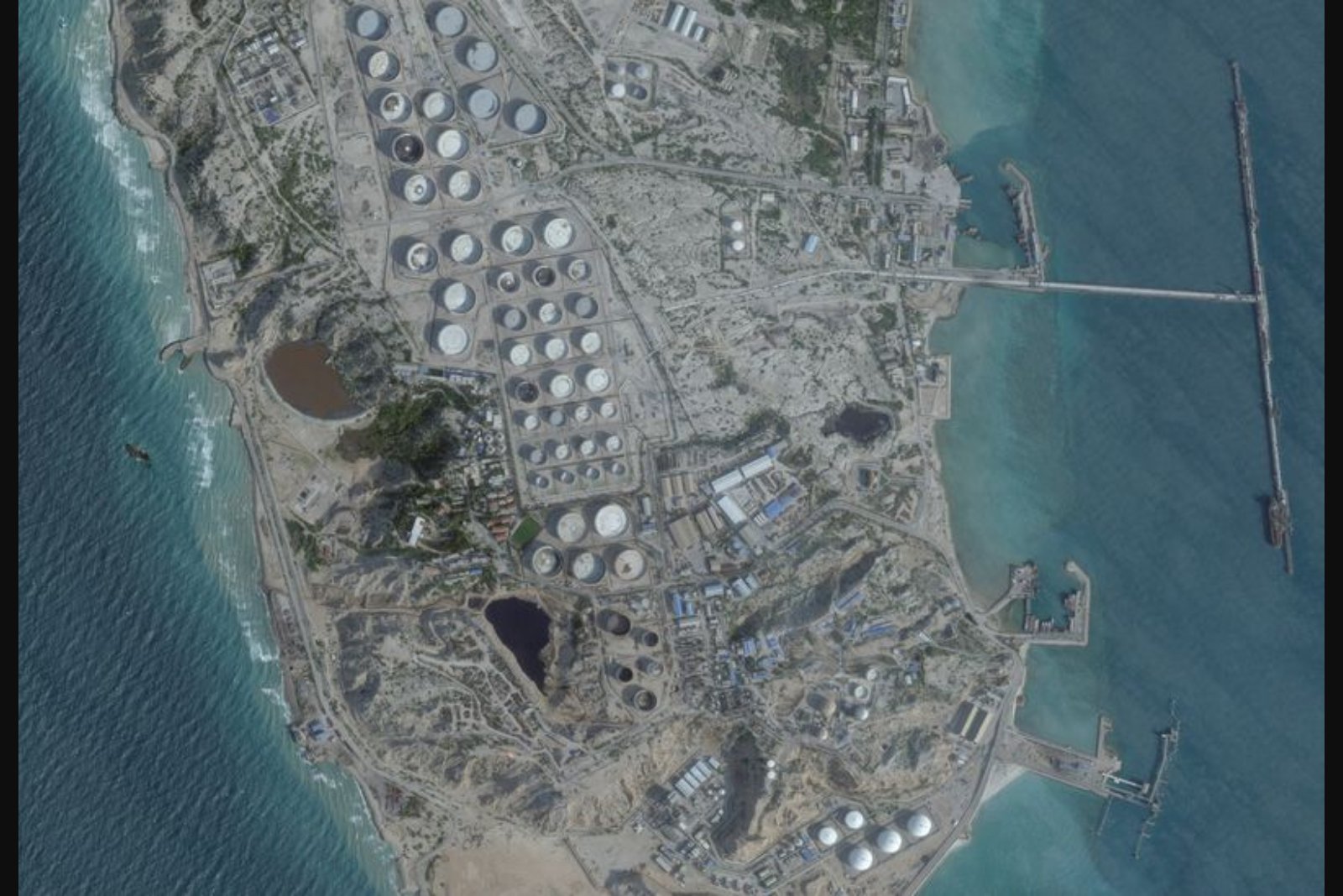
U.S. policymakers are weighing whether to mount a ground seizure of Kharg Island, Iran's principal oil export terminal, a step that military analysts say could be carried out swiftly but would leave U.S. forces exposed to sustained attacks and could extend the current conflict rather than end it.
Why Kharg matters
Kharg Island sits roughly 16 miles (26 km) off Iran's coastline at the northern edge of the Gulf and is about 300 miles (483 km) northwest of the Strait of Hormuz. The island is surrounded by waters deep enough to accommodate tankers that cannot approach the mainland's shallow coast. As the handling point for 90% of Iran's oil exports, control of Kharg would give an occupying force the capacity to seriously disrupt Iran's energy trade, applying severe pressure to Tehran's economy. Iran ranks as the third largest producer in the Organization of the Petroleum Exporting Countries.
Current military posture and options
U.S. forces mounted strikes against Kharg in mid-March, an operation that the U.S. president described as having "totally obliterated" military targets on the island. In parallel, U.S. officials have been reported to be considering whether to dispatch ground troops to seize and hold the facility. Two Marine contingents could arrive in the wider region toward the end of the month, and Pentagon planners are said to be preparing thousands of airborne troops to provide additional options for a potential ground assault.
Operational risks - drones and mines
Analysts caution that although U.S. forces could likely take Kharg Island relatively quickly, occupying it would not necessarily yield the decisive victory sought by policymakers. Experts from the Foundation for Defense of Democracies, Ryan Brobst and Cameron McMillan, have argued that "A seizure and occupation of Kharg Island is more likely to expand and extend the war than it is to deliver any sort of decisive victory." They point to the heightened vulnerability of stationed troops to missile and drone strikes, including small camera-equipped "first-person view drones" that have been deployed widely in Ukraine.
Such attacks present both tactical and information risks. Brobst and McMillan noted that "Upon any successful strikes, the Iranian regime would be expected to release videos of those attacks online, using the graphic deaths of American service members as propaganda."
In addition to aerial threats, Tehran could increase the use of naval mines to threaten commercial shipping. Observers note that floating mines could be laid from the coast, compounding hazards for maritime traffic in a region where shipping has already been significantly disrupted by the conflict. The possibility of more mines could make the Gulf and approaches to the Strait of Hormuz even more dangerous for civilian and military vessels.
Force requirements and logistical concerns
Joseph Votel, a former commander of the U.S. Central Command, said that a relatively small garrison - on the order of 800 to 1,000 troops - might be sufficient to occupy Kharg Island itself. However, he emphasized that those personnel would require substantial logistical support, and that the convoys, ships and infrastructure providing that support would also need protection.
Votel characterized the plan as potentially offering little tactical advantage and underscored the exposure of forces tasked with holding the island. He described the operation as "kind of an odd thing to do ... But we could certainly do it if we had to," while expressing doubt that taking the island would deliver a clear military benefit.
Strategic aims and potential responses
One motive for seizing Kharg Island would be to force Iran to reopen the Strait of Hormuz and to gain leverage in any future negotiations. Yet analysts warn that Iran could respond by increasing maritime mining and continuing asymmetric attacks, steps that would keep shipping under strain and could make the region more perilous rather than reducing conflict intensity.
In sum, while U.S. forces may possess the capability to capture Kharg Island in a short operation, multiple experts argue that occupation carries significant operational, informational and maritime risks that could prolong and escalate the conflict rather than conclude it.