
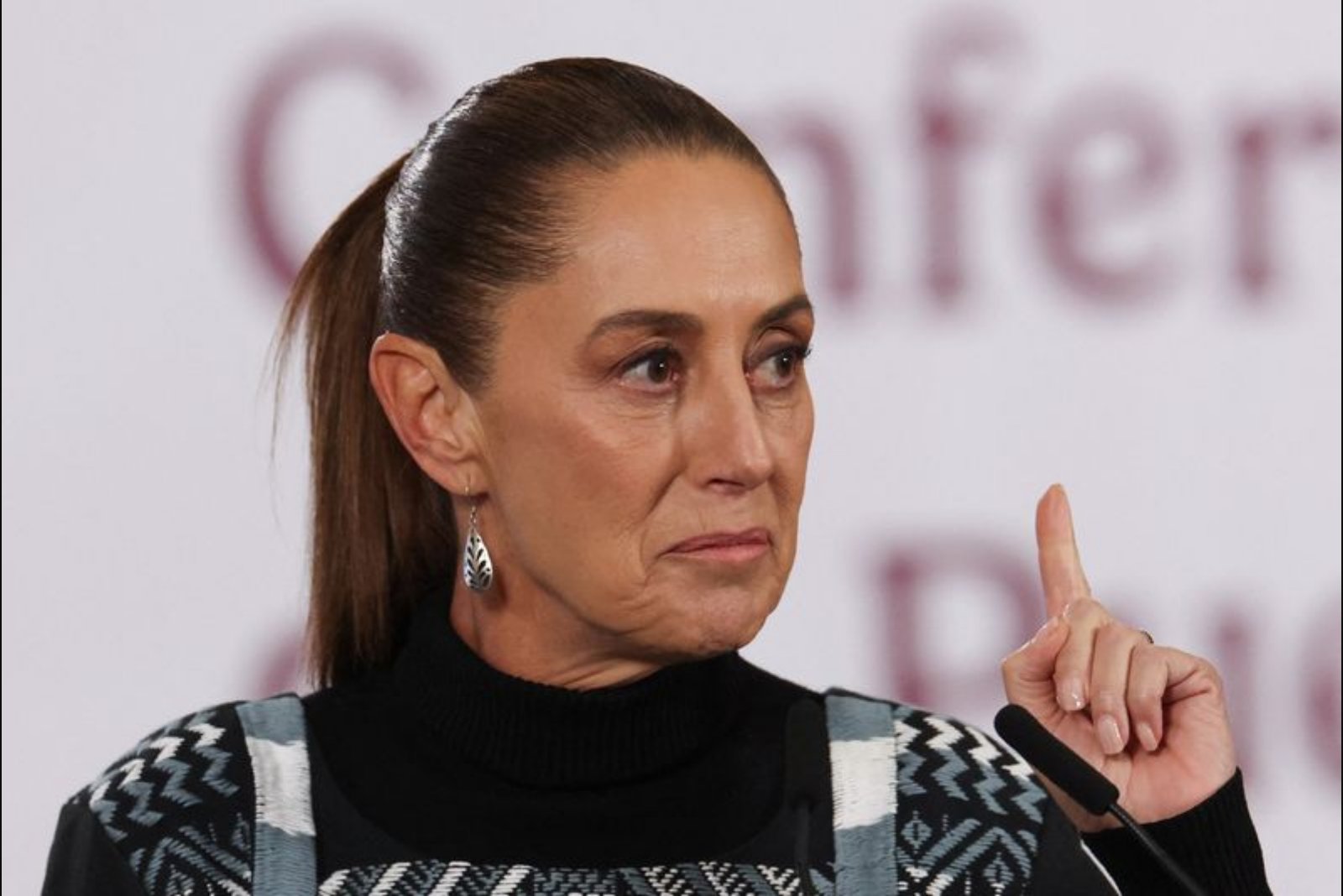
Mexican President Claudia Sheinbaum on Tuesday told reporters that Mexico decides on oil shipments to Cuba based on sovereign considerations, and she rejected the notion that those decisions are dictated by pressure from the United States. At the same time, she appeared to acknowledge that a planned shipment to Cuba had been halted.
At her regular morning press briefing, Sheinbaum was asked to respond to media reporting that Mexico had stopped an oil delivery bound for Cuba. She answered: "It is a sovereign decision and it is made in the moment when necessary."
The president declined to say whether Mexico would restart shipments to the island, saying only that any resumption or change would be made public: "in any case, it will be reported."
Earlier coverage had identified the suspension of the oil cargo. In separate reporting last week, it was disclosed that the Mexican government had been reviewing whether to continue sending oil to Cuba as officials inside Sheinbaum's administration grew increasingly concerned that the policy could prompt reprisals from the United States.
Mexico's oil deliveries to Cuba have drawn heightened attention in Washington after U.S. President Donald Trump vowed to stop oil and financial flows from Venezuela to Cuba following the Jan. 3 capture of Venezuelan President Nicolas Maduro by U.S. special forces. Shipping data and internal documents from Venezuela's state oil company show that Caracas has not sent crude or fuel to Cuba for about a month, with cargoes curtailed due to a U.S. blockade even before Maduro's capture.
With Venezuela largely offline as a supplier, Mexico has become the second-largest source of oil for Cuba in 2025, supplying roughly 5,000 barrels per day. That volume is now a critical, though insufficient, lifeline for the island. Over the nine months ending in September, Mexico's state oil company Pemex exported 17,200 barrels per day of crude and 2,000 barrels per day of petroleum products to Cuba.
Sheinbaum emphasized the historical context and humanitarian elements that shape Mexico's approach to selling or gifting oil to Cuba. She said decisions about timing and mode of delivery are determined by Pemex under existing contracts, or by the government when shipments are made as humanitarian gestures under certain circumstances.
Context for logistics and energy sectors
The developments place attention on shipment timing, contractual terms and the operational decisions of a national oil company - factors that directly affect supply chains, shipping schedules and port operations linked to the Cuba trade lane.