
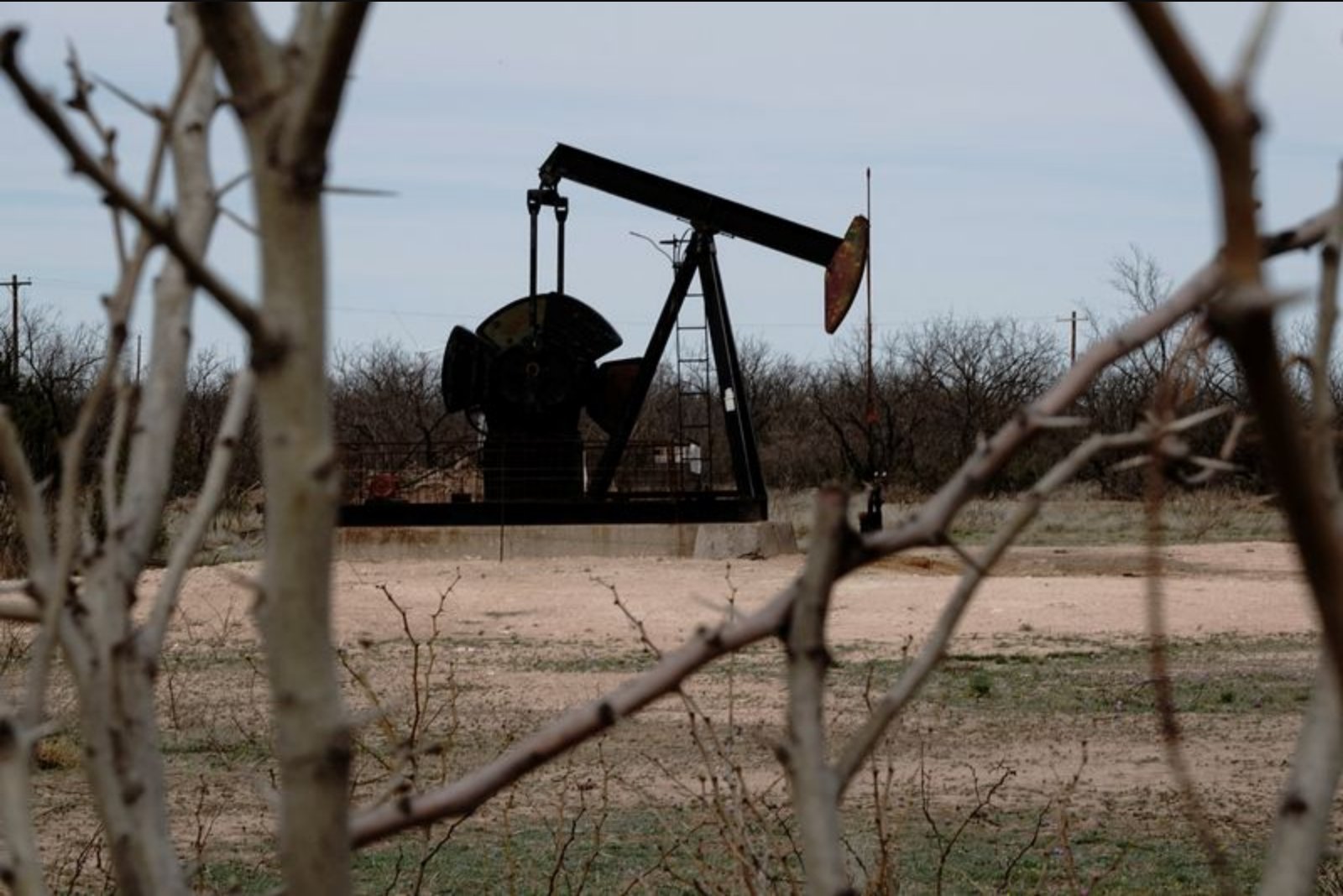
HOUSTON, March 23 - Oil prices crossing the $100-a-barrel threshold would not be enough, on their own, to spur a rapid or substantial rise in U.S. shale output unless the elevated level endures beyond a single quarter, executives said at the CERAWeek energy conference in Houston. That assessment will be concerning for consumers already affected by the energy crunch associated with the U.S.-Israeli war on Iran.
Shale production helped position the United States as the world’s top oil producer, and its relatively fast-cycle nature has made it a common assumption as the source of any near-term supply response. But in recent years, many shale companies have shifted priorities away from aggressive volume growth and toward returning capital to shareholders. Companies also face higher operating costs and the reality of maturing fields, factors that limit how quickly they can ramp activity even when prices rise.
ConocoPhillips is not contemplating higher production at the present time, said Nick Olds, executive vice president of the company’s U.S. onshore lower 48 operations. Olds emphasized that ConocoPhillips would require a sustained period of stronger prices before altering its production stance.
The effective closure of the Strait of Hormuz along Iran’s coast has halted passage of roughly 20% of global oil flows, a disruption that has contributed to global price increases of about 50%. Even with those market moves, several executives said, operators largely have drilling plans and budgets already locked in for the year, which limits how quickly they can pivot. They added that higher prices for later months would need to materialize for companies to revisit and revise those plans.
Executives cautioned that even after a commercial decision to add rigs or accelerate activity, the timeline to produce additional barrels is not immediate. "The cycle from the time you begin to when you make a decision that you’re going to add rigs to then ultimately drilling and producing and getting to market, that can be a year-long process, even in the U.S., which is a short-cycle market. Nine months would be the very best-case scenario," said Steve Gassen, SLB’s executive vice president of geographies, speaking on the sidelines of the conference.
Gassen stressed that operators need visibility that higher prices will persist. "Before operators make the decision to ratchet up production, there needs to be a line of sight to higher oil prices for longer. So the concern is that you’re in a bit of a bell curve, and then prices then normalize back to $60 or $65 a barrel," he said. SLB staff are engaged in extensive discussions with U.S. operators, but those conversations remain in an evaluation phase, Gassen added.
Market pricing already reflects some expectation of normalization further out the curve. U.S. oil futures for October delivery are trading around $77 a barrel, which is roughly $11 below current prompt prices, according to remarks made at the conference.
Major producer Repsol also signaled it would stick to its plan rather than improvise in response to near-term market volatility. "We have a plan, and we cannot improvise because of the environment, because of the price. Let’s stick to the plan," said Francisco Gea, executive managing director of exploration and production at Repsol, which has operations in Texas, Alaska and the Gulf of Mexico.
Private and smaller producers described conditions under which they would accelerate activity. Linhua Guan, CEO of Surge Energy America, one of the largest private players in the Midland Basin, said companies would move to accelerate or restart drilling programs if higher prices persist for at least two quarters. Guan noted that operators would prioritize completing wells already drilled so they could more quickly deliver barrels to market at current strong prices, and that firms will also use the period to strengthen hedge positions to lock in higher future values.
Smaller Permian producer Admiral Permian Resources echoed the caution. CEO Denzil West said the company would not speed up activity at $90 a barrel because that level was not viewed as sufficiently sustainable to justify a ramp-up. Admiral Permian, which produces about 25,000 barrels per day and currently runs two rigs, would consider boosting activity only if price strength appeared consistent over a six- to 12-month window.
Contextual note on timelines and company priorities: Executives at the conference repeatedly tied the decision to expand drilling to both price duration and internal budget discipline. While some operators could bring already-drilled wells online relatively quickly, adding rigs and new drilling campaigns typically involves lead times measured in many months, reflecting crew availability, supply chain factors, and permit and completion scheduling.
The cumulative picture presented at CERAWeek was of an industry prepared to use high prices to optimize returns - through selective completions and hedging - rather than to immediately flood the market with additional supply.