
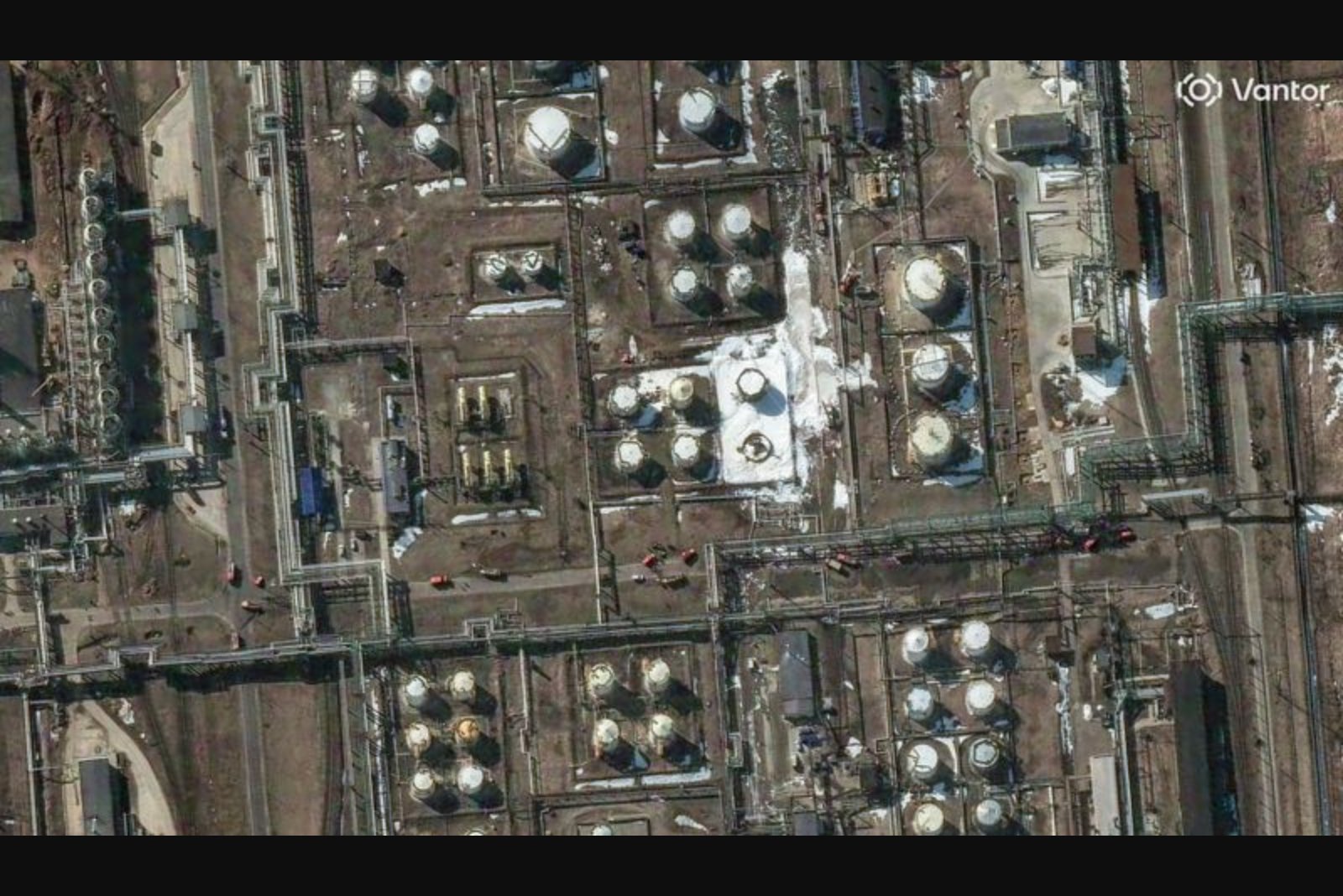
Industry sources say a near-term reduction in Russian oil production is inevitable after a wave of drone strikes damaged port infrastructure, pipelines and refineries, curtailing export capability by roughly 1 million barrels per day - roughly one fifth of Russia's total export capacity. The three sources, speaking on condition of anonymity because of the sensitivity of the situation, warned that the damage has left pipeline systems congested and storage filling up, forcing producers to reduce flow to avoid overwhelming the network.
Ukraine has intensified attacks on oil export infrastructure over the past month, mounting its heaviest drone strikes since the conflict began more than four years ago. The Baltic ports of Ust-Luga and Primorsk have been among the principal targets as Kyiv seeks to pressure economic levers. Ust-Luga in particular suspended oil exports about a week ago after heavy drone strikes and subsequent fires, according to the sources.
With export outlets impaired and domestic refineries also being targeted, the state-controlled pipeline network has become clogged with crude. Sources said that storage facilities are filling and, as a result, some oilfields will need to cut production rather than risk flooding the system with additional volumes.
That reduction in Russian supply would compound stress on global markets at a time when oil markets have already been disrupted by conflict in the Middle East. The sources emphasized that the export shortfall equates to around 1 million bpd lost from loading capacity, or about 20% of Russia's export capability, a loss substantial enough to affect production decisions at the field level.
Russia is identified as the world's second largest oil exporter. According to Organization of the Petroleum Exporting Countries data cited by the sources, Russian oil production was 9.184 million barrels per day in February. The sources did not provide a figure for the precise volume of production that would be cut as a result of the export bottleneck.
Even prior to the latest attacks on the Baltic ports, Russia's export capacity was under strain. The Druzhba pipeline, which supplies crude to Hungary and Slovakia, has been suspended since January. More than 80% of Russia's oil transport uses pipelines controlled by state monopoly Transneft. Sources reported that Transneft informed exporters that Ust-Luga was unable to load oil in line with the initial export schedule because of the recent damage, and that the company could not accept full volumes from producers who had been slated to ship via Ust-Luga.
Requests for comment to Transneft and Russia's energy ministry did not receive a response, according to the sources.
The export bottleneck at Ust-Luga affects not only Russian flows but also regional shipments. The sources said Kazakhstan ships between 200,000 metric tons and 400,000 metric tons of KEBCO oil via Ust-Luga each month. Disruption at the port therefore has implications for neighboring producers that rely on the same loading infrastructure.
Seasonal refinery maintenance in Russia is adding to the congestion. During March and April, when refineries typically reduce throughput for routine work, countries often increase crude exports to compensate for lower domestic processing. This year, however, the combination of refinery turnarounds and attacks on export facilities could leave an unusually large volume of crude destined for export sitting in pipelines and storage rather than moving to market or through refining.
There are no official public figures on how much spare storage capacity remains in the system. One source told the reporters there was enough capacity to hold the surplus for weeks, but not for months.
Russian production trends over the last year show only a modest contraction despite sanctions and attacks. According to Russian data referenced by the sources, national oil output fell by 0.8% last year to 10.28 million barrels per day, representing around a tenth of global production. That limited decline came even as export disruptions and attacks continued to affect refinery infrastructure.
The sources also noted that Russia has benefited from a rise in oil prices since late February amid renewed hostilities in the Middle East. Nevertheless, a deliberate cut in production would still represent a material hit to state finances: oil and natural gas together account for about a quarter of Russian federal budget revenues.
Operationally, the near-term picture is constrained: the loading calendar for Ust-Luga in the first half of April is not expected to be fulfilled, while allocations for the second half of the month remain in place until further notice, according to the sources. The degree of any enforced production cuts and their duration were not specified by the sources.
In sum, the combination of intensified drone strikes on key export facilities, a partly suspended cross-border pipeline, routine refinery turnarounds and limited storage availability has created a logistical choke point that industry participants say will unavoidably translate into lower field output unless the flow situation eases.