
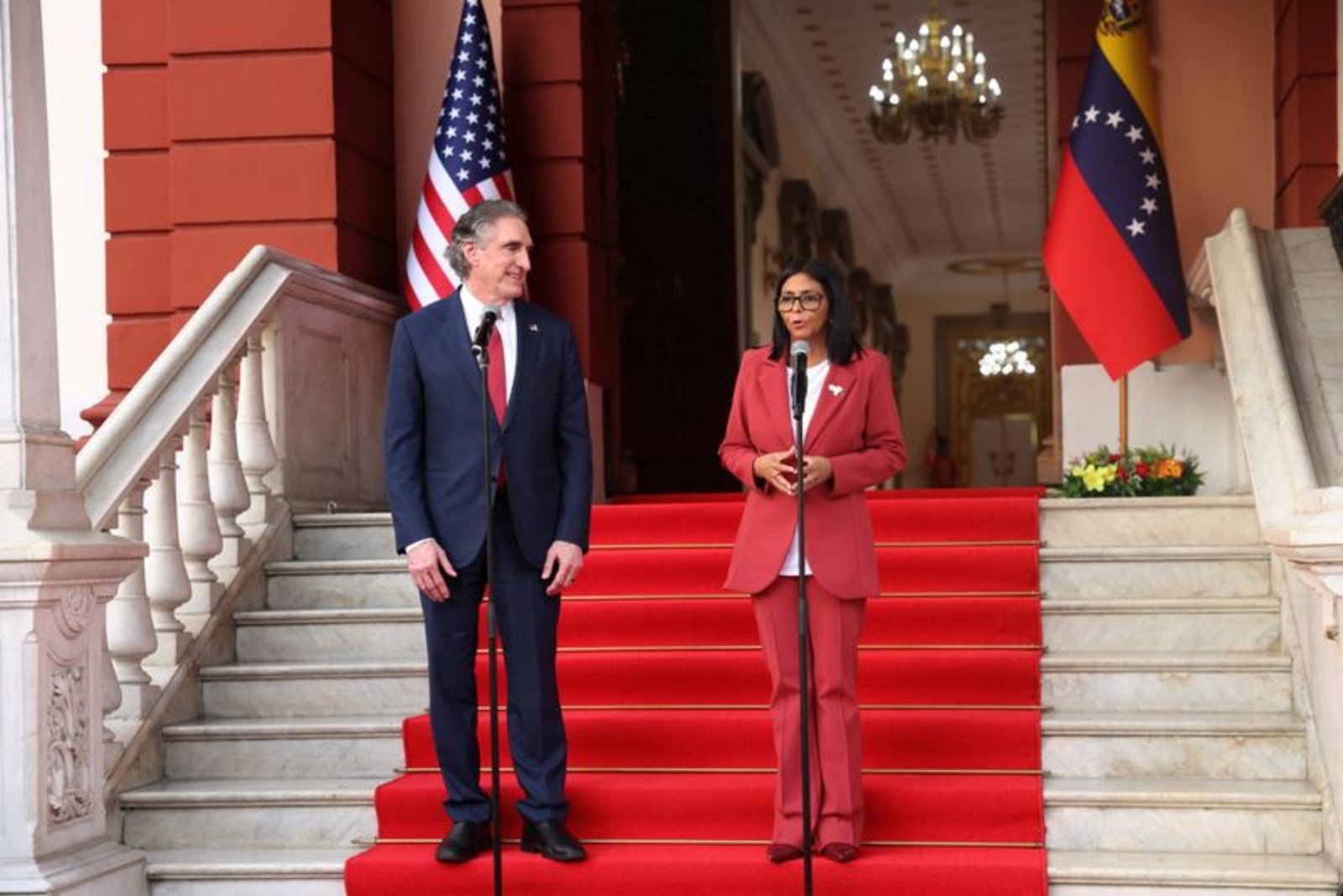
U.S. Secretary of State Marco Rubio said in a television interview that Venezuela must undergo a transition period and ultimately hold free and fair elections, while urging patience as events unfold.
Speaking on Fox News Channel’s "Hannity" program, Rubio said: "Ultimately, there will have to be a transition phase. There will have to be free and fair elections in Venezuela. And that point has to come." He added: "We have to be patient, but we also can’t be complacent."
The interview revisited a series of U.S. actions earlier this year. In January, U.S. forces seized Venezuelan President Nicolas Maduro in a raid that resulted in fatalities; Rubio’s comments referred back to that operation, which the article describes as having been ordered by President Donald Trump. The United Nations human rights office has stated that the raid violated international law.
At the time of the January operation, Trump said Washington would "run" Venezuela. Following that action, Maduro’s former vice president, Delcy Rodriguez, assumed leadership and has been governing under what the article characterizes as U.S. oversight.
Rubio used the interview to link developments in Venezuela to U.S. policy toward Cuba. He said Washington would have more to announce on Cuba soon and argued that the island needs both economic and political reforms. In his words: "So I think Cuba is in need of two things, economic reforms and political reforms, you cannot fix their economy if you don’t change their system of government."
The U.S. response after the change in Caracas included cutting off Venezuela’s oil exports to Cuba. The article reports that, after toppling Maduro in January, Washington halted those oil shipments and that President Trump warned he would impose punitive tariffs on any country that continued to send crude to Cuba.
The account links Cuba’s energy shortfall to the suspension of Venezuelan crude: the island’s energy crisis has produced blackouts across a population of roughly 10 million, and health officials cited in the article say the crisis has increased mortality risk for cancer patients, particularly children. Human rights experts quoted in the article view Trump’s emphasis on Venezuelan oil and threats aimed at Cuba as reflecting an imperialist approach.
The reporting does not offer a timeline for when a Venezuelan transition would take place, nor does it provide detail on the nature of the additional U.S. announcements Rubio referenced regarding Cuba. Those elements remain unspecified in the material presented.
Key points
- Rubio called for a transition in Venezuela followed by free and fair elections, urging patience but warning against complacency - impacting political risk assessments and sovereign outlooks.
- The U.S. raid in January that seized President Nicolas Maduro was ordered by President Trump and has been described by the U.N. human rights office as a violation of international law - a factor for legal and geopolitical risk monitoring.
- Washington cut off Venezuelan oil exports to Cuba and signaled possible tariffs on third-party crude suppliers, linked to Cuba’s ensuing energy shortages and associated health impacts - relevant to energy and trade sectors.
Risks and uncertainties
- Timing and mechanics of a Venezuelan transition and the scheduling of free and fair elections remain unclear - this uncertainty affects sovereign risk, regional stability, and markets tied to oil and trade.
- Legal and reputational risk stemming from the U.N. human rights office finding that the January raid violated international law - relevant for diplomatic relations and international legal scrutiny.
- Trade and energy disruption risk from U.S. measures such as cutting oil exports to Cuba and threats of tariffs on other crude suppliers - this influences energy supply chains and countries involved in crude trade with Cuba.