
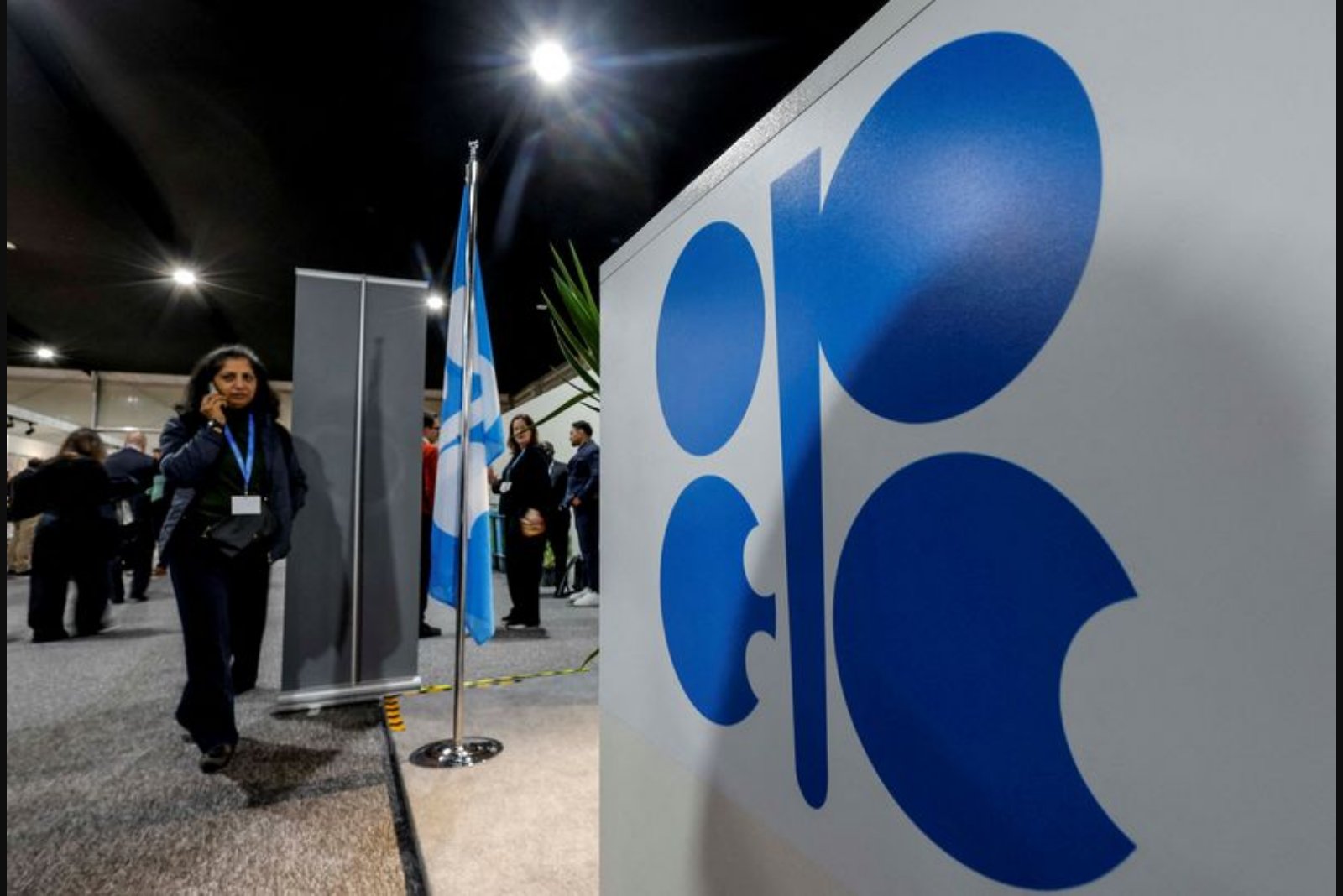
Three OPEC+ delegates said the producer group is likely to keep its pause on monthly increases in oil production for March when members meet this weekend. The decision follows an 8% rise in oil prices so far this month, pushing benchmarks above $66 a barrel after a notable drop in Kazakhstan's crude output.
The meeting will bring together eight OPEC+ members - Saudi Arabia, Russia, the United Arab Emirates, Kazakhstan, Kuwait, Iraq, Algeria and Oman - who jointly account for about half of global oil production. The session is scheduled for February 1, and delegates are expected to confirm a continuation of the halt on additional supply for March.
Last year the eight members agreed to lift oil production targets by roughly 2.9 million barrels per day for the period from April to December 2025, a volume equivalent to almost 3% of estimated world demand. At the same time they enacted a pause on the planned monthly increases for January through March amid forecasts of weak demand.
Market anxiety over supply has been heightened by a string of disruptions. Drone strikes and technical problems have curtailed output in Kazakhstan, and JP Morgan has estimated that the Tengiz oilfield will remain offline through the end of January. The bank projects Kazakhstan's crude production will average between 1.0 and 1.1 million barrels per day in January, down from a typical level of about 1.8 million barrels per day, JP Morgan said.
Delegates also noted that Venezuelan output is unlikely to rebound quickly and that any recovery would take time, making it improbable to have a major effect on the global oil balance in the near term. The United States has urged oil companies to invest in Venezuela to help lift production, and the U.S. captured Venezuelan President Nicolas Maduro early in January, according to the account provided to delegates.
Separately, the prospect of potential U.S. strikes on Iran has increased concerns about future supply availability. Against that backdrop, some earlier reporting had indicated OPEC+ would keep policy settings steady, a position that appears to be reflected in the expected outcome of the forthcoming meeting.
OPEC and authorities in Saudi Arabia and Russia had not immediately provided comment on the meeting plans. The combination of elevated prices, production disruptions in Kazakhstan, and geopolitical uncertainty continues to shape near-term market expectations as producers weigh the timing and scale of additional supply.