
Oil benchmarks showed a modest increase on Friday as geopolitical tensions resurfaced after U.S. President Donald Trump reiterated warnings directed at Iran, a prominent oil producer in the Middle East. As of 0243 GMT, Brent crude futures for March delivery increased by 35 cents, or 0.55%, reaching $64.41 per barrel, while U.S. West Texas Intermediate (WTI) crude climbed by 33 cents, or 0.56%, settling at $59.69 per barrel. This follows a noticeable 2% decrease in both contracts on Thursday.
The price rally was sparked by comments from President Trump aboard Air Force One, where he indicated that the U.S. is dispatching a significant naval force, described as an "armada," toward Iran. While he expressed hope to avoid military action, he also issued renewed threats concerning Iran's treatment of protesters and its nuclear program. Official sources confirmed plans for the arrival of U.S. warships, including an aircraft carrier and guided missile destroyers, in the Middle Eastern region in the upcoming days.
Iran stands as the fourth-largest oil producer within the Organization of the Petroleum Exporting Countries (OPEC) and serves as a key exporter to China, the world's second-largest consumer of oil. The renewed military posture and rhetoric have naturally raised concerns about potential supply disruptions.
Despite volatility earlier in the week linked to geopolitical developments, including President Trump's threatened Greenland invasion and resulting diplomatic tensions with Denmark and NATO, crude prices had edged up prior to Thursday’s declines. The dip was influenced by Trump’s diplomatic pullback over Greenland and bearish U.S. government data revealing an unexpected build in crude inventories.
The U.S. Energy Information Administration (EIA) reported on Thursday a crude stockpile increase of 3.6 million barrels for the week ending January 16. This exceeded the predicted 1.1 million barrel rise and also went beyond the 3 million barrel build reported by the American Petroleum Institute (API) trade group the day before. Both agencies released their data a day later than usual due to the Martin Luther King Jr. holiday in the United States on Monday.
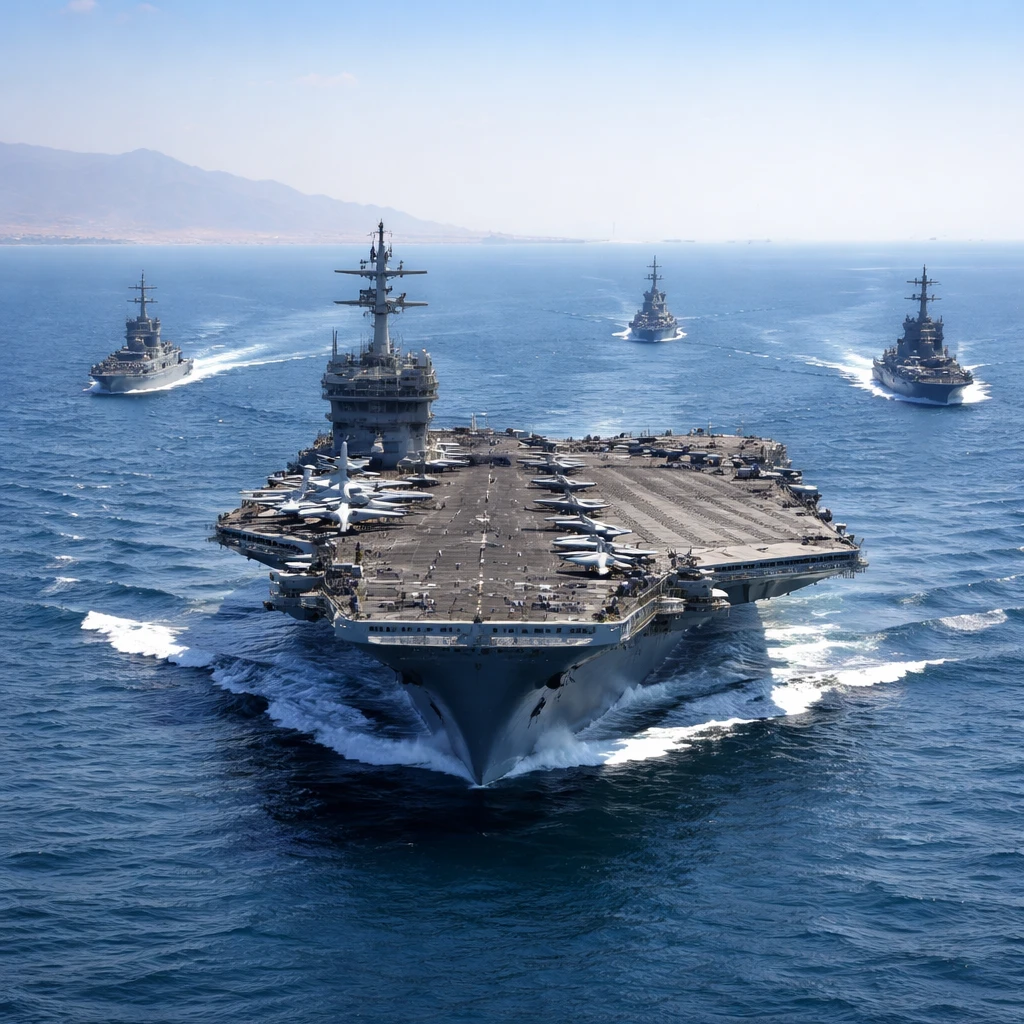
Oil prices experienced a rebound on Friday following statements by U.S. President Donald Trump that highlighted an upcoming deployment of naval forces toward Iran. These remarks have amplified fears of potential military conflict that could interfere with oil supply lines, particularly given Iran's significant role as an oil producer in OPEC and exporter to major markets like China. Despite a recent decline due to rising U.S. crude inventories and previous geopolitical uncertainties, markets have responded with a cautious price recovery.
Key Points
- Oil prices rose following U.S. President Trump's announcement of deploying naval forces toward Iran, raising concerns about possible military conflict disrupting oil supplies.
- Iran is a major oil producer within OPEC and an essential exporter to China, linking geopolitical tensions directly to global oil markets and prices.
- Data showing growing U.S. crude inventories contributed to price volatility this week, highlighting supply-demand uncertainties in the world's largest oil consumer.
Risks
- Potential military confrontation between the U.S. and Iran could disrupt oil production and exports, affecting global supply and trading markets; impacts energy and commodity sectors.
- Continued diplomatic tensions following U.S. threats about Greenland and Iran could destabilize international alliances and indirectly influence commodity prices and economic relations.
- Higher-than-expected U.S. crude stockpiles indicate slowing fuel demand, suggesting possible demand-side risks which could pressure oil prices and financial markets tied to energy assets.