
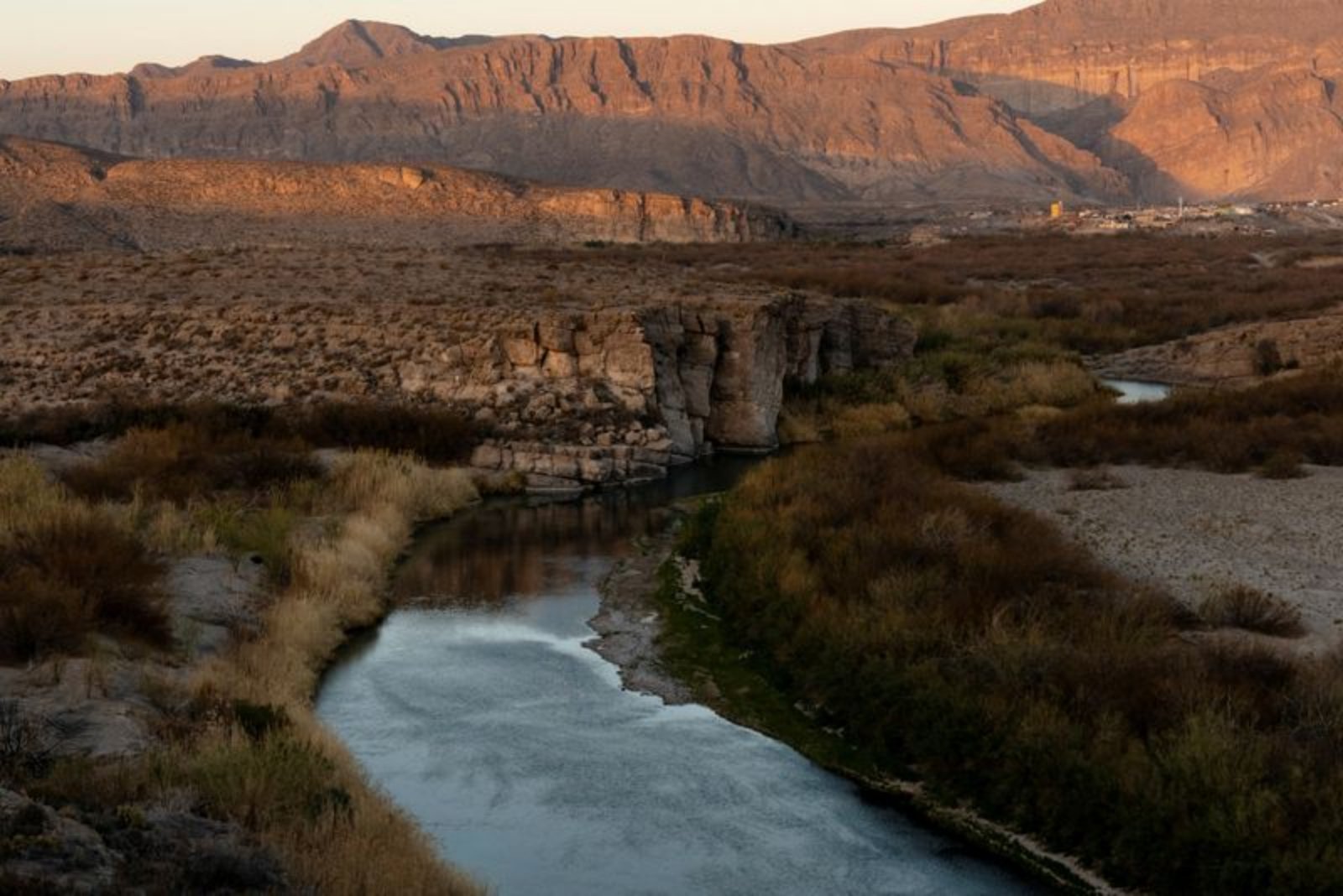
Mexico has committed to provide a minimum of 350,000 acre-feet of water annually to the United States, U.S. officials said in a joint announcement following recent bilateral negotiations over treaty deliveries.
In a statement, Mexico's foreign ministry framed the agreement as a step toward more predictable management of shared resources, saying, "The agreement reached makes it possible to strengthen the orderly management of water resources in the Rio Grande basin and to move toward planning with greater predictability and shared responsibility in the face of the effects of drought."
As part of the negotiated outcome, Mexico also agreed to a detailed plan to fully repay all outstanding water debt accrued during the previous delivery cycle, according to U.S. officials. To monitor implementation and reduce the risk of future shortfalls, officials from both countries will hold monthly meetings to promote timely and consistent deliveries.
Mexico noted that while it has guaranteed a minimum annual volume, actual deliveries will be contingent on hydrological conditions. The government said that allocations will prioritize human consumption and agriculture, reflecting competing demands within the basin.
"The Department of State, Department of Agriculture, and the U.S. International Boundary and Water Commission have worked to secure Mexico’s commitment to meet its obligations under the 1944 Water Treaty, while also providing a plan to eliminate the deficit from the prior cycle, strengthening water security for Texas communities and U.S. agriculture," said U.S. Secretary of State Marco Rubio.
The discussions and commitments come against a backdrop of tensions over treaty compliance. In December, U.S. President Donald Trump accused Mexico of violating the 1944 agreement, which governs how a network of dams and reservoirs manages water sharing between the two nations.
The 1944 Water Treaty requires Mexico to deliver 1.75 million acre-feet of Rio Grande water to the United States every five years. Officials have acknowledged that Mexico has at times struggled to meet those deliveries, citing drought conditions and local demand as constraints on supply.
U.S. officials said that treaty issues were discussed at a recent conversation between President Trump and Mexican President Claudia Sheinbaum. According to the joint statement, both leaders reaffirmed their commitment to resolving long-standing water management challenges and to supporting communities and producers on both sides of the border.
Details released by the governments emphasize a two-track approach: setting a minimum annual delivery level while retaining flexibility tied to hydrology, and instituting regular bilateral oversight through monthly meetings. The repayment plan for prior-cycle deficits is intended to clear accumulated obligations, though officials described the measures without providing additional numerical specifics beyond the committed minimum.
This agreement addresses immediate delivery expectations and seeks to create a recurring governance mechanism to limit future deficits. The measures explicitly highlight the prioritization of human consumption and agricultural needs within Mexico's allocation framework while recognizing that deliveries remain subject to changing water availability in the Rio Grande basin.