
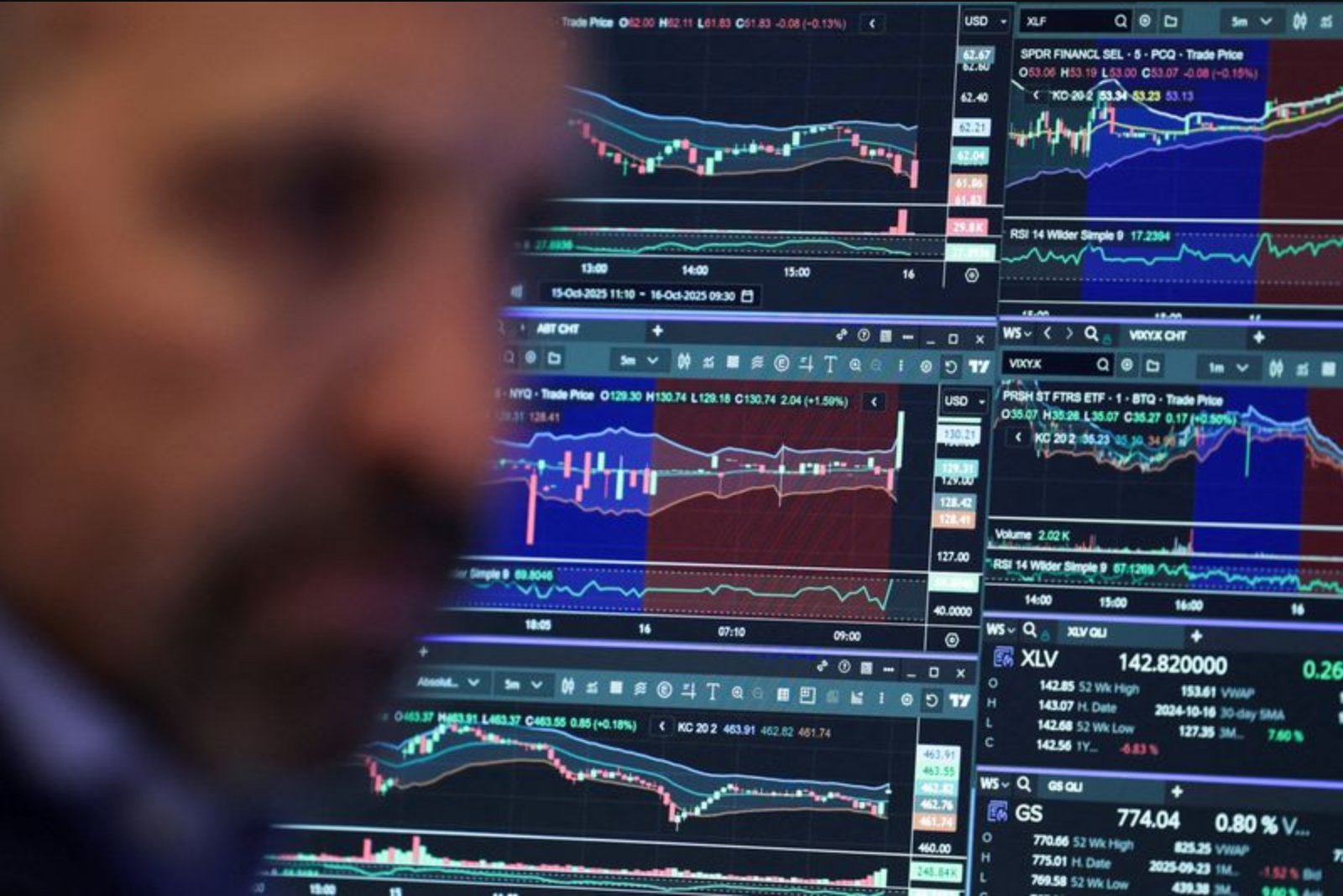
Markets around the world showed a pronounced relief reaction on Wednesday after the U.S. announced a two-week ceasefire with Iran. The announcement, made by U.S. President Donald Trump on Tuesday evening shortly before his deadline for Tehran to reopen the Strait of Hormuz, pushed benchmark crude below $100 a barrel and sparked notable gains in stocks and bonds while sapping some of the dollar's safe-haven strength.
The immediate market response was marked and broad-based. U.S. S&P 500 futures jumped roughly 2.5%, while major indices in Europe and Asia recorded their largest single-day percentage gains since April of last year. In Asia, Japan's Nikkei climbed more than 5% and South Korea's KOSPI rose over 6%. In early European trading, the STOXX 600 was up around 3.5%.
Sectors that benefit from lower energy costs and softer yields led the advance. Travel, banks, technology and industrials were among the top performers. In South Korea, chipmaker SK Hynix surged about 15% on elevated expectations for its upcoming results, following a very strong quarterly profit forecast from peer Samsung earlier in the week. Energy shares were the day's weakest performers amid the drop in oil prices, though they remain higher year-to-date.
Currency and fixed-income markets also moved sharply. The dollar index retreated from recent 11-month highs as the U.S. currency eased against major developed-market peers. The Japanese yen, which nearly hit 160 per dollar on Tuesday, pulled back from that level. Bond prices rallied across the board: U.S. Treasury yields fell as traders brought the prospect of Federal Reserve rate cuts back into consideration. Euro zone sovereign yields retreated as well, with market participants scaling back bets for additional ECB rate increases. The largest intraday yield moves occurred in Britain, where yields dropped more than 20 basis points.
Despite the pronounced relief rally, market participants were cautious about how long the calm would last. The ceasefire remains conditional on Tehran reopening the Strait of Hormuz; Iran has said it is prepared to do so if attacks on Iran cease. Traders and analysts warned that the headline outcome does not guarantee a permanent de-escalation of the broader conflict or a lasting easing of the energy shock.
Some observers pointed to how market expectations have shifted since the onset of hostilities. Not long ago, Brent crude trading above $90 a barrel would have been viewed as a negative for the global economy and equity markets; in the weeks since the conflict began, pricing for the scale of central bank easing has also changed compared with levels immediately prior to the war. As a result, investors noted that the current rally hinges on follow-through in diplomacy and whether negotiation talks can move the situation meaningfully beyond the current truce.
U.S.-Iran negotiations are slated to start on Friday, and markets will be closely monitoring those talks for signs of durable progress. The conditional nature of the ceasefire and the brief timeframe mean that traders remain prepared for volatility if the arrangement does not hold or if diplomatic efforts falter.
Energy flows could respond quickly if the Strait of Hormuz reopens. A temporary halt to hostilities and resumed shipments through the waterway would permit Middle Eastern exporters to move volumes of oil that have been stranded in the Gulf since fighting began, providing an immediate easing of some pressure on global energy markets, according to commentary by ROI Energy Columnist Ron Bousso.
On the immediate calendar, market-watchers flagged the U.S. 10-year note auction scheduled for 1 p.m. EDT as a key event to observe. Fixed-income demand and pricing at that sale will be monitored for signals about investor appetite given the sharp moves in yields earlier in the session.
What happened - at a glance:
- Two-week ceasefire announced by U.S. President Donald Trump, conditional on Tehran reopening the Strait of Hormuz.
- Brent and WTI futures fell back below $100 a barrel on the news.
- S&P 500 futures rose about 2.5%; Japan's Nikkei gained over 5%, South Korea's KOSPI rose more than 6%, and Europe's STOXX 600 was up around 3.5% in early trading.
- SK Hynix jumped roughly 15% on elevated earnings expectations after Samsung's strong quarterly profit forecast.
- The dollar index eased from near 11-month highs; the yen retreated from the 160-per-dollar threshold.
- Global bond prices climbed and yields fell, with British yields down more than 20 basis points.
Outlook and watch points:
- Negotiations between the U.S. and Iran, due to begin Friday, will be a key test of whether the ceasefire can be extended or translated into a more durable de-escalation.
- Oil market conditions could shift rapidly if the Strait of Hormuz reopens and previously trapped cargoes are exported from the Gulf.
- Investors will be assessing incoming data and auctions, including the U.S. 10-year note sale, for indications of how fixed-income demand holds up amid the move lower in yields.
Investors responded to the immediate reduction in headline geopolitical risk by shifting into risk assets and repricing rates expectations, but the brevity and conditional nature of the truce mean that vigilance remains high. The market's pronounced moves illustrate how tightly global asset prices have been linked to oil price trajectories and geopolitical developments since the conflict began.