
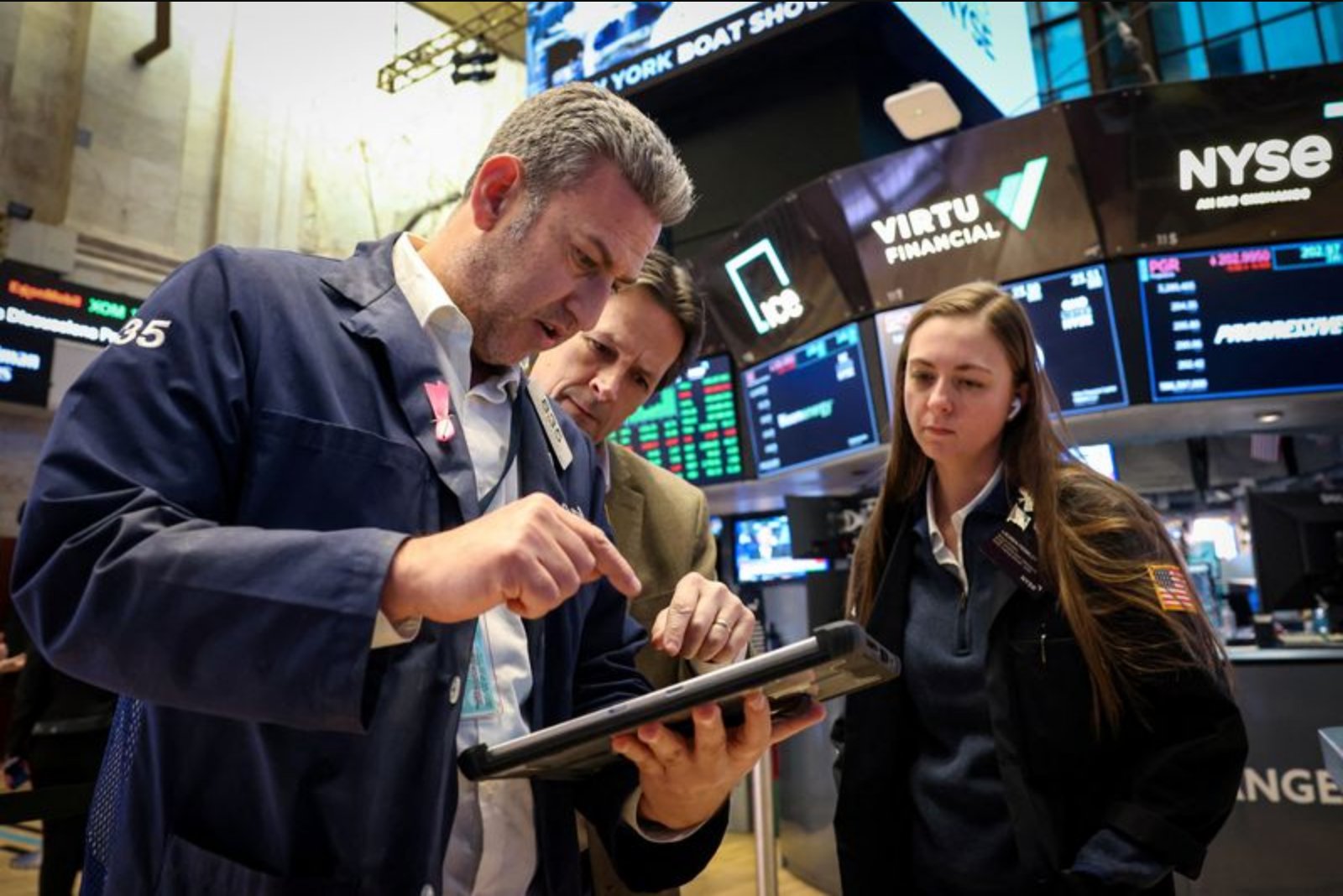
Equity markets advanced as the new trading week began, with major indices shrugging off a fresh U.S. tariff threat directed at South Korea and concentrating on corporate profit reports from large technology and industrial names.
Investors are braced for a wave of mega-cap earnings this week that includes Microsoft, Meta and Tesla, a factor that helped underpin demand for risk assets despite rising trade tensions. The S&P 500 closed 0.5% higher on Monday and futures were trading up ahead of Tuesday's open, while both Japan's Nikkei and South Korea's KOSPI also moved higher.
Notably, the KOSPI reached a new high even after it became the latest target of the U.S. administration's trade policy. The administration announced on Monday an increase in tariffs on imported South Korean goods to 25% from 15%. The move was attributed to what was described as a failure by the South Korean parliament to rapidly implement a pact struck last year with President Lee Jae Myung intended to boost investment in U.S. business projects.
Despite equities' resilience, markets exhibited signs of caution. Gold and silver held firm on Tuesday morning, reflecting sustained global uncertainty amid the prospect of further trade measures. The U.S. dollar also remained under pressure after a rough period that included the dollar index's largest three-day slide since last April. The index slipped further following a brief uptick on Tuesday.
Japan's yen remained near its strongest levels of the year, driven by ongoing speculation about potential joint U.S.-Japan action to bolster the currency ahead of next month's Japanese snap election. The yen's firmness has contributed to broader FX market unease as participants monitor signs of possible coordinated intervention.
All eyes are on the U.S. Federal Reserve, which begins a two-day policy meeting this week. Market expectations are for rates to be held steady, but volatility around the dollar could increase depending on how the Fed frames risks to its independence and how the U.S. administration responds to the policy stance. In the background, a heavy calendar of debt issuance has been weighing on fixed income, although long-term U.S. Treasury yields eased this week in the run-up to the Fed meeting.
In a contrasting trade development, other governments moved forward on reducing barriers. India and the European Union announced a long-delayed trade pact intended to cut duties on most goods. The agreement is reported to cover nearly 97% of EU exports and 99.5% of Indian exports. The deal, informally described as "the mother of all deals," will be formally signed after vetting in both India and the EU is completed, and an Indian government official said implementation should occur within a year.
Domestically, the U.S. administration appeared to moderate its stance following the fatal shooting of a second anti-ICE protestor in Minnesota on Saturday. After a private call with Minnesota Governor Tim Walz on Monday, the administration took a less confrontational tone, and a senior administration official confirmed that Gregory Bovino, a U.S. Border Patrol official who has drawn criticism from Democrats and activists, would be leaving Minnesota soon. The shift in tone unfolded against polling that showed Americans' approval of the administration's immigration policy had fallen to its lowest level since the start of the current presidential term, according to a Reuters/Ipsos poll conducted before and after Saturday's fatal shooting.
Market participants continue to watch currency intervention chatter closely. A chart highlighted by market analysts tracks three years of unilateral Japanese action to buy yen, while noting that joint action with Washington authorities has not been observed for about 15 years. The specter of coordinated intervention remains a source of market nervousness, especially for currency and interest rate markets.
Events and corporate calendar to watch this week
- U.S. January consumer confidence (10:00 AM EST)
- U.S. 5-year note auctions (1:00 PM EST)
- Federal Reserve Open Market Committee two-day meeting; decision due Wednesday
- Richmond Fed January business surveys (10:00 AM EST)
- Dallas Fed January service sector survey (10:30 AM EST)
Notable corporate earnings scheduled:
- Boeing
- General Motors
- HCA
- Invesco
- Kimberly-Clark
- NextEra Energy
- Northrop Grumman
- Packaging Corporation of America
- PPG Industries
- RTX Corp
- Seagate
- Synchrony Financial
- Sysco
- Union Pacific
- UnitedHealth Group
- United Parcel Service
Markets are balancing near-term corporate news and policy developments against ongoing geopolitical and trade risks. Investors continue to price in heightened sensitivity to central bank messaging, currency intervention speculation and the effects of potential tariff changes on global trade flows.