
Overview
At least 40% of Russia's oil export capacity has been halted after a wave of Ukrainian drone attacks, a disputed incident affecting a major pipeline and the seizure of tankers, according to calculations based on market data. That equates to around 2 million barrels per day (bpd) of crude that is currently not flowing to international buyers. The scale of the stoppage represents the most severe modern-era disruption to output from Russia, which is the world's second largest oil exporter.
Context and scale
The export curtailments have come at a time when global crude prices have moved above $100 a barrel amid the Iran war, intensifying the economic stakes for Moscow. Oil receipts are among the primary revenue sources for the Russian state, and the sector is central to an economy valued at about $2.6 trillion. Oil and gas revenues together account for roughly a quarter of state budget proceeds, making disruptions to export channels especially consequential for public finances.
What has been hit
Ukrainian forces have stepped up drone operations this month against Russia's oil and fuel export infrastructure. The strikes have affected all three of Russia's major western export ports - Novorossiysk on the Black Sea and Primorsk and Ust-Luga on the Baltic Sea. Reuters' calculations indicate that Primorsk, Ust-Luga and the Druzhba pipeline are among the routes currently out of action.
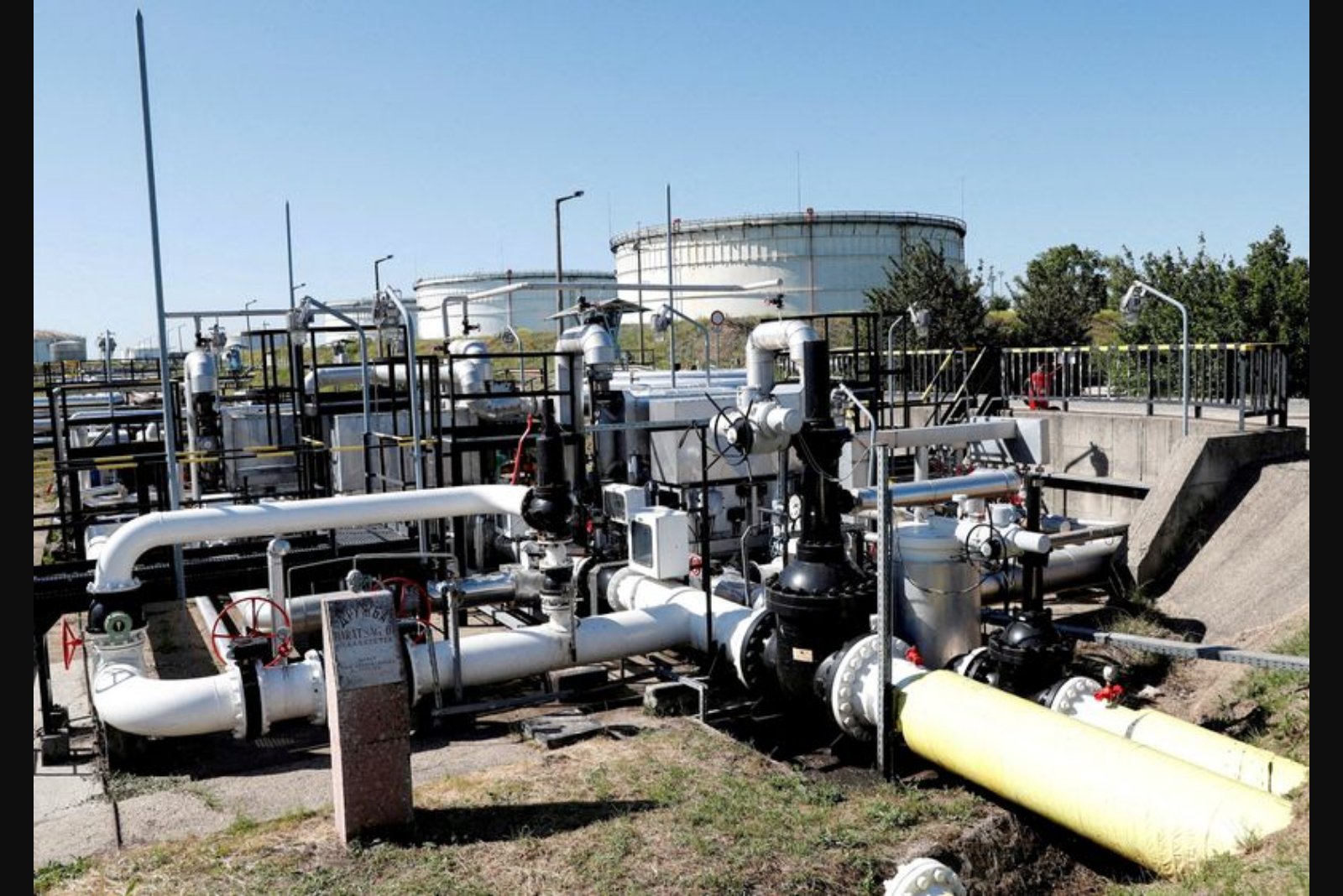
The Druzhba pipeline, which carries crude through Ukraine to refineries in Hungary and Slovakia, is included in the disruptions. Kyiv has also targeted pipeline pumping stations and refineries as part of its campaign, saying its aim is to reduce Moscow's oil and gas revenues and curtail military capacity. Russia has labelled the Ukrainian strikes as terrorist attacks and has responded by tightening security measures across its territory spanning 11 time zones.
Ports, pipeline damage and tanker seizures
Ukraine reported that a section of the Druzhba pipeline suffered damage from Russian strikes at the end of January, a development that prompted requests from both Slovakia and Hungary for Kyiv to resume supplies. The Novorossiysk oil terminal, which has capacity to handle up to 700,000 bpd, has been operating below planned loadings since it sustained heavy damage in an early-month Ukrainian drone attack.
Traders say that frequent seizures of vessels related to Russia have interrupted roughly 300,000 bpd of Arctic exports shipped from the port of Murmansk. Those tanker actions have further dented flows as western export routes face repeated disruption.
Shifting to Asian customers, with limits
With western outlets under pressure, Moscow is increasing its focus on Asian markets. However, traders note that eastbound options are constrained by capacity limits.
Russia continues to deliver oil to China via pipelines including the Skovorodino-Mohe and Atasu-Alashankou routes, and by sea through ESPO Blend exports from the port of Kozmino. Those three routes together account for about 1.9 million bpd. In addition, Russia is loading shipment volumes from two far eastern Sakhalin projects, sending roughly 250,000 bpd from the island. Traders also estimate that supplies to refineries in Belarus are running at about 300,000 bpd.
Implications
The combined effect of port damage, pipeline interruptions and tanker seizures has materially reduced Russia's western-facing oil export capacity, compounding pressure on prices at a moment of elevated geopolitical risk. How long these outages persist and how quickly alternative routing and loadings can be enhanced remain central questions for markets and for Russia's budgetary outlook.