
French President Emmanuel Macron announced on Wednesday that around 15 nations are engaged in planning efforts, under France's direction, to enable the resumption of maritime traffic through the Strait of Hormuz. The move follows the announcement of a ceasefire between the United States and Iran.
Macron described the planned operation as "strictly defensive" and said the participating countries are coordinating with Iran to facilitate the reopening of the strategic waterway, which normally carries about one-fifth of the world's oil supply.
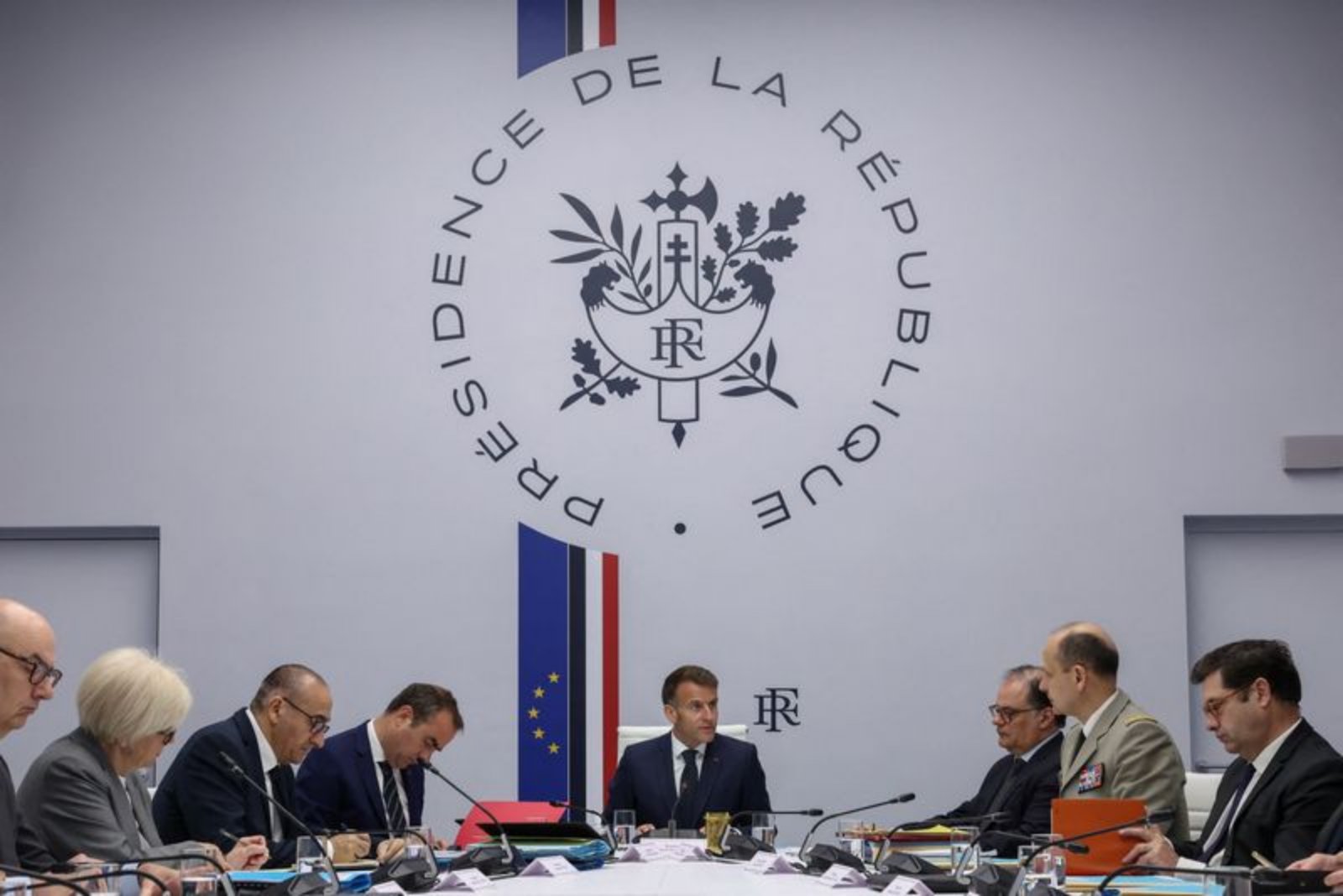
Speaking at the opening of a defence meeting with his advisers and members of the cabinet, Macron said: "About 15 countries are currently mobilised and are participating in the planning, under France's leadership, to enable the implementation of this strictly defensive mission in coordination with Iran to facilitate the resumption of traffic."
Macron said he welcomed the ceasefire between Iran and the United States. He also highlighted continuing instability in Lebanon, saying that the situation there remained critical and that Lebanon should be included in the ceasefire arrangement.
"Our wish in this context is to be assured that the ceasefire fully includes Lebanon," Macron said.
France maintains close ties with Lebanon, a former protectorate, and Macron's comments underscored Paris's interest in ensuring Lebanon is part of any broader de-escalation measures. Beyond the diplomatic emphasis, the announcement signals an international effort - coordinated by France - to provide a defensive presence focused on restoring safe passage through a narrow but economically vital maritime route.
The president's remarks came at the start of a defence meeting in which advisers and cabinet members were present to discuss the planning and coordination required for the mission. Details on the precise roles of the mobilised countries, timelines for implementation, and operational specifics were not provided in Macron's remarks.
Macron's statement links two threads: the immediate diplomatic development of a ceasefire between the United States and Iran, and a complementary security initiative led by France aimed at ensuring maritime traffic can resume through a chokepoint that is significant for global energy flows. At the same time, he drew attention to the unresolved and fragile situation in Lebanon and the need for that country to be included within the scope of the ceasefire.