
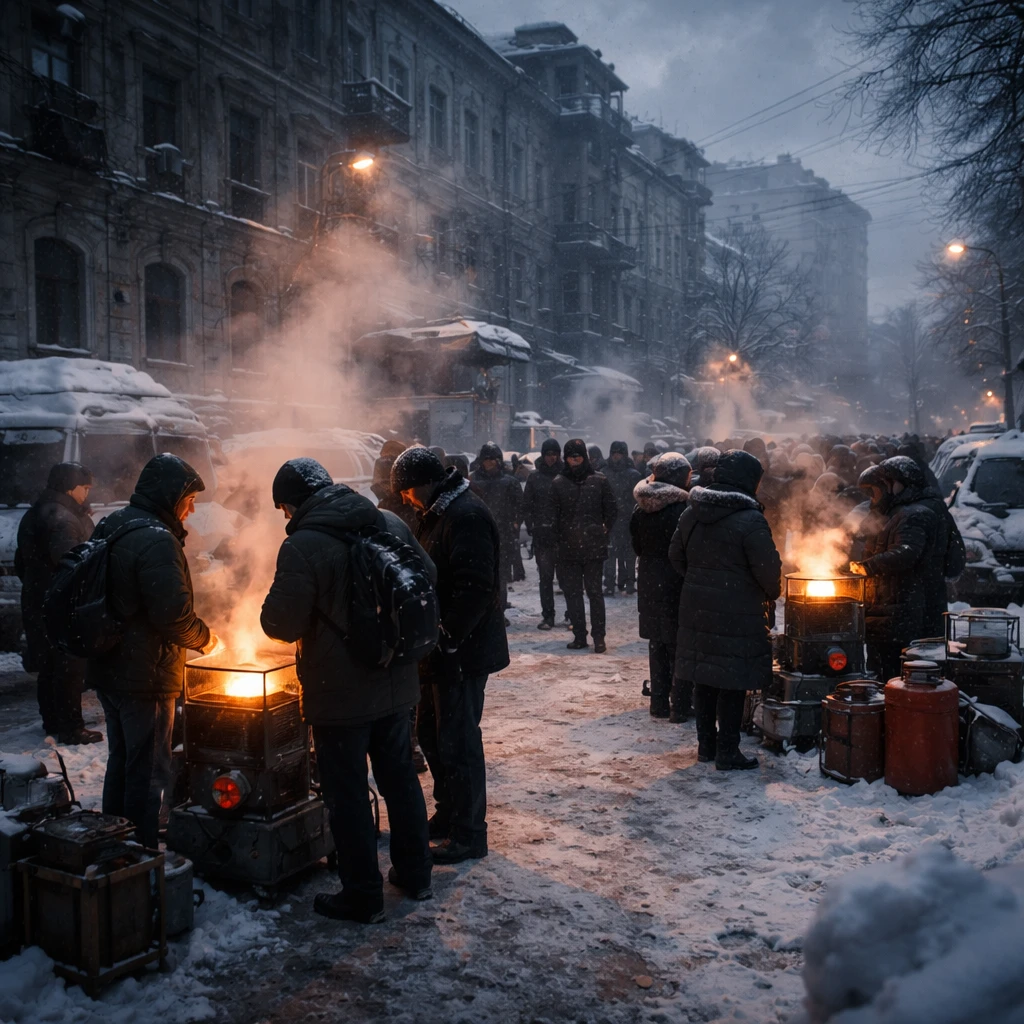
As Ukraine confronts the ruthless cold of winter, citizens of Kyiv are finding inventive ways to manage a stark lack of heating and electricity, a situation exacerbated by concerted Russian attacks on the country’s energy infrastructure. With temperatures dropping as low as minus 18 degrees Celsius and heavy snow blanketing the city, the struggle for warmth has become an arduous daily battle for millions.
Anton Rybikov, a 39-year-old military chaplain and father to young children, described the harsh conditions his family endures. In his home, he and his wife Marina have gathered backup batteries and sleeping bags to prepare for frequent power outages. Recently, one of his sons developed pneumonia after enduring a 19-hour blackout during which the apartment temperature fell to 9 degrees Celsius. "When there is no electricity, heating ceases, and the apartment literally freezes," Rybikov explained. He resorted to warming water in a metal milk churn to provide some relief.
Over recent months, Russian air and drone strikes have concentrated on critical urban centers like Kyiv, Kharkiv, and Dnipro, aiming to debilitate Ukraine’s military capabilities by targeting energy supplies. British military intelligence reports indicate a stark increase in unmanned aerial system attacks, with approximately 55,000 drones deployed in 2024—about five times more than the previous year. This barrage has severely disrupted power and water availability for hundreds of thousands in Kyiv’s three million population.
Following an intense overnight strike, President Volodymyr Zelenskiy revealed on January 21 that over a million households were without power, complicating everyday activities such as cooking and hygiene. The government’s response included declaring a state of emergency focused on the mounting energy crisis, a first since the conflict escalated nearly four years ago.
Despite Russia’s assertions that their strikes exclusively target military assets, Kyiv's mayor Vitali Klitschko contends the assaults are designed to undermine civilian morale and compel residents to abandon their homes. He stressed that Kyiv remains a primary target for Russian aggression intending to sap the city's spirit.
Amid these conditions, many inhabitants seek refuge in schools and temporary "invincibility points" where generators offer warmth, phone charging, and internet access. At one such site operated by World Central Kitchen, 66-year-old Valentyna Kiriiakova waited with her granddaughter for hot food. Her apartment’s power outage rendered cooking impossible. "We don’t complain because we understand that war demands endurance," she stated.
Ukraine’s energy sector has sustained significant damage: economy minister Oleksii Sobolev reported that since October, Russia’s attacks have incapacitated 8.5 gigawatts of generation capacity—nearly half of the country's typical consumption. Gas production facilities have also been targeted, cutting Ukraine’s domestic gas output by almost 50%, according to Naftogaz and the central bank governor, forcing increased reliance on imports. Olena Lapenko, safety and resilience director at the Dixi Group, remarked that the system isn’t destroyed but is deteriorating steadily under continuous pressure.
The impact of these disruptions extends broadly. Educational institutions have prolonged winter breaks, and numerous businesses have shifted to remote work or curtailed hours. Repair crews are stretched thin as they attempt to restore power amid worsening weather and extensive infrastructure damage. Hennadii Barulin, a digger operator, noted the physical challenge of repairing deeply frozen ground and asphalt under these conditions.
Officials warn of depleted stockpiles of energy equipment and urgent need for approximately $1 billion in financing to manage immediate repairs and bolster resilience. Western allies have supported Ukraine by supplying generators, robust batteries, and industrial boilers to partially offset shortages.
Newly appointed Energy Minister Denys Shmyhal acknowledged progress in deploying decentralized generation capacity, which reached 762 megawatts in 2025 compared to 225 megawatts the previous year. However, he emphasized that such advancements remain insufficient to meet the demands of the current crisis. Additionally, Shmyhal criticized Kyiv for lagging behind other cities in adopting independent energy generation, a claim rejected by mayor Klitschko.
With forecasts predicting continued freezing temperatures and further Russian offensives, energy experts anticipate ongoing challenges with limited prospects for near-term improvement. Confronted with worsening blackouts, Rybikov expressed willingness to send his children out of the city to safeguard their health. He underlined the fundamental necessity of warmth, asserting that while other hardships can be endured, preventing the children from freezing is paramount.