
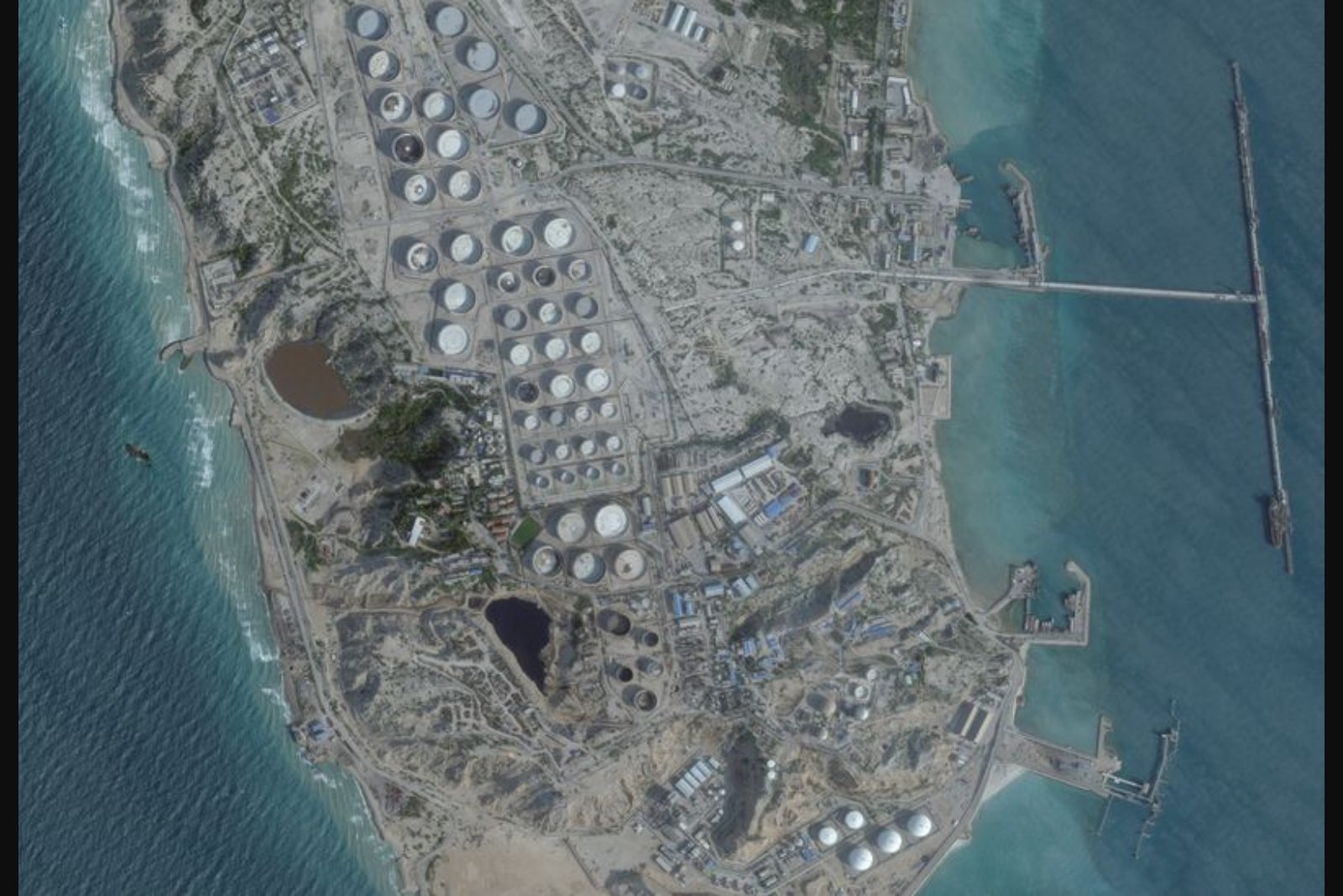
JP Morgan analysts say an operation to take control of Kharg Island - the key offshore terminal that handles the vast majority of Iran's crude exports - would immediately disrupt most of Tehran's ability to ship oil and could reduce the country's production by roughly half.
The analysts note that discussions within the U.S. administration about seizing the island were reported on March 7. Kharg Island lies about 30 km off Iran's coast in the Gulf and processes approximately 90% of the country's crude exports, making it a critical node in Iran's petroleum logistics.
"A direct strike would immediately halt the bulk of Iran's crude exports, likely triggering severe retaliation in the Strait of Hormuz or against regional energy infrastructure," JP Morgan wrote in its note.
Iran is the third-largest producer in the Organization of the Petroleum Exporting Countries, accounting for about 4.5% of global oil supplies. The country's current output is estimated at roughly 3.3 million barrels per day (bpd) of crude, in addition to about 1.3 million bpd of condensate and other liquids.
Historical precedent shows Kharg has been resilient to episodic attacks. During the 1979 hostage crisis, then-U.S. President Jimmy Carter imposed sanctions on Iran but did not order strikes on Kharg. In the 1980s, amid the Iran-Iraq Tanker War, the U.S. focused on protecting shipping and targeting Iranian vessels and missile batteries, while Kharg itself was left largely untouched.
JP Morgan highlighted that although Iraqi forces struck terminals and tankers during that eight-year conflict, Kharg remained largely operational and repairs were typically completed quickly. The bank said this history indicates that rendering the terminal inoperable would require sustained, large-scale attacks rather than isolated strikes.
The island receives oil through pipelines from Iran's largest producing fields including Ahvaz, Marun and Gachsaran. In the run-up to the reported U.S.-Israeli action, Iran is said to have lifted shipments from Kharg toward near-record levels: JP Morgan notes that over February 15-20, more than 3 million bpd were loaded from the island, nearly triple the terminal's typical export pace of roughly 1.3 million to 1.6 million bpd.
Storage on Kharg is estimated at about 30 million barrels. Data provider Kpler estimates that roughly 18 million barrels are currently stored on the island, which JP Morgan equates to around 10-12 days of exports under normal conditions.
Markets have already reacted to widening production cuts across the Middle East, with oil prices rising to $119 per barrel on Monday as disruptions extended to Iraq, Kuwait, Saudi Arabia and the United Arab Emirates.
Key points
- Seizing Kharg Island would likely halt most of Iran's crude exports and could cut national output by about half - impact significant for global oil supply and energy markets.
- Historical resilience of Kharg suggests disabling the terminal would require sustained, large-scale attacks - relevant for military planners and infrastructure insurers.
- Recent loading spikes and on-island stocks provide limited short-term buffer; storage is estimated at about 30 million barrels with roughly 18 million barrels currently held - affecting short-term supply and trading flows.
Risks and uncertainties
- Retaliatory attacks in the Strait of Hormuz or against regional energy infrastructure could further disrupt shipping and oil flows - a key risk for energy and shipping sectors.
- Damage to Kharg that exceeds quick-repair scenarios would prolong export outages and sustain higher prices - a risk for commodity markets and industries reliant on oil inputs.
- Estimates of loading and storage provide only a short-term cushion (10-12 days of exports under normal conditions) and may not prevent immediate price pressure - an uncertainty for traders and refiners.