
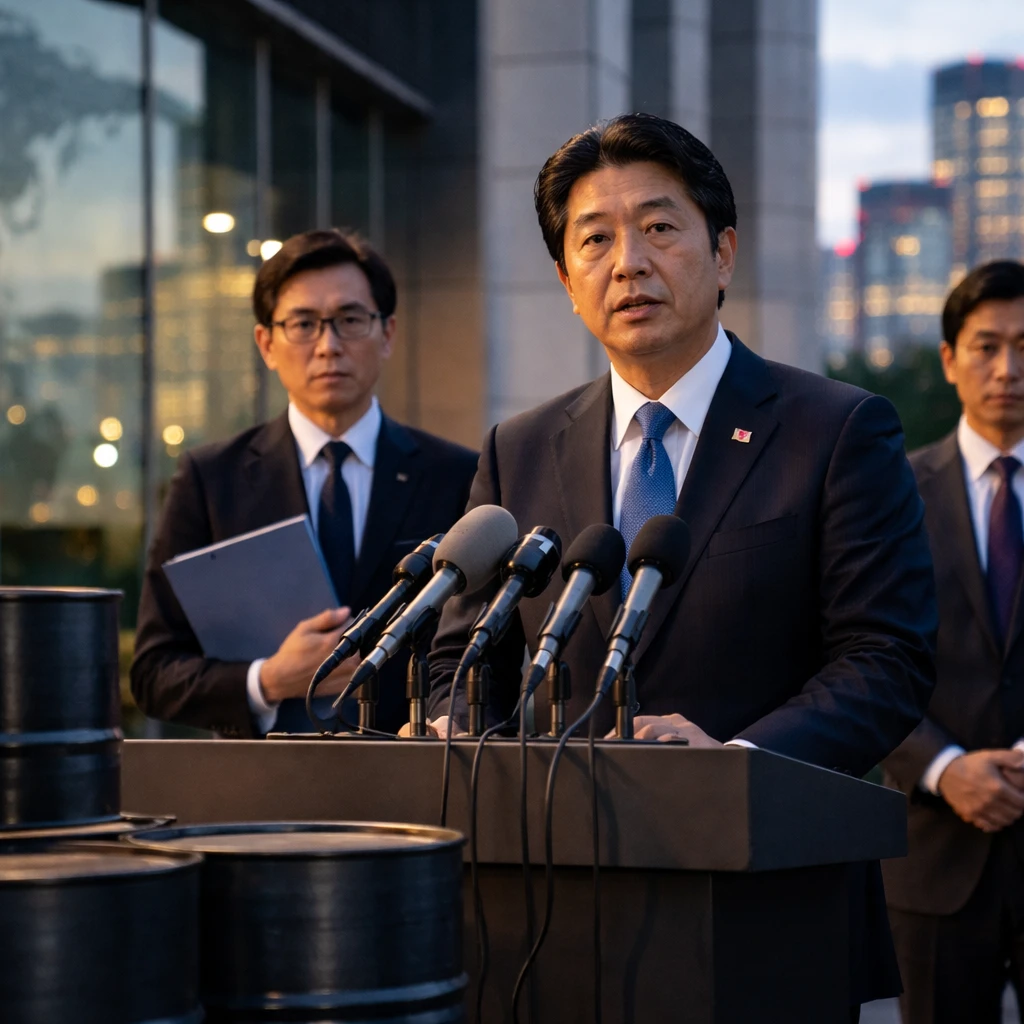
Tokyo - Japan plans to back a coordinated release of strategic oil reserves by members of the International Energy Agency as the war in Iran poses risks to the country's economy through higher import fuel costs and softer global demand.
Trade Minister Ryosei Akazawa, who is responsible for the nation's energy policy, told reporters Tuesday evening in Tokyo that such a joint release "is an effective means toward stabilizing the international market." The minister framed the potential action as a market-stabilizing tool rather than a standalone remedy.
Akazawa said he will participate in an online Group of Seven meeting Tuesday night with his counterparts, and he indicated that discussions there will likely include the IEA-coordinated oil releases. The minister did not offer additional policy specifics but emphasized multilateral consultation as the forum for decisions.
In his remarks Akazawa warned that Japan's economy could face substantial effects depending on how the situation in Iran develops. He said domestic concerns are rising and that authorities are paying close attention to unfolding events, signalling heightened monitoring by policymakers.
Japan's stance, as articulated by its trade minister, centres on using coordinated reserve releases as a tool to contain price volatility and sustain market functioning while governments assess longer-term implications for energy supply and demand.
Summary
Japan will support an IEA-coordinated release of oil reserves to help stabilize international markets amid the conflict in Iran, Trade Minister Ryosei Akazawa said. He will join an online G7 meeting where the coordinated release is expected to be discussed, and authorities are closely watching potential economic impacts.
Key points
- Japan supports a coordinated oil reserve release by IEA members to help stabilise markets.
- Trade Minister Ryosei Akazawa will join an online G7 meeting where IEA releases are likely to be on the agenda.
- Authorities are monitoring the situation closely as domestic concerns rise about possible economic effects.
Risks and uncertainties
- Escalation of the conflict in Iran could increase energy import costs for Japan - affecting energy-related sectors and broader economic activity.
- Reduced global demand tied to the conflict could weigh on Japan's export-dependent industries and wider market performance.