
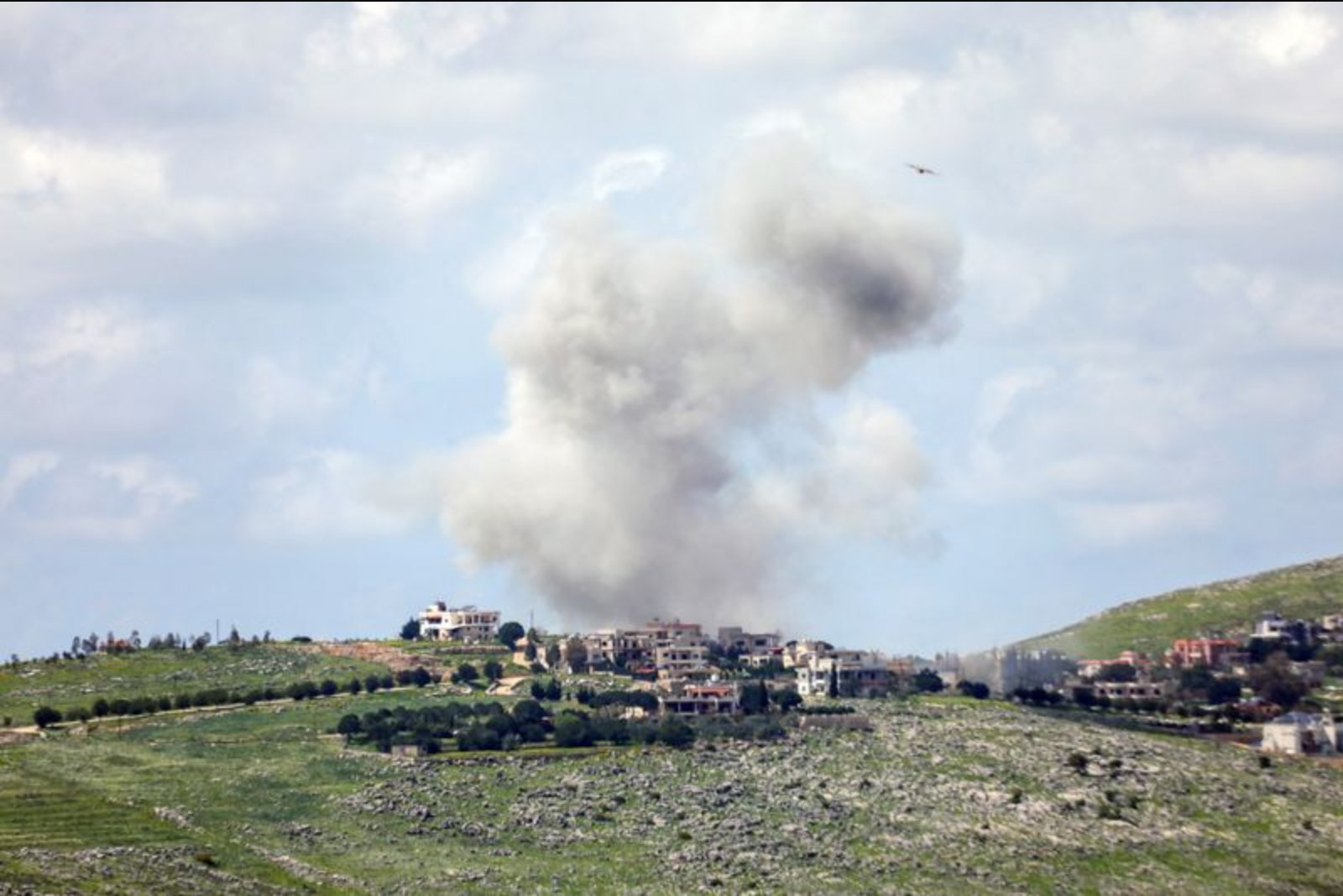
Israel's defence minister said on Tuesday that Israeli forces would occupy southern Lebanon up to the Litani River, describing the territory as a "security zone" and indicating an intention to seize an area amounting to nearly a tenth of Lebanon.
At a meeting with the military chief of staff, the defence minister said Israeli forces would "control the remaining bridges and the security zone up to the Litani," a river which meets the Mediterranean about 30 km (20 miles) north of Israel's border. The comments provided the clearest public statement to date of Israel's intention to hold that stretch of Lebanese territory.
Lebanon's Iran-backed Hezbollah responded with a promise to fight any attempt to occupy the south, calling such a move an "existential threat" to the Lebanese state. Senior Hezbollah lawmaker Hassan Fadlallah told reporters that any occupation south of the Litani would be met with resistance. "We have no choice but to confront this aggression and cling to the land," he said.
The defence minister had previously warned Lebanon's government that it risked losing territory if it did not disarm Hezbollah, which the defence minister blamed for drawing Lebanon into the U.S.-Israeli war on Iran after firing into Israel on March 2. Israel has a history of military incursions into Lebanon and maintained forces in the south until 2000.
Since March 13, Israel has destroyed five bridges over the Litani and has demolished homes in border villages, actions the defence ministry said were part of operations against Hezbollah. Under international law, attacks on civilian infrastructure, including homes and bridges, are generally prohibited.
The United Nations expressed alarm at the defence minister's statement. A United Nations spokesperson said the rhetoric was "very much concerning" and warned that such developments were "the last thing we would want to see. This is the last thing the Lebanese people in the south would want to see," speaking to reporters in New York.
The defence minister further stated there could be no homes or residents in areas of southern Lebanon where there was "terror," an apparent reference to Hezbollah. For the second time in a week, he compared operations in southern Lebanon to Israel's campaign in Gaza, saying buildings near the border were being demolished to create a defensive buffer.
Fighting and strikes across the border have already produced civilian casualties and displacement on both sides. Israel's ambulance service reported that a woman in Israel was killed near the border with Lebanon following missile fire toward northern Israel on Tuesday, and two others were wounded by shrapnel. The service did not specify where the missile was fired from.
Two Israeli soldiers have been killed in fighting in Lebanon since the war began. Lebanon's health ministry reported that Israel's strikes across Lebanon have killed more than 1,070 people, including more than 120 children, 80 women and 40 medics. The ministry does not otherwise distinguish between civilians and militants. More than one million people have been displaced by strikes and evacuation orders, though thousands remain in parts of the south.
The Lebanese health ministry also reported that a 15-year-old boy was killed early on Tuesday when Israeli troops carried out an incursion into the southeastern town of Halta and abducted a man. The Israeli military did not immediately respond to a request for comment on that incident.
Residents who have fled southern towns voiced frustration at perceived governmental silence. Najib Hussein Halawi, who fled his hometown of Kfar Kila near the border, asked: "If our government isn’t standing with us, what is it we can do?"
An overnight strike on an apartment southeast of Beirut killed three people, including a three-year-old girl, according to the health ministry. The blast tore open walls and scorched furniture in a neighbouring apartment. The neighbouring apartment's owner, Rawaa Eido, said in tears that militants who expect to be targeted should not be staying in residential buildings. "We don’t have any political affiliation to anyone at all...Why - when they’re being targeted - do they want to hide in houses among people?" she asked. There was no comment from the Israeli military on that strike.
Separately, later on Tuesday an Iranian missile was intercepted in Lebanese airspace by a launch from a foreign vessel off Lebanon's shores, according to three security sources. The Israeli military also said the missile was fired from Iran. Shrapnel from the interception landed in several Lebanese towns.
In a diplomatic move, Lebanon declared the Iranian ambassador persona non grata on Tuesday and gave him until Sunday to leave, after ordering the departure of dozens of other Iranian nationals including diplomats earlier this month. Lebanon said the action did not represent a severing of diplomatic ties with Iran. Israel's foreign minister praised the decision, while Hezbollah condemned it.
The statement by Israel's defence minister, the reaction from Hezbollah, the United Nations' public concern and the continuing strikes and infrastructure damage together underscore an escalating security and humanitarian situation in southern Lebanon. The defence minister's description of a "security zone" and explicit intention to control bridges and territory up to the Litani mark a notable shift in publicly stated objectives for the conflict.
Authorities on both sides and international observers will be monitoring whether the declared intent to occupy territory up to the Litani is implemented and how Hezbollah and Lebanese institutions respond. For now, people in the border regions are facing continued strikes, the destruction of infrastructure and widespread displacement, while diplomatic tensions between Lebanon and Iran have increased following the persona non grata declaration.
- Summary: Israel announced plans to occupy southern Lebanon up to the Litani River, calling it a "security zone." Hezbollah vowed to resist, the United Nations voiced concern, and strikes and infrastructure damage have produced significant casualties and displacement.
- Key points:
- Israel's declared intention to control territory up to the Litani River and to "control the remaining bridges" in that zone; this directly affects transportation and infrastructure in southern Lebanon.
- Hezbollah pledged to resist any occupation, raising the likelihood of continued or intensified armed confrontation in the south, with implications for regional security and defence sectors.
- Strikes and demolitions have resulted in significant civilian casualties and displacement, which will affect humanitarian relief operations and logistics for aid delivery.
- Risks and uncertainties:
- Risk of extended ground occupation and ongoing fighting in southern Lebanon - this poses threats to transport infrastructure, cross-border trade and civilian safety.
- Uncertainty over escalation involving regional actors after the interception of a missile reportedly fired from Iran and the diplomatic expulsions; this could complicate diplomatic channels and humanitarian access.
- Humanitarian strain from extensive displacement and damage to civilian infrastructure, complicating logistics for aid delivery and medical services in affected areas.