
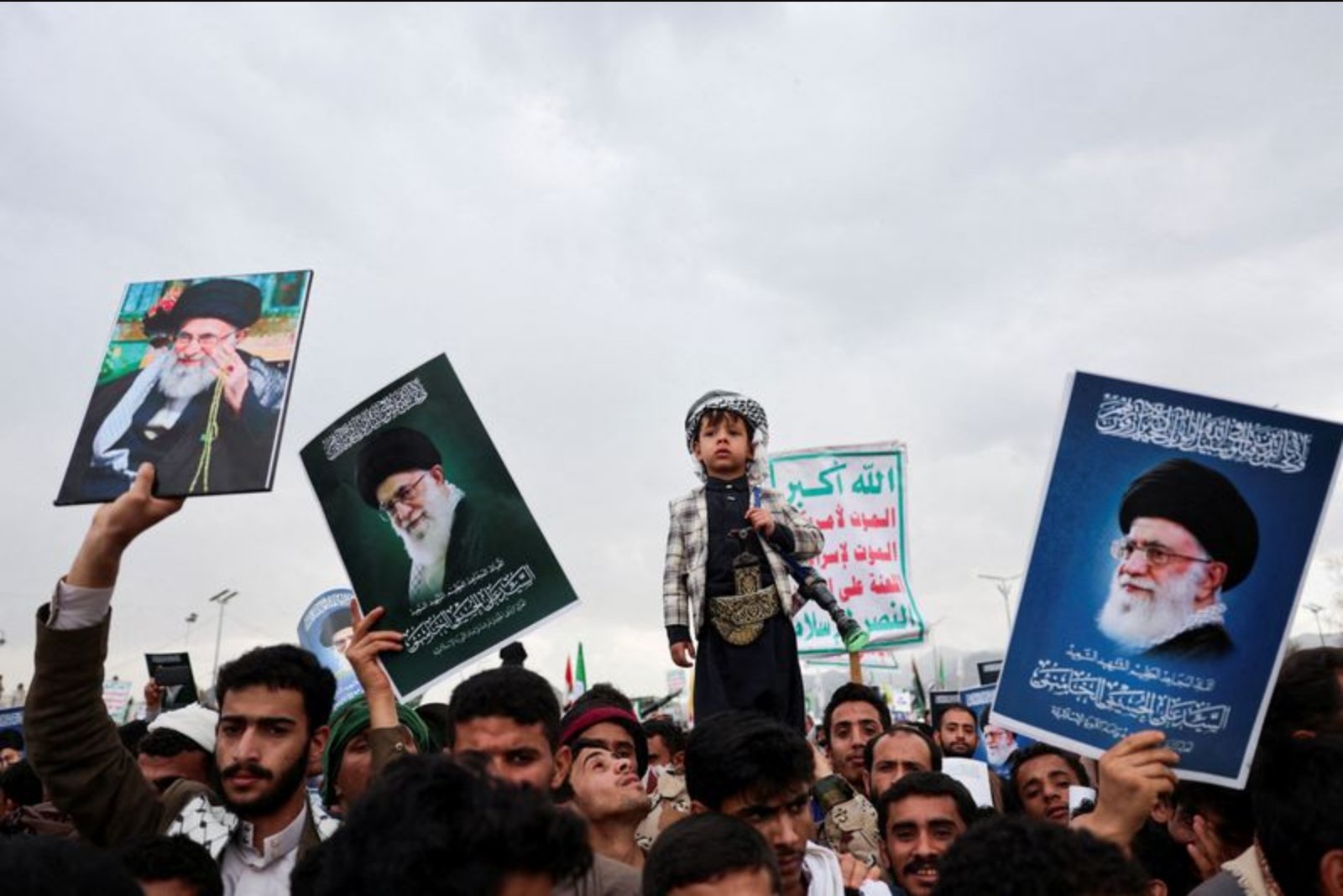
Yemen's Houthi movement, aligned with Iran, says it stands prepared to open a new front in the regional war if circumstances require, a development that would heighten risk to one of the world’s most important maritime chokepoints, according to a Houthi leader who spoke on condition of anonymity.
The militant group, which carried out attacks across the Red Sea that disrupted international shipping and commerce amid the Gaza war, said it is ready to act in solidarity with Tehran and could once again target critical sea lanes that carry crude oil and other commodities. The leader told Reuters the group is "fully militarily ready with all options" and that final decisions on timing would rest with movement leadership.
"We stand fully militarily ready with all options. As for other details having to do with determining zero hour they are left to leadership and we are monitoring and following up with the developments and will know when is the suitable time to move," the Houthi leader said, speaking anonymously because of the sensitivity of the issue.
"Until now Iran is doing well and is defeating the enemy every day and the battle is going in its direction. If anything contrary to this happens then we can assess."
Diplomats and analysts cited in reporting say the Houthis may be waiting for a strategically advantageous moment to enter the conflict in coordination with Iran, so as to exert maximum pressure on regional sea routes. One such opportunity could be the effective closure of the Strait of Hormuz to Gulf Arab hydrocarbon exports, which has increased reliance on the Red Sea for shipping.
Iran’s semi-official Tasnim news agency on Wednesday quoted an unnamed Iranian military source saying Tehran could open a new front in the Bab al-Mandab Strait if attacks were carried out on Iranian territory or its islands. The report aligns with concerns that Iran and its regional allies have been expanding their involvement - Iran’s Shi'ite allies in Lebanon and Iraq have already joined the conflict triggered by U.S. and Israeli strikes on Tehran.
While Lebanon’s and Iraq’s groups have become combatants, the Houthis - who are heavily armed and capable of striking Gulf neighbours and disrupting maritime navigation around the Arabian Peninsula - have not officially declared a sustained campaign beyond previous Red Sea actions.
Bab al-Mandab, also known as the Gate of Tears because of its navigational hazards, forms the southern outlet of the Red Sea between Yemen on the Arabian Peninsula and Djibouti and Eritrea on Africa’s coast. The strait is a vital artery for global seaborne trade, carrying crude oil and fuels from the Gulf bound for the Mediterranean via the Suez Canal or the SUMED pipeline on Egypt’s Red Sea coast, as well as commodities headed for Asia, including Russian crude.
At its narrowest point the Bab al-Mandab is 18 miles (29 km) wide, funneling traffic into two channels for inbound and outbound shipments and making it a particularly sensitive location for any sustained attacks or military activity.
After the October 7, 2023 attack on Israel by the Palestinian militant group Hamas, which precipitated a large-scale Israeli military campaign in Gaza, the Houthis began firing on international shipping in the Red Sea in stated support of the Palestinians. The movement halted those strikes following a U.S.-brokered ceasefire between Israel and Hamas in October 2025.
"When they see Iran is needing them the most then they will move," Amr Al-Bidh, a senior leader of Yemen’s separatist Southern Transitional Council, told Reuters in Geneva, reflecting a view that Houthi actions could be timed to support Tehran if required.
Any Houthi decision to engage in new strikes around the Bab al-Mandab could further complicate efforts to maintain secure transit of energy and other commodities through a route that already carries a substantial portion of global seaborne oil and fuel shipments. Such disruption would add to the geopolitical and economic pressures stemming from the wider Middle East conflict.
Summary
The Iran-aligned Houthi movement in Yemen says it is militarily prepared to open a new front in support of Tehran, potentially targeting the Bab al-Mandab Strait - a narrow and strategically vital southern passage of the Red Sea - which would exacerbate current disruptions to global shipping and fuel flows.
Key points
- The Houthi movement has declared it is "fully militarily ready" and will follow leadership direction on whether and when to act.
- Bab al-Mandab is a critical chokepoint connecting the Red Sea to the Gulf of Aden and onward to the Suez Canal and SUMED pipeline, carrying significant volumes of crude oil and other commodities.
- Previous Houthi attacks on Red Sea shipping during the Gaza war disrupted international trade; the movement halted those strikes after a U.S.-brokered ceasefire in October 2025.
Risks and uncertainties
- Potential for renewed attacks on Bab al-Mandab could further impede global seaborne oil and fuel shipments, affecting the energy sector and broader trade flows.
- Coordination between the Houthis and Iran - if it occurs - would increase regional military complexity and raise the possibility of wider maritime disruption, with implications for shipping, insurance and logistics sectors.
- Timing and scale of any Houthi action remain uncertain - leaders have signaled readiness but said decisions on a "zero hour" would be made by movement leadership, leaving markets and policymakers with limited visibility.