
U.S. President Donald Trump and Israeli authorities intensified demands on Iran to reopen the Strait of Hormuz while search-and-rescue operations continued for a U.S. airman missing after one of two American warplanes was downed. The president reiterated a tight deadline for Iran to agree to terms, and Israeli defence sources said preparations were underway to strike Iranian energy facilities pending U.S. approval.
On his social media account, Trump said he had given Iran "ten days to MAKE A DEAL or OPEN UP THE HORMUZ STRAIT. Time is running out - 48 hours before all Hell will reign (sic) down on them. Glory be to GOD!" The message followed a pattern of public statements in which the president alternated between hinting at possible diplomatic progress and threatening substantial military action, including earlier warnings to strike Iranian power plants if his conditions were not met.
According to a senior Israeli defence official, Israel had drawn up plans to target Iranian energy infrastructure and was awaiting U.S. sign-off; the official said any such attacks would likely occur within the next week. The prospect of coordinated strikes on energy facilities adds pressure on Tehran as the broader conflict carries on into its sixth week.
Iranian response and ongoing warnings
Iran issued stern warnings against an escalation, according to Iranian media, saying that an intensification of attacks would make "the entire region will become a hell for you." Tehran has shown continued defiance since the start of the conflict, even as its foreign minister left the possibility of mediated talks open in principle.
Foreign Minister Abbas Araqchi said Iran was grateful for Pakistan's mediation efforts and that Tehran had not refused to travel to Islamabad, but emphasized that Iran's priority was the terms for a "conclusive and lasting END to the illegal war that is imposed on us," comments posted on X. Araqchi also warned the United Nations about the risks to nuclear facilities after a fourth strike near the Bushehr power plant, describing an "intolerable situation that poses a serious risk of radiological release," according to Iran's state media.
Widening violence and impact on energy routes
The fighting has already inflicted substantial casualties and contributed to an energy shock as Tehran has effectively closed the Strait of Hormuz, a sea lane that normally carries about one-fifth of global oil and liquefied natural gas shipments. Iran has launched missiles and drones at Israel and at Gulf states aligned with the United States, while those Gulf countries have so far refrained from direct involvement amid concerns over further escalation.
Iranian state television reported that its military targeted U.S. radar sites, a U.S.-linked aluminium plant in the United Arab Emirates, and U.S. military headquarters in Kuwait in retaliation for strikes on Iranian industrial centres. State media also said Iran attacked an Israel-affiliated vessel in the strait with a drone, setting the ship alight, citing a commander of the Revolutionary Guards' navy.
Yemen's Iran-aligned Houthi group announced what it described as an attack on Israel using a ballistic missile and drones, claiming the operation was conducted jointly with Iran's Revolutionary Guards, the Iranian army, and Lebanon's Hezbollah. The Houthis did not supply evidence for the damage caused, and Israel did not confirm the reported strike.
Downing of U.S. aircraft and search operations
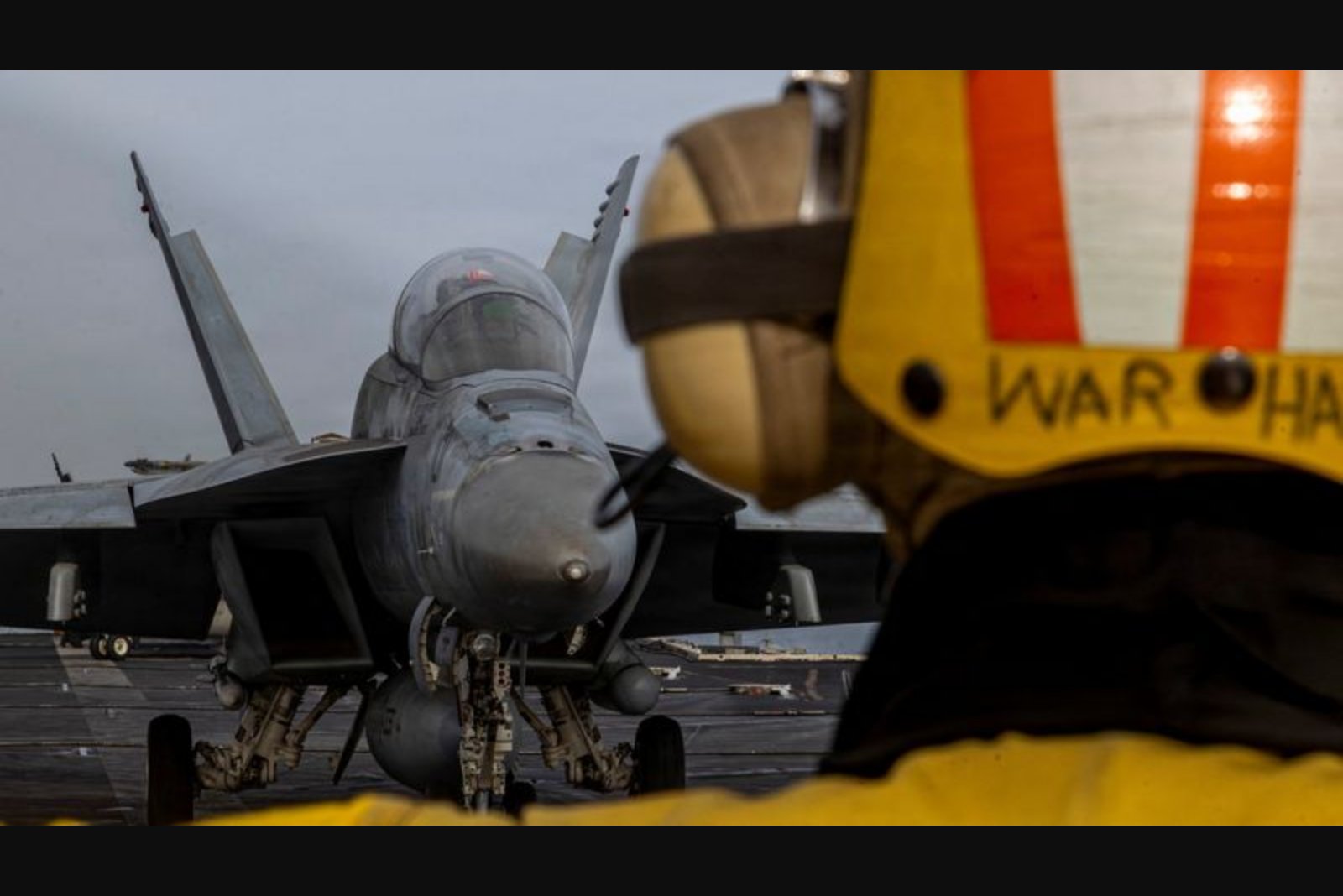
The downing of two U.S. warplanes underscored persistent risks to U.S. and Israeli air operations despite assertions from the White House and the U.S. Defense Secretary that American forces maintained control of the skies. Iranian fire brought down a two-seat U.S. F-15E jet, officials said, and U.S. search-and-rescue efforts recovered one of the crew. Two Black Hawk helicopters involved in the search were struck by Iranian fire but managed to exit Iranian airspace, U.S. officials told Reuters.
Separately, an A-10 Warthog fighter was hit and went down over Kuwait; the pilot ejected, according to U.S. officials. Iran's Islamic Revolutionary Guard Corps said it was conducting sweeps in a southwestern area near where the U.S. aircraft came down, while a regional governor promised a reward for anyone who captured or killed "forces of the hostile enemy," comments reported by Iranian outlets.
Iranian air-defence claims and retaliatory strikes
Iranian forces celebrated recent battlefield successes. The Khatam al-Anbiya joint military command said it had employed a newly unveiled air-defence system that targeted a U.S. fighter jet, three drones, and two cruise missiles. A spokesperson for the command, quoted by state media, said, "The enemy should know that we rely on new air-defence systems built by the young, knowledgeable, and proud people of this country, unveiling them one after another in the field."
The Revolutionary Guards reported launching missiles and drones at various targets in Israel. Israeli media said two warheads from an Iranian cluster missile landed near the Kirya military headquarters in Tel Aviv. Later on Saturday, the Israel Defense Forces reported detecting additional missiles launched from Iran toward Israel.
Strikes on industrial and petrochemical facilities
Iranian state media reported airstrikes on a petrochemical zone in southwestern Iran, noting five injuries and that a fire had since been extinguished. Israeli Prime Minister Benjamin Netanyahu acknowledged that Israel had struck the plant. An Israeli military spokesperson described the facility as producing materials used for explosives and missiles.
In parallel, Israel continued operations against Hezbollah targets in Lebanon after the militant group fired on Israel in solidarity with Iran. Israeli forces said they struck Hezbollah infrastructure in Beirut and later reported an Israeli soldier killed in fighting in southern Lebanon.
Political and public dynamics
Washington faces increasing strategic and political challenges as the conflict drags into a sixth week. The prospect that a U.S. service member may be alive and evading capture inside Iran raises stakes for the U.S. government. At the same time, the likelihood of immediate peace talks appears limited, and public opinion polls reportedly show low support for the war.
Military leaders and political figures on both sides continue to issue hardline statements while diplomatic channels remain strained. Iran signalled conditional openness to mediated talks but stressed its demand for terms that would secure an end to what it calls an illegal war imposed on the country.
Outlook
With threats of strikes against energy infrastructure, continuing air and missile engagements, and active search-and-rescue operations for downed aircrew, the situation remains volatile. The confluence of attacks on military, industrial, and energy sites across the region maintains high operational and economic risks while complicating diplomatic options.