
Donald Trump’s sudden decision to pause planned U.S. strikes on Iranian energy infrastructure followed a sequence of warnings from Gulf Arab states and widening regional unease that Washington had underestimated Tehran’s capacity and willingness to escalate, regional sources and analysts said.
Multiple Gulf capitals, speaking to U.S. officials, warned directly that attacks on Iran’s electricity grid or power plants would invite Iranian retaliation against energy and desalination facilities located in Gulf states, according to three regional sources who asked not to be named due to the sensitivity of the issue.
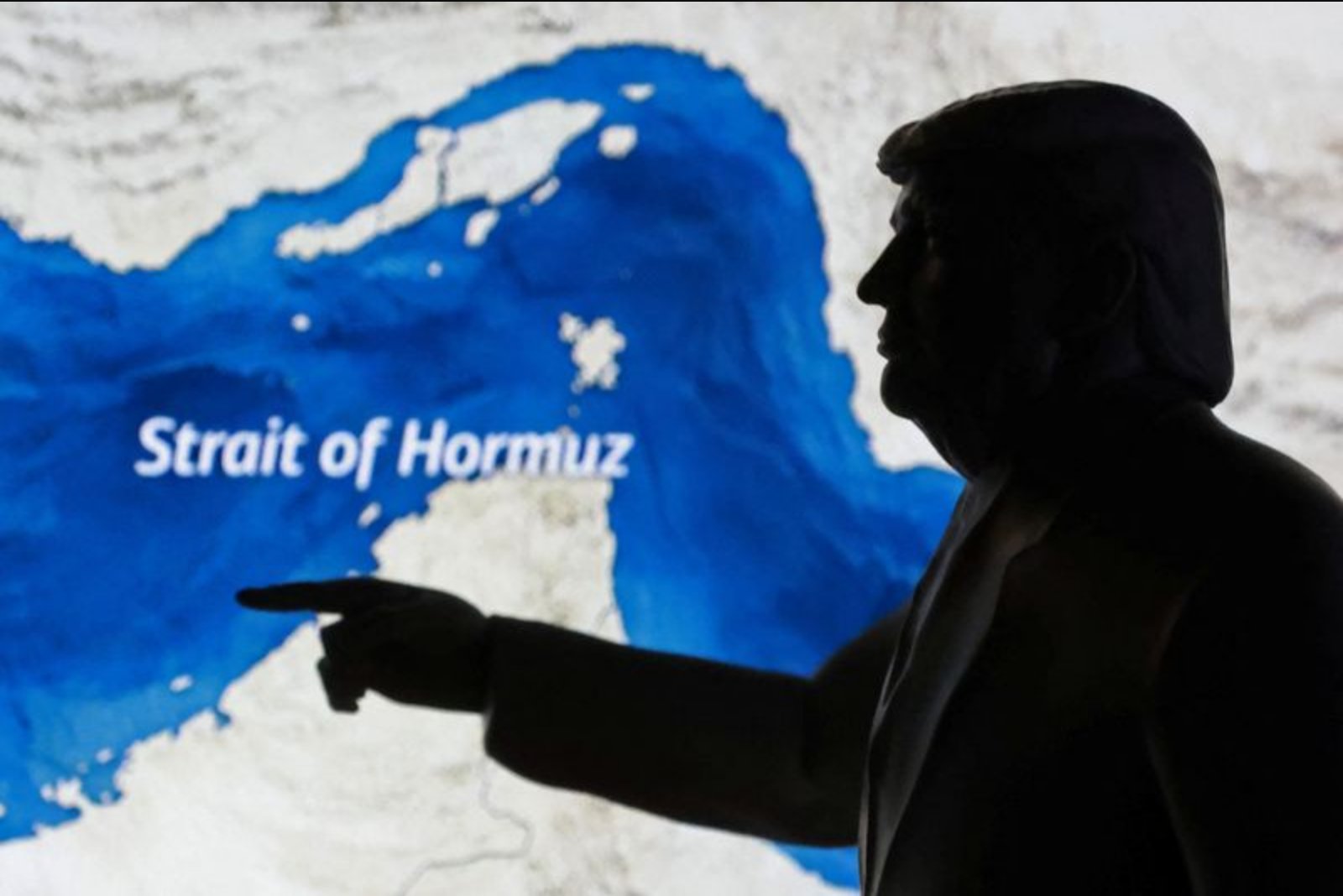
The confrontation intensified after the president threatened to strike Iran’s power infrastructure unless Tehran reopened the Strait of Hormuz - the strategic waterway that moves about a fifth of global oil and gas exports from Gulf producers. Iran did not comply with the demand, the strait remained closed at times, oil prices spiked and global equities suffered declines, exposing limits to the influence the White House was attempting to project.
Regional officials said Iran conveyed a stark warning to Gulf capitals through an Arab intermediary: any U.S. attack on Iranian power plants would trigger unlimited retaliation, according to two other regional sources. That threat materially changed calculations in Washington and among U.S. partners.
"Trump totally miscalculated when he said ’you’ve got 48 hours to open the strait’," said Alan Eyre, a former U.S. diplomat and Iran specialist. "Once it became clear Iran was serious about hitting Gulf energy infrastructure in response, he had to back down."
Analysts such as Alex Vatanka of the Middle East Institute said Tehran surprised U.S. policymakers by both remaining in the fight and by demonstrating a readiness to escalate without apparent constraint. "They showed no inhibitions, no restrictions, no holdbacks," Vatanka said.
There was no immediate public comment from Iranian authorities, Gulf Arab governments or the U.S. State Department for this reporting. A White House spokeswoman, Anna Kelly, said the president had judged that U.S. forces were close to completing defined objectives for Operation Epic Fury and that the president remained in close contact with partners in the region. Kelly added: "The President is in close contact with our partners in the Middle East, and the terrorist Iranian regime’s attacks on its neighbors prove how imperative it was that President Trump eliminate this threat to our country and our allies."
Regional sources and analysts interpret the pause as an acknowledgment that a conflict the president threatened to escalate had spun partly beyond U.S. control and that the immediate costs were now greater than the political benefits of appearing resolute.
In the background, diplomatic channels and intermediaries were active to limit a broader spillover. Pakistan, Turkey and Egypt were among the countries involved in behind-the-scenes efforts to reduce the risk of further regional entanglement, alongside Gulf partners worried about being drawn into a war they had not chosen and could not control.
Ebtesam Al-Ketbi, president of the Emirates Policy Center, suggested the pause could point in more than one direction. One possibility, she said, is a tactical pause - a window to finish deployments, observe Iran’s reactions and issue a final warning before any larger action. The other possibility is strategic - a move to de-escalate and create conditions for a broader settlement that could include a reset of regional rules of engagement in the Gulf. In either scenario, Al-Ketbi emphasized, the conflict itself has not ended but been converted into leverage.
From the start of the confrontation, Iran escalated its campaign by targeting Gulf infrastructure and commercial shipping, raising the prospect of prolonged disruption to oil, gas, liquefied natural gas and trade transiting the Strait of Hormuz. Vatanka argued that the Gulf states bore the heaviest immediate consequences. "If I were a Gulf leader, I’d be furious," he said. "They were put at enormous risk without their consent, and the damage inflicted in four weeks could take years to undo."
Analysts and regional officials said the White House misjudged Iran’s resilience and the scale of regional and global fallout. Expecting Tehran to be either too weak, divided or deterred to respond, Trump instead faced a pattern of asymmetric escalation that imposed considerable costs on U.S. partners and on the global economy.
Faced with that outcome, Trump followed a familiar pattern according to analysts: sharp rhetoric combined with a strategic delay. Preserving options required stepping back from a course of action that risked transforming a demonstration of resolve into a protracted and politically damaging quagmire.
The broader implication, analysts say, is that the conflict has eroded the previous status quo the administration appeared to think could be reshaped. Iran remains damaged but not defeated, and the episode reinforced Tehran’s belief in the utility of deterrence. Iranian calculations now mix newfound confidence with caution: extract durable concessions from the confrontation or face renewed conflict, analysts said.
"Iran feels partly emboldened and partly afraid," Eyre said. "They’ve taken heavy damage, destruction and death, and don’t want to go through this again. But they can’t go back to the old status quo" because the risk of renewed strikes from actors such as Israel would persist, he added.
Senior sources in Tehran told regional interlocutors that Iran’s negotiating posture has hardened since hostilities began, signaling that any serious talks would come at a steep political and strategic price for the United States. Those sources said Iran would demand binding guarantees against future military action, compensation for wartime losses and formal control over the Strait of Hormuz as part of any settlement. Attempts by Iran to assert control over the strait would alarm Gulf states that share the waterway, and would raise fears that Tehran seeks a regional order tilted to its advantage at the expense of Gulf interests.
Abdulaziz Sager, chairman of the Gulf Research Center, warned that the strait remains a vital conduit for commerce and energy and that its stability is non-negotiable. Vali Nasr, an academic and foreign policy analyst, said Tehran is no longer seeking a return to pre-conflict arrangements but is eyeing a broader settlement that could include security guarantees, economic relief and a new balance of power within the Gulf.
U.S. officials and regional sources indicated an openness to indirect engagement with Iran through intermediaries even while both sides continue to publicly posture hard. Analysts identify Iran’s parliament speaker Mohammad Baqer Qalibaf, a former Revolutionary Guards commander, as a central figure who could negotiate while retaining credibility with the country’s hardline factions.
Even as Tehran signals a conditioned willingness to enter talks, its stance remains cautious - projecting deterrence while visibly marked by the costs it has endured. Iranian-American historian Arash Azizi described Tehran’s approach as one of showing strength without inviting further destruction. He noted that any sustained resolution would likely need regional acceptance and possibly the involvement of other global powers, according to the sources quoted.
Key points
- Gulf Arab states privately warned U.S. officials that strikes on Iran’s power plants would trigger Iranian retaliation against Gulf energy and desalination facilities, increasing the risk of wider regional damage - sectors affected include oil, gas, LNG and utilities.
- Iran’s escalation and apparent readiness to hit Gulf infrastructure narrowed U.S. options, prompting President Trump to pause strikes - this move affected global energy markets and equity markets which experienced volatility.
- Behind-the-scenes diplomacy via intermediaries such as Pakistan, Turkey and Egypt, along with Gulf partners, sought to limit spillover even as both Washington and Tehran publicly maintained hard lines.
Risks and uncertainties
- Further escalation that targets Gulf energy infrastructure could produce prolonged disruptions to oil, gas and LNG flows, with significant implications for energy markets and economies dependent on those exports.
- Attempts by Iran to secure formal control or exclusive guarantees over the Strait of Hormuz would alarm Gulf states and could recalibrate regional balances of power, introducing uncertainty for trade and shipping sectors.
- Negotiations conducted indirectly through intermediaries may leave outcomes opaque and contingent on fragile regional buy-in, increasing the risk that any agreement could unravel or fail to address compensation and security guarantee demands.
Disclosure: