
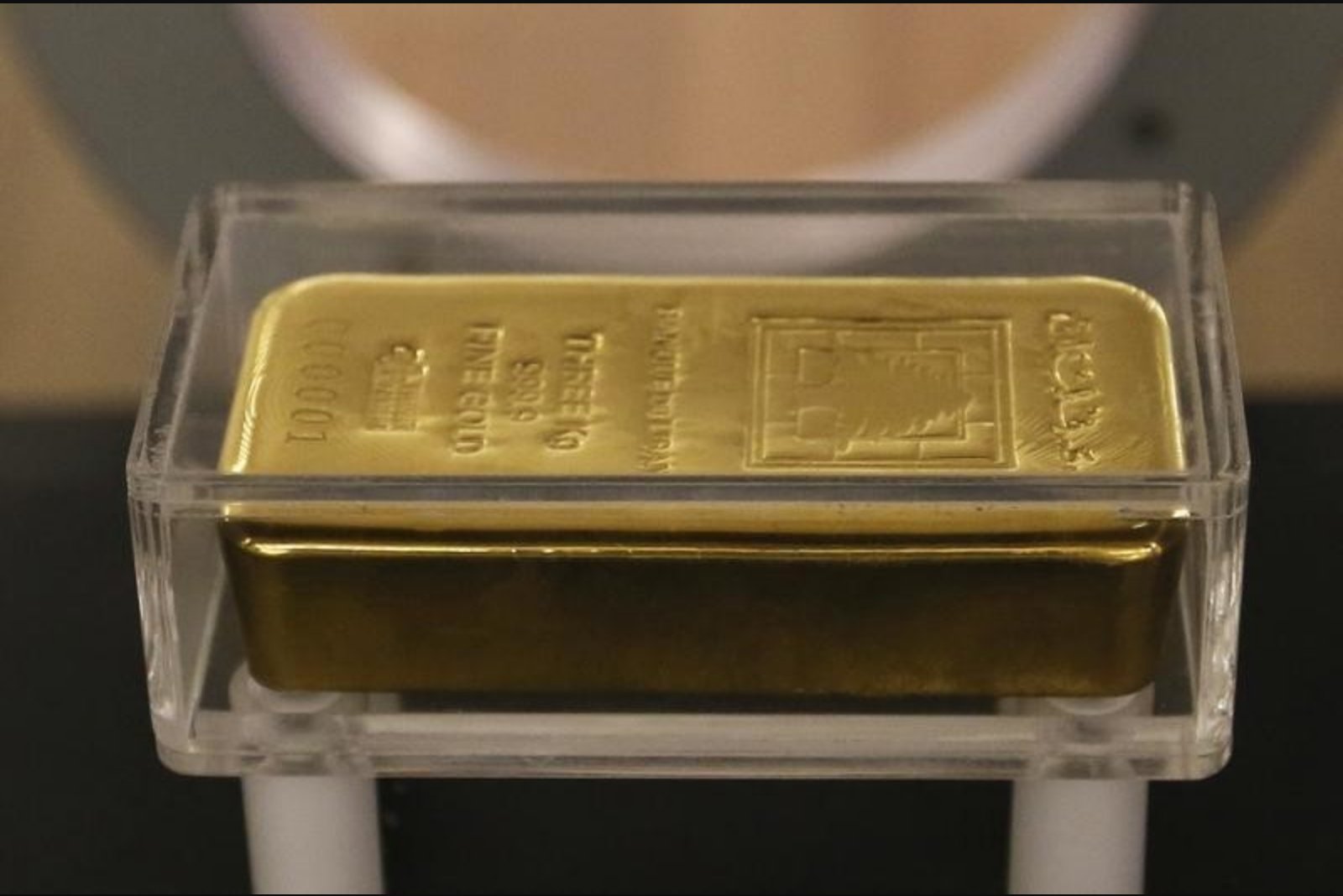
Gold experienced a notable sell-off in Asian markets on Monday as concerns over inflation and sustained high interest rates undermined the metal's safe-haven appeal, despite the ongoing U.S.-Israel war on Iran.
Over the weekend, tension intensified when U.S. President Donald Trump issued a 48-hour deadline for Iran to reopen the Strait of Hormuz. Tehran countered by warning of retaliation and threatened to attack critical energy and water infrastructure across the Middle East, while also saying it could completely close the strait. Reports indicated that hostilities between Iran and Israel continued over the weekend, marking the fourth consecutive week of conflict.
By 21:11 ET (01:11 GMT), spot gold had declined 1.7% to $4,413.32 an ounce. Gold futures fell 3.5%, trading at $4,448.46 per ounce. Earlier in the session, spot prices touched a low of $4,320.19 per ounce.
Other precious metals moved lower alongside gold. Spot silver eased 0.4% to $67.6085 per ounce, and spot platinum fell 0.6% to $1,913.57 per ounce.
Geopolitical flashpoint and market reaction
The weekend's public ultimatum from Mr. Trump - giving Iran 48 hours to reopen the Strait of Hormuz or face the possibility that the U.S. would "obliterate" critical energy infrastructure - heightened the risk of a fresh escalation. Iran's response, which included threats to strike key energy and water infrastructure across the region and the warning that it could close the strait entirely, added to market uncertainty. Analysts noted that if Washington follows through on its threat, and if Tehran retaliates, the conflict could enter a more dangerous phase.
Inflation and central bank expectations weigh on bullion
Despite the intensifying conflict, market forces tied to inflation and interest rates appeared to dominate trading behavior. Over the last three weeks, concerns that the Iran war would drive up energy prices and, consequently, global inflation have been a key factor pressuring gold prices. That dynamic has reduced bullion's ability to recover to previous levels.
Market participants have feared that a protracted conflict could push up energy costs, prompting a more hawkish stance from major central banks. Evidence of this shift emerged last week when both the European Central Bank and the Bank of England signaled the possibility of rate hikes later this year. The Federal Reserve, by contrast, did not signal any rate hikes. Nonetheless, markets were observed steadily pricing out expectations for Fed rate cuts during the current year.
Commenting on market dynamics, OCBC analysts said: "The market is trading less on geopolitical hedging flows and more on fears that stickier inflation could prompt a more hawkish central bank stance." The analysts also noted that the long-term drivers of gold remained intact.
For now, bullion markets are balancing the immediate shock of an intensifying geopolitical confrontation with growing concern that higher energy-driven inflation could sustain higher interest rates, a combination that has, for the moment, diminished demand for gold as a safe-haven asset.