
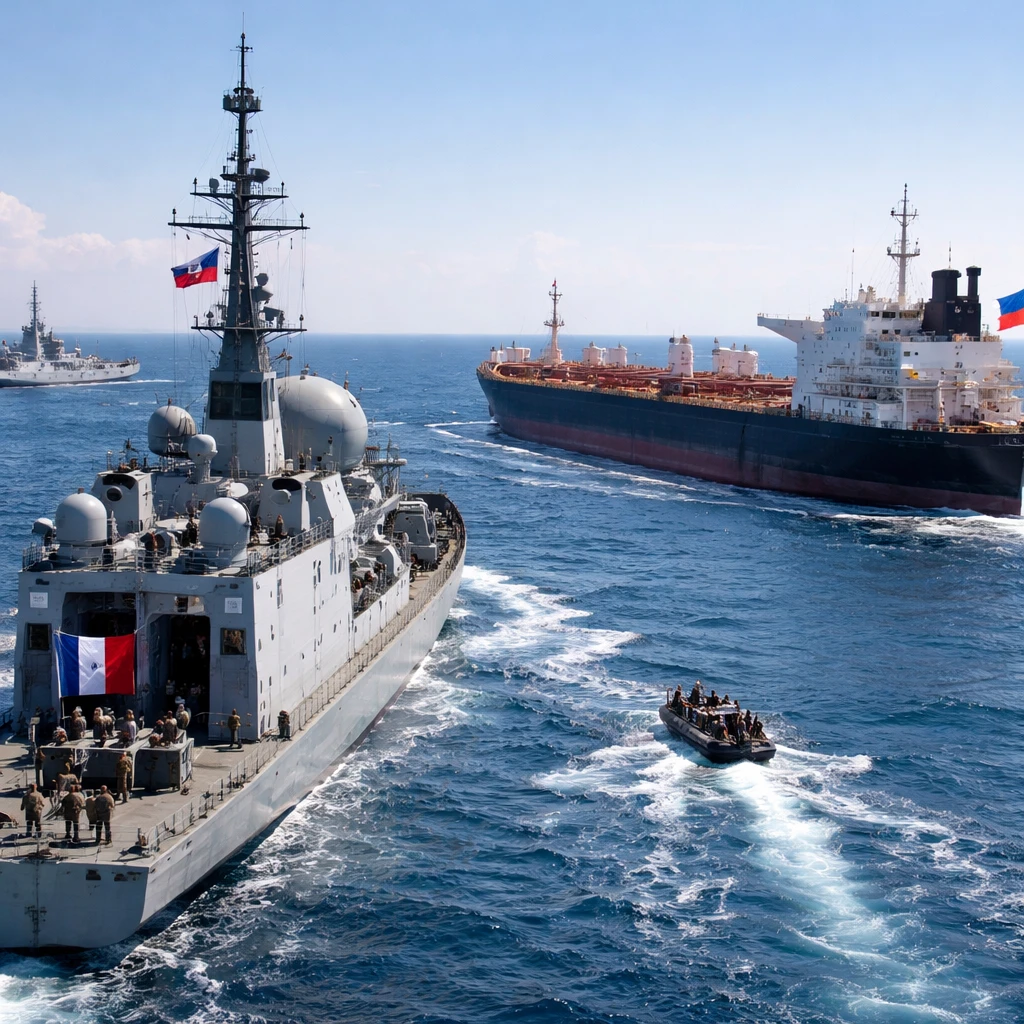
On January 22, the French naval forces conducted an interception of a Russian tanker, named the GRINCH, in the Mediterranean Sea. This vessel is suspected of being part of the so-called shadow fleet, which enables Russia to continue exporting oil in spite of international sanctions.
The operation took place on the high seas in the Western Mediterranean, specifically in a maritime zone between Spain’s southern coastline and Morocco’s northern shore, as confirmed by the French maritime police in an official statement.
French President Emmanuel Macron announced on the social media platform X that the operation was executed with cooperation from several allied nations, explicitly including Britain. He emphasized that the action adhered strictly to the provisions of the United Nations Convention on the Law of the Sea.
France's enforcement firm's identification of the GRINCH revealed that the tanker was departing from Murmansk, located in northern Russia, and is subject to existing international sanctions. Further, Macron noted suspicions that the vessel was operating under a false flag—a tactic often employed to obscure ownership or circumvent embargoes.
The French government characterized the shadow fleet’s activity as significantly aiding Russia’s financing of its ongoing military operations against Ukraine, thereby linking these commercial endeavors directly to the continuation of conflict.
Following the interception, French authorities referred the matter to the Marseille prosecutor’s office, which is responsible for issues pertaining to maritime law. The ship was ordered to alter its course for further investigation under these legal frameworks.
This recent incident echoes a previous event in October when France detained another sanctioned vessel, the Boracay, off its western coast. After several days under custody, the Boracay was ultimately released.
The European Union has enacted a comprehensive suite of 19 sanction packages targeting Russia to disrupt its oil exports, yet Moscow has adapted by leveraging the shadow fleet for the transportation and sale of millions of barrels of oil. These shipments frequently reach nations such as India and China, often negotiated at discounted prices compared to global benchmarks.
These enforcement initiatives indicate the persistent challenges facing international maritime regulation and sanction implementation, particularly in sectors impacted by geopolitical tensions and energy markets.