
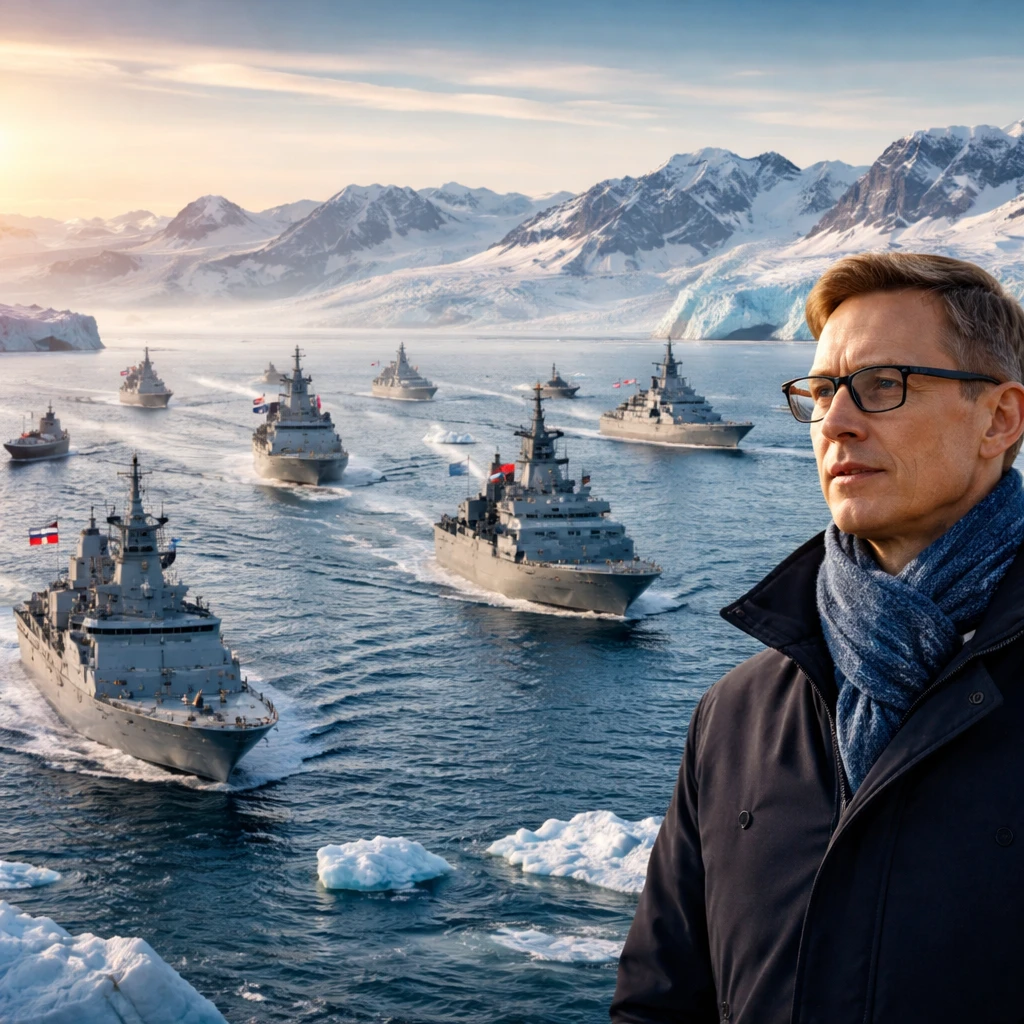
During the World Economic Forum in Davos, Switzerland, Finnish President Alexander Stubb outlined his ambition to formulate a comprehensive strategy to reinforce security in the Arctic by the time NATO convenes its summit in Ankara, Turkey, in July. This statement comes in the wake of the United States finalizing a framework deal granting it enduring access to Greenland, which is an autonomous territory within the Kingdom of Denmark.
The US agreement aims to reduce tensions surrounding Greenland's future, particularly after President Donald Trump declared that total and permanent US access had been secured as part of the arrangement with NATO. The NATO Secretary General emphasized that members should intensify efforts to safeguard the Arctic region amid growing concerns about Russian and Chinese influence.
Previously, President Trump had threatened tariffs against eight European allies who opposed his objectives concerning Greenland, drawing unease across European capitals. However, he later retracted threats of tariffs and dismissed any intentions of forcibly acquiring Greenland. President Stubb commented that the package of defensive measures he envisions would resemble the landmark agreement made in The Hague last June, wherein NATO leaders collectively endorsed substantially increased defense spending, fulfilling one of President Trump's core demands.
Stubb emphasized the significance of stronger Arctic security architecture based on collaborative engagement among NATO's Scandinavian members—Sweden, Finland, Norway, Denmark, and Iceland—alongside active cooperation from the United States and Canada.
European Union leaders were scheduled to hold emergency consultations in Brussels later the same day to coordinate a unified stance regarding Greenland, with President Stubb expressing confidence in maintaining the EU's cohesion. He particularly highlighted the importance of incorporating the perspectives of Danish Prime Minister Mette Frederiksen, given Denmark's sovereignty over Greenland.
President Trump has articulated concerns that only the United States can effectively guarantee Greenland's security in light of perceived ambitions from China and Russia within the Arctic. Nonetheless, his direct approach to the issue has strained relations within NATO and raised the specter of rekindled trade tensions between the United States and Europe.