
Market movement
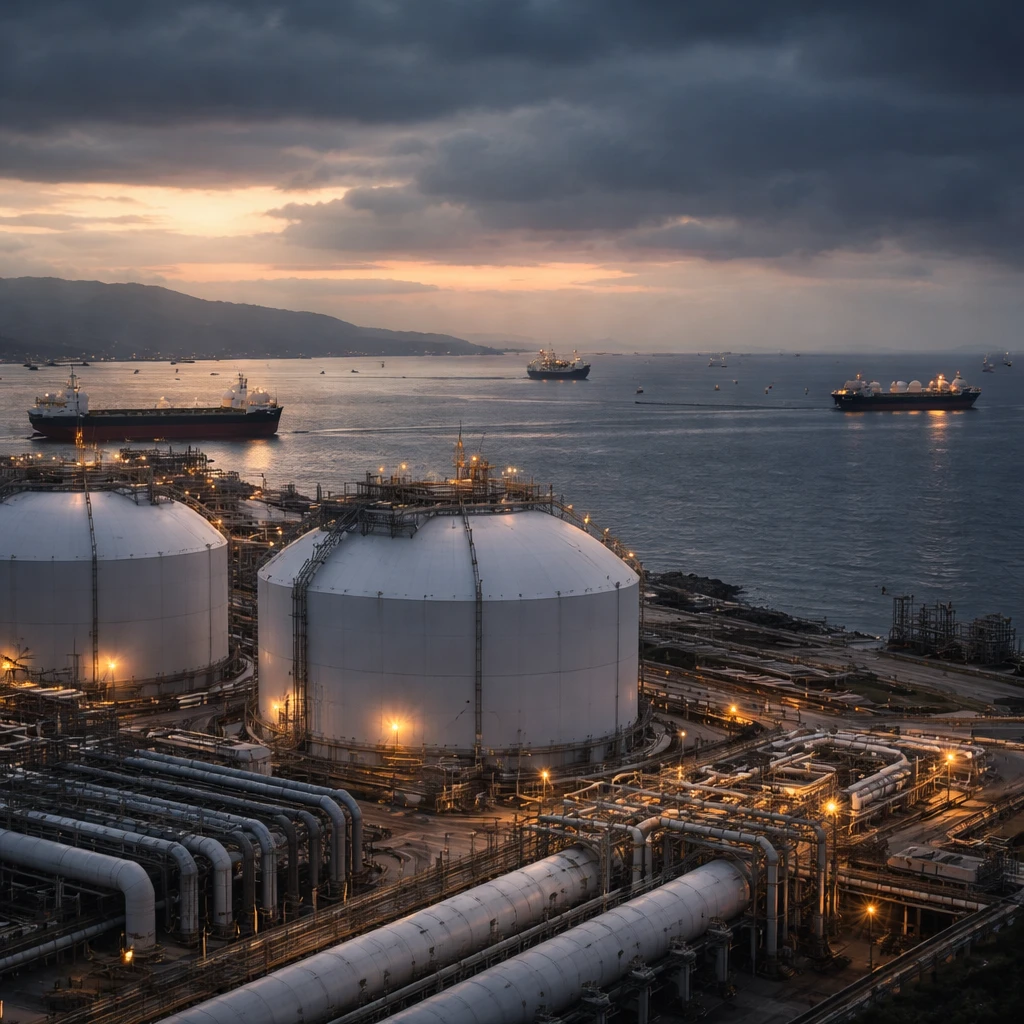
European natural gas prices retreated from an earlier uptick on Tuesday as market participants assessed a near-term U.S. deadline for Iran to reopen the Strait of Hormuz and noted ongoing Pakistani efforts to promote a ceasefire. By 05:47 ET (09:47 GMT), ICE data showed the Dutch front-month contract at the TTF hub down 2.0% at 49.16 euros per megawatt hour.
Supply routes and disruptions
Many European countries rely on natural gas supplied from producers in the Persian Gulf, particularly Qatar. Those flows have been affected by Iranian attacks on energy infrastructure across the region. Analysts have cautioned that even if hostilities ended suddenly, disrupted flows might not immediately resume, leaving a gap in supply continuity.
Inventory and contract dynamics
Strategists at ANZ, cited by the Wall Street Journal, said that tightening inventories are increasing the sensitivity of European and Asian gas markets to adverse weather conditions and to supply outages. The analysts also noted evidence of thinning activity in the spot market, as a growing number of traders appear to be shifting toward the relative safety of longer-term contracts.
Geopolitical developments
On Monday, U.S. President Donald Trump reiterated a threat to strike bridges and power plants in Iran if Tehran did not accept terms to halt hostilities and reopen the Strait of Hormuz. The strait, a vital shipping lane off Iran's southern coast, carries roughly a fifth of the world’s oil and has reportedly been largely blockaded by Iran for weeks.
Speaking of the consequences of renewed U.S. strikes, Trump warned that such attacks would leave Iran with damage that would take "100 years to rebuild." At the same time, he said a diplomatic solution could still be reached to the conflict, which the article notes began with joint U.S. and Israeli strikes on Iran in late February.
Diplomatic signals and ongoing combat
Separately, Pakistani mediation efforts appear to be moving into an advanced phase. An Iranian official described the talks as nearing a "critical, sensitive stage." In a social media post, Reza Amiri Moghadam, Iran’s ambassador to Pakistan, offered no further specifics and wrote only "[s]tay tuned for more."
Despite the diplomatic activity, Iran and Israel continued to exchange attacks on Tuesday.
Key points
- TTF front-month gas fell about 2.0% to 49.16 euros per megawatt hour by 05:47 ET (09:47 GMT), according to ICE data.
- Gulf-sourced flows to Europe, especially from Qatar, have been disrupted by Iranian attacks on energy infrastructure; resumed supply is not guaranteed even if fighting ends suddenly.
- Tight inventories are heightening market sensitivity to weather and outages, and some traders are moving from spot to longer-term contracts.
Risks and uncertainties
- Further escalation or new strikes could prolong blockades and infrastructure damage, compounding supply disruptions that affect European gas availability - relevant to energy and utilities sectors.
- Inventory constraints leave markets vulnerable to unexpected cold snaps or technical outages, which could rapidly push spot prices higher and affect energy-intensive industries and commodity traders.
- Diplomatic progress, including Pakistan's mediation, is described as potentially sensitive but lacks detailed outcomes; the uncertainty around negotiations could keep markets unsettled until clearer signals emerge.