
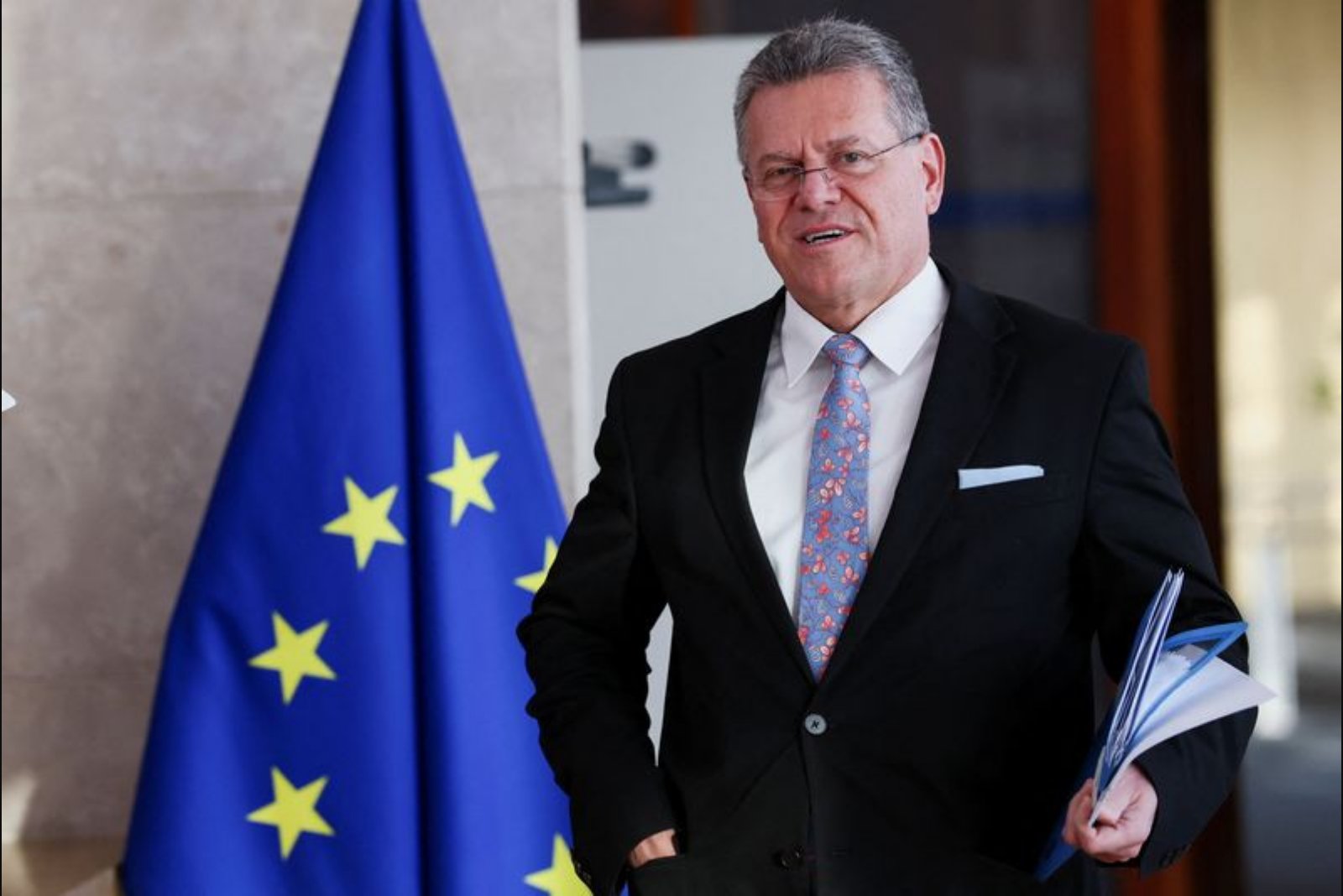
The European Union's trade commissioner reported a constructive exchange with the U.S. Trade Representative while attending the World Trade Organization ministerial meeting in Cameroon.
Commissioner Maros Sefcovic said the meeting with U.S. Trade Representative Jamieson Greer was "very positive," and that both parties agreed to intensify work on critical minerals. He also said tariffs were raised during the discussion.
In parallel, EU lawmakers moved forward on legislation on Thursday to meet the European side of the trade agreement negotiated with the United States in Turnberry, Scotland, last July. That legislative step followed several months marked by uncertainty stemming from President Donald Trump's tariff threats and a new import levy, concerns that had cast doubt on implementation of the deal.
Lawmakers included safeguards in the package to address worries that Washington might not fully adhere to the arrangement. The underlying agreement between the U.S. and the EU foresees a 15% import tariff on most EU goods - a level equal to half of the previously threatened rate - a compromise that helped prevent a larger trade confrontation between the two partners, who together account for nearly one third of global trade.
Sefcovic highlighted the timing of the legislative vote and his meeting with the U.S. official as significant, saying the developments show that both sides are maintaining their commitment to the agreement despite broader global turbulences. He framed the outcomes as evidence of continued cooperation between the two economies.
"It demonstrates on both sides, despite turbulences on the global stage, that we are sticking to the agreement," Sefcovic said.
The commissioner also noted the scale of the economic relationship, pointing out that the United States is the EU's largest trading partner and that EU exports to the U.S. reached a record 555 billion euros in 2025.
Looking beyond the transatlantic relationship, Sefcovic said the EU intends to engage with other trading partners where mutual free trade agreements are possible, and to pursue tariff reductions with those already in trade relations with the bloc. He described this agenda as a forward-looking element of the EU's trade strategy.
Contextual notes: The discussions on critical minerals and tariffs took place on the sidelines of the WTO ministerial in Cameroon; EU domestic legislative action was taken to implement its commitments from the Turnberry agreement; safeguards were added in response to concerns about U.S. adherence; and the trade relationship between the EU and U.S. is large, with EU exports to the U.S. reaching a record level in 2025.