
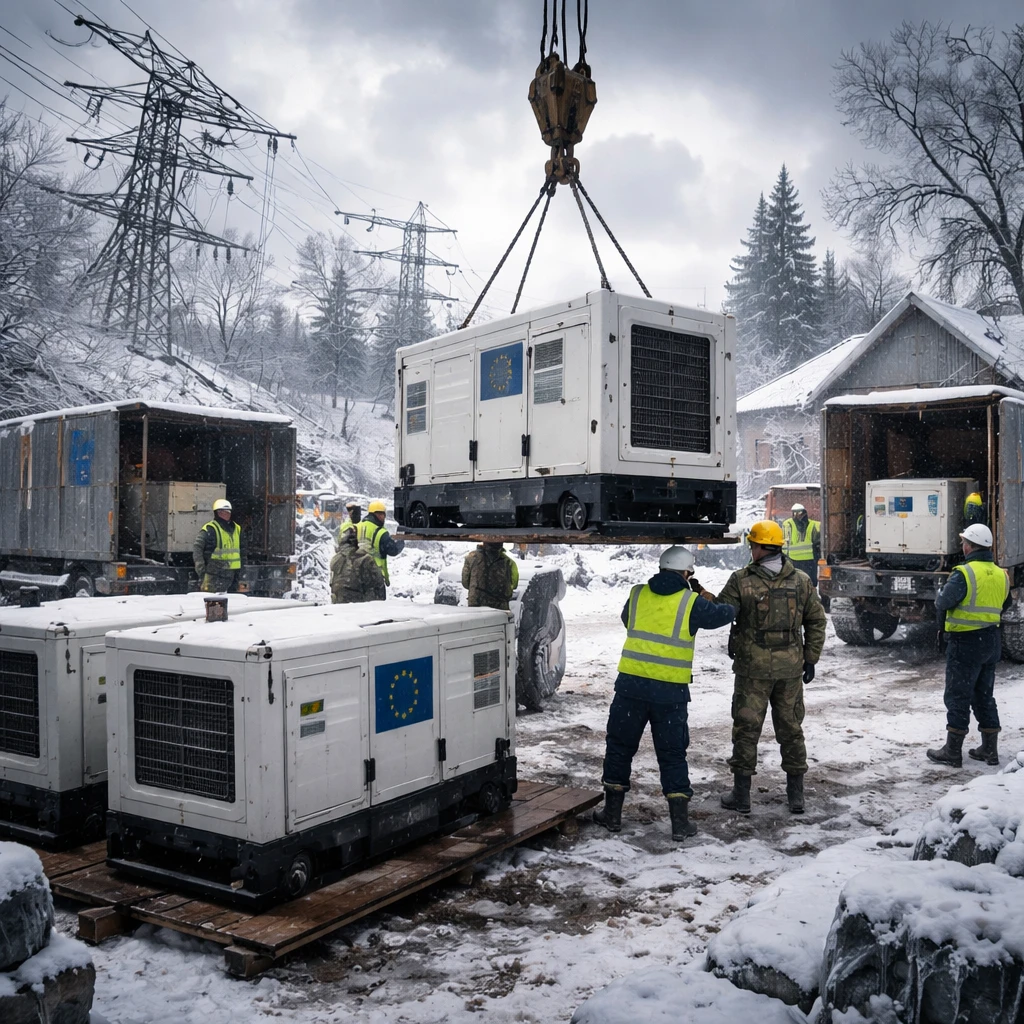
The European Union is actively responding to the energy crisis in Ukraine by deploying 447 emergency generators valued at approximately 3.7 million euros (around $4.3 million), aiming to supply power to vital institutions including hospitals and shelters. This measure targets the severe disruption caused by persistent Russian attacks on Ukraine's power infrastructure, which have resulted in an estimated one million people lacking access to electricity and heating during a cold snap reaching minus 20 degrees Celsius (minus 4 Fahrenheit).
Electrical engineers in Ukraine have been working tirelessly and under hazardous conditions to repair and maintain the damaged grid since the attacks intensified. These generators will be distributed from strategic reserves located in Poland and sent to the most affected areas in cooperation with the Ukrainian Red Cross.
European crisis manager Hadja Lahbib emphasized that the Russian offensive aims to demoralize the Ukrainian population by targeting critical energy systems. In response, Ukrainian President Volodymyr Zelenskiy has declared an energy emergency due to the extensive damage to power generation and distribution facilities.
European Commission spokesperson Eva Hrncirova underscored the EU’s commitment, stating, "We won’t let Russia freeze Ukraine. We bring light and warmth where Russia sends darkness." This highlights the EU’s determination to mitigate the humanitarian consequences of the ongoing conflict.
On the diplomatic front, French Foreign Minister Jean-Noel Barrot announced plans to convene a virtual meeting involving G7 countries along with Nordic and Baltic states. The purpose of this call is to coordinate further support to strengthen Ukraine's energy grid, which remains under persistent threat from Russian shelling.
France has pledged to provide Ukraine with an additional 13 megawatts of electricity alongside approximately 100 generators to help replace infrastructure that has been destroyed. Barrot noted that other nations are expected to announce their aid commitments during this international dialogue, demonstrating broad-based support.
The French minister condemned the continued Russian assault on Ukrainian cities and energy assets, reaffirming the commitment to ongoing assistance. This international cooperation effort reflects a strategic response to safeguard Ukraine’s energy security during this critical period.