
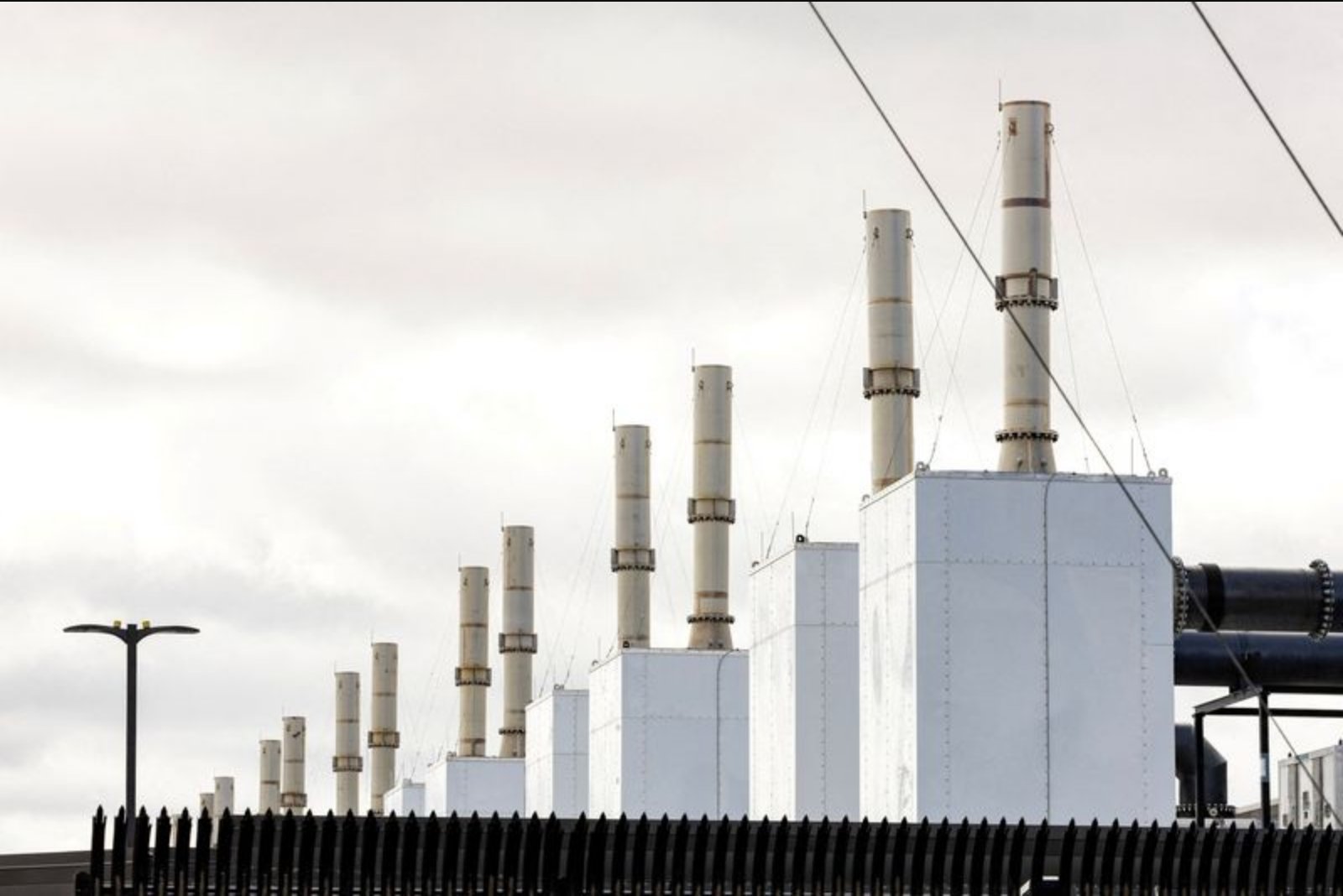
U.S. technology companies face mounting pressure to reduce power consumption at times of peak demand as concerns grow that the expansion of data centers could overwhelm regional electrical systems. Utilities and grid regulators are increasingly seeking commitments from the industry to curtail energy use in large server farms when requested by system operators.
The practice of asking major customers to dial back electricity use - known in the electric industry as demand response - has long been rare for data centers. Historically, many cloud facilities required continuous and stable power to preserve data integrity, and outages can be extraordinarily costly. Industry estimates from IT consultant Heunets put the cost of data center downtime at roughly $9,000 per minute.
Still, the objective behind these emergent measures is straightforward: to prevent blackouts and avoid steep power bills during the relatively few days and hours each year when grid demand peaks. For technology companies building in regions with stressed distribution systems, agreeing to increased operational flexibility could also hasten the timetable for connecting new facilities to nearby grids.
A recent study by the Electric Power Research Institute (EPRI) warned that electricity consumption from data centers could increase more than fourfold by the end of the decade, potentially accounting for as much as 17% of U.S. power supplies. That projection has heightened attention on how data centers will interact with constrained local networks during peak periods.
U.S. Energy Secretary Chris Wright addressed the issue at the CERAWeek conference in Houston, emphasizing the importance of delivering power at times of peak need. He said, "It’s not electrons on the grid - it’s being able to deliver when demand is at a peak. When electricity demand rises high, supply must meet demand, or people die."
The need for flexibility is not hypothetical. During a winter storm, the Department of Energy asked data centers operating within the PJM Interconnection - the United States' largest regional electric grid and the globe’s largest data center market - to run on backup generators so the grid could conserve capacity. PJM officials have signaled the possibility of supply shortfalls as soon as next year if demand continues to outpace new supply additions.
"Finding a way to manage this in a flexible way is how we are going to get through this as an industry," said Stu Bresler, chief operating officer of PJM Interconnection.
Research released by Duke University’s Nicholas Institute for Energy, Environment & Sustainability suggests that taking action to coordinate demand-side flexibility could reduce the need for $40 billion to $150 billion in capital investments over the next decade. Those avoided costs could translate into lower long-term bills for households and small businesses by limiting the extent to which the broader grid must be upsized to accommodate data center growth.
Investors and energy suppliers are now making clear that data center operators will need to demonstrate the ability to curtail grid-sourced consumption when requested. Matt O’Connor, Chief Investment Officer of International Energy at Carlyle, argued that demand response must be part of the industry’s approach. "Demand response has to be part of the solution," he said. "I think we will see, and what we’re starting to see now, is that real heavy end-users are going to start to be able to figure that out and model that into how the data centers operate."
Transitioning legacy data centers into demand response programs presents technical and operational challenges. Many traditional cloud facilities were designed to keep workloads and stored data on a single site, requiring constant power to avoid data loss or compromise, according to industry sources. That design philosophy has made participation in demand response uncommon among existing installations.
Newer facilities, particularly those purpose-built for artificial intelligence workloads, may be inherently more adaptable. Developers of AI systems are increasingly able to distribute energy-intensive tasks, such as large language model training, across multiple sites. This capability allows some data centers to shift processing away from locations on stressed grids during peak windows.
In practice, technology firms are beginning to pledge operational adjustments. Some have committed to rerouting intensive workloads to other facilities or switching to on-site backup power rather than pulling from the grid at peak times. Google, for example, has signed agreements with several utilities to reduce consumption at specified data centers when requested. Nvidia announced a collaboration with Emerald AI aimed at controlling and relocating power consumption from server warehouses when grid demand spikes.
This week, EPRI published a framework developed with input from dozens of power and technology companies, including Meta, outlining methods for enhancing data center flexibility. The framework is intended to help standardize approaches and accelerate the interconnection process for new data centers by clarifying how flexibility measures can be implemented.
Owners and developers are actively exploring how to operationalize flexibility. "You’re seeing a transition period where everybody would like to do it, and we’re working through how it can be done," said Jennifer Cahill, an associate vice president at engineering and building firm Black & Veatch, whose clients include utilities and technology firms. She noted that owners are increasingly focused on practical steps to make their facilities responsive to grid needs.
Implications for markets and sectors
- Power and utilities: Grid operators and utilities may need to refine interconnection processes and incentives to integrate data center flexibility without compromising reliability.
- Data center developers and operators: Facility design and operational planning will likely incorporate demand-response capabilities and workload mobility as part of site selection and contracts.
- Investors and capital markets: Potential reductions in required grid capital investments could affect cost forecasts and valuation models for utility infrastructure and data center-related real estate.
Summary
As regions confront peak electricity demand, the technology industry is increasingly being asked to make data centers more flexible so they can reduce consumption when utilities and grid operators need relief. Pilot programs and industry collaborations are testing workload shifting, backup generation use, and formal demand-response arrangements. The goal is to avoid blackouts, alleviate pressure on grid expansion costs, and speed up the interconnection of new facilities.