
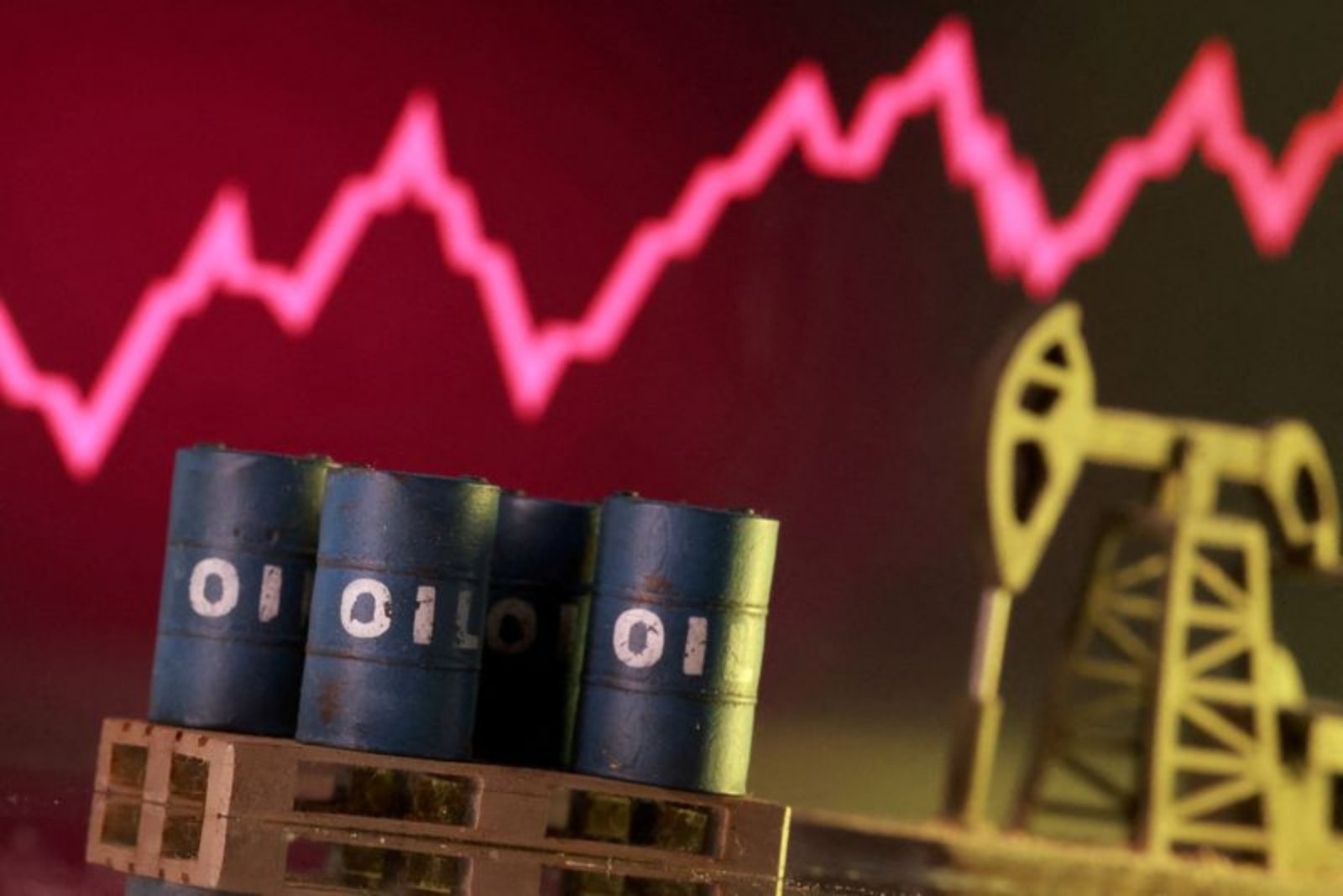
Oil leapt about 25% in trading on Monday to reach levels not seen since mid-2022, with Brent crude on track for what market participants described as an unprecedented one-day gain. The jump came as the widening confrontation between the United States, Israel and Iran prompted cuts to Middle Eastern oil supplies and heightened concerns over possible long-term disruption to shipping through the Strait of Hormuz.
Brent futures climbed to as high as $119.50 per barrel, while U.S. West Texas Intermediate rose to $119.48 per barrel. The scale of the move has left traders and analysts noting the absence of any clear diplomatic off-ramp in the region.
"The violent reaction stems from the markets seeing no obvious offramp in the escalating Middle East conflict, now a high-stakes standoff where neither side appears willing to blink first," said Tony Sycamore, an analyst at IG. "The risk of more lasting economic damage continues to build by the day."
Market commentators pointed to concrete signs of supply disruption. According to analysts at ING, the situation appears to be worsening and upstream production has begun to be shut in as producers confront storage limits. "Iraq, Kuwait, and the UAE began reducing oil production," ING said in a note, highlighting actions by some major regional suppliers.
The crude spike reverberated quickly through agricultural markets because vegetable oils are widely used in biofuel production. Malaysian palm oil advanced 9% on the session, and Chicago soybean oil reached its highest level since late 2022. In grains, wheat climbed to its strongest point since June 2024 and corn touched a 10-month high.
Precious metals moved in the opposite direction. Gold declined more than 2% as the dollar strengthened - trading near a three-month high reached last week - which made dollar-priced bullion more costly for holders of other currencies. Traders also cited a combination of higher energy costs feeding inflation concerns and a reduced likelihood of near-term interest-rate cuts as factors that bolstered U.S. yields and the dollar, outweighing safe-haven demand for gold.
Base metals displayed a mixed picture. Aluminium rose sharply on intensifying supply worries linked to tensions in the Gulf, with benchmark three-month aluminium on the London Metal Exchange climbing to $3,544 per ton, its highest since March 2022. Qatalum, a Qatari smelter, and Aluminium Bahrain have declared force majeure on shipments amid the rising regional tensions. Other industrial metals were generally under pressure from a firmer dollar.
The overall market reaction reflected both immediate logistical concerns and broader macro effects. Higher energy prices lifted commodity-linked agricultural products and some industrial metals, while simultaneously weighing on safe-haven assets and adding pressure to expectations that central banks might ease policy in the near term.
Market context and takeaway
- Rapid escalation in the Middle East conflict has driven crude to near-term peaks and prompted supply curbs by regional producers.
- Vegetable oils and several agricultural commodities rose in step with crude due to biofuel linkages and energy-cost transmission.
- Gold and a number of base metals were pressured by a stronger dollar and the prospect of delayed interest-rate cuts, even as aluminium rallied on supply concerns and force majeure declarations.