
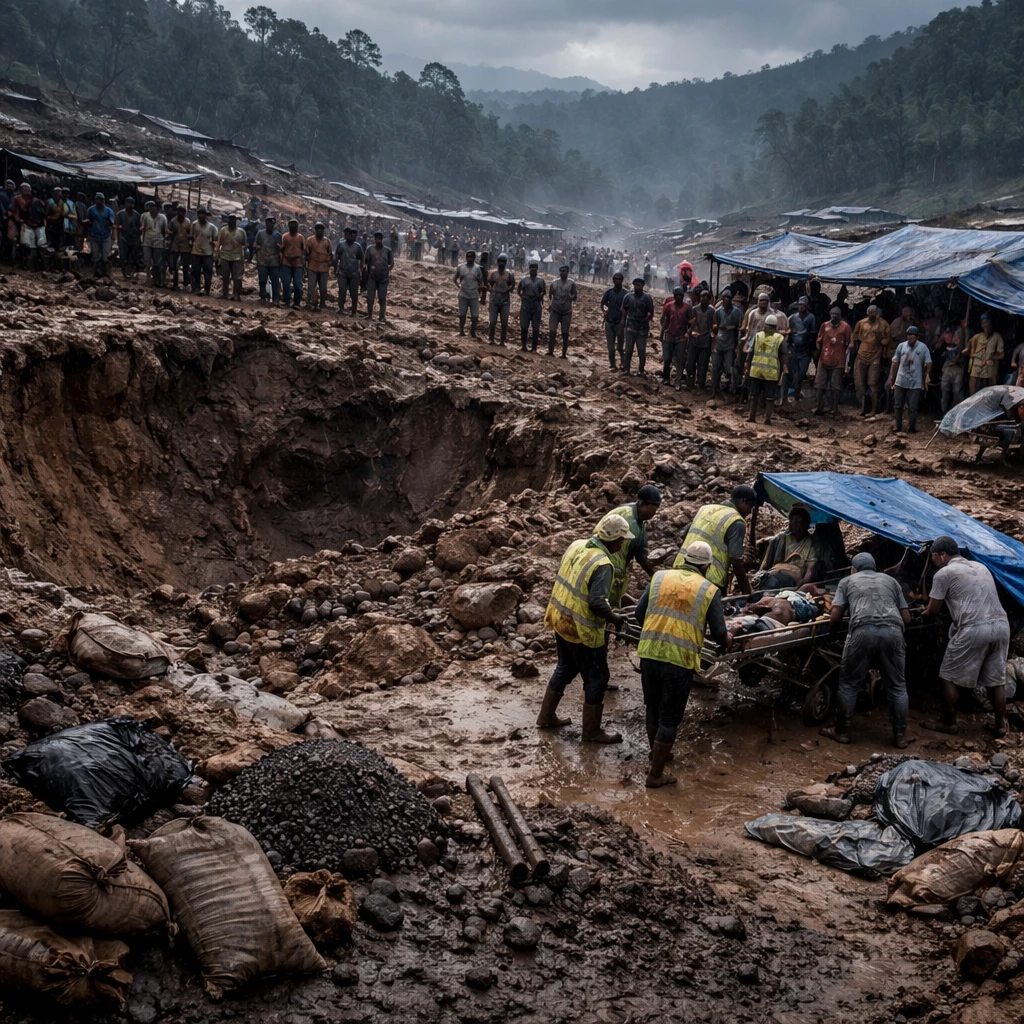
Local authorities reported on Friday that a collapse at the Rubaya coltan mine in eastern Democratic Republic of Congo has resulted in more than 200 fatalities. Lumumba Kambere Muyisa, the spokesperson for the rebel-appointed governor of the province where the mine is located, provided the casualty estimate and described the conditions that led to the disaster.
Rubaya is a significant coltan-producing site, accounting for around 15% of global output of the ore processed into tantalum. Tantalum is a heat-resistant metal used in the manufacture of mobile phones, computers, aerospace components and gas turbines. The site is largely worked by local diggers who extract ore manually for modest daily earnings.
The mine has been under the control of the AFC/M23 rebel group since 2024. The collapse took place on Wednesday; as of Friday evening the precise death toll was still unclear. "More than 200 people were victims of this landslide, including miners, children and market women. Some people were rescued just in time and have serious injuries," Muyisa said, adding that about 20 injured people were being treated in health facilities.
Speaking about conditions at the site, Muyisa said: "We are in the rainy season. The ground is fragile. It was the ground that gave way while the victims were in the hole." An adviser to the governor provided a higher count of confirmed dead, saying the number was at least 227. He spoke on condition of anonymity because he was not authorised to brief the media.
The incident occurs amid wider scrutiny of control over mineral-rich areas in eastern Congo. The United Nations has said the AFC/M23 has plundered Rubaya's riches to help fund its insurgency, and has alleged the rebel group is backed by the government of neighbouring Rwanda - an allegation Kigali denies. The rebels are described as heavily armed, with a stated aim to overthrow the government in Kinshasa and to ensure the safety of the Congolese Tutsi minority. They expanded their control over additional mineral-rich territory during a rapid advance last year.
Response efforts and recovery operations at Rubaya are constrained by the ongoing presence of armed actors and the unstable ground conditions tied to the rainy season. Authorities and humanitarian actors face immediate challenges in confirming casualties and treating the injured while operating in an area under rebel administration.
Context and immediate considerations
- The collapse underscores the vulnerability of artisanal mining sites to seasonal ground instability.
- Rubaya's share of global coltan production - around 15% - highlights why incidents at the site attract attention from manufacturers who use tantalum in electronics and aerospace components.
- Control of the mine by AFC/M23 introduces political and security complexities for emergency response and longer-term oversight of mineral extraction.