
Shortly before dawn on March 17, residents near the Olmeca refinery in Tabasco watched a distant flash that turned into a blaze. Guillermo Risso, president of the community council of Puerto Ceiba, recalled the scene: "It was an explosion, the entire refinery lit up," and added, "We saw flames and were alarmed." The fire originated after oily water overflowed inside the refinery, reached a nearby road and was ignited by a passing vehicle, an episode the state oil company reported led to five fatalities.
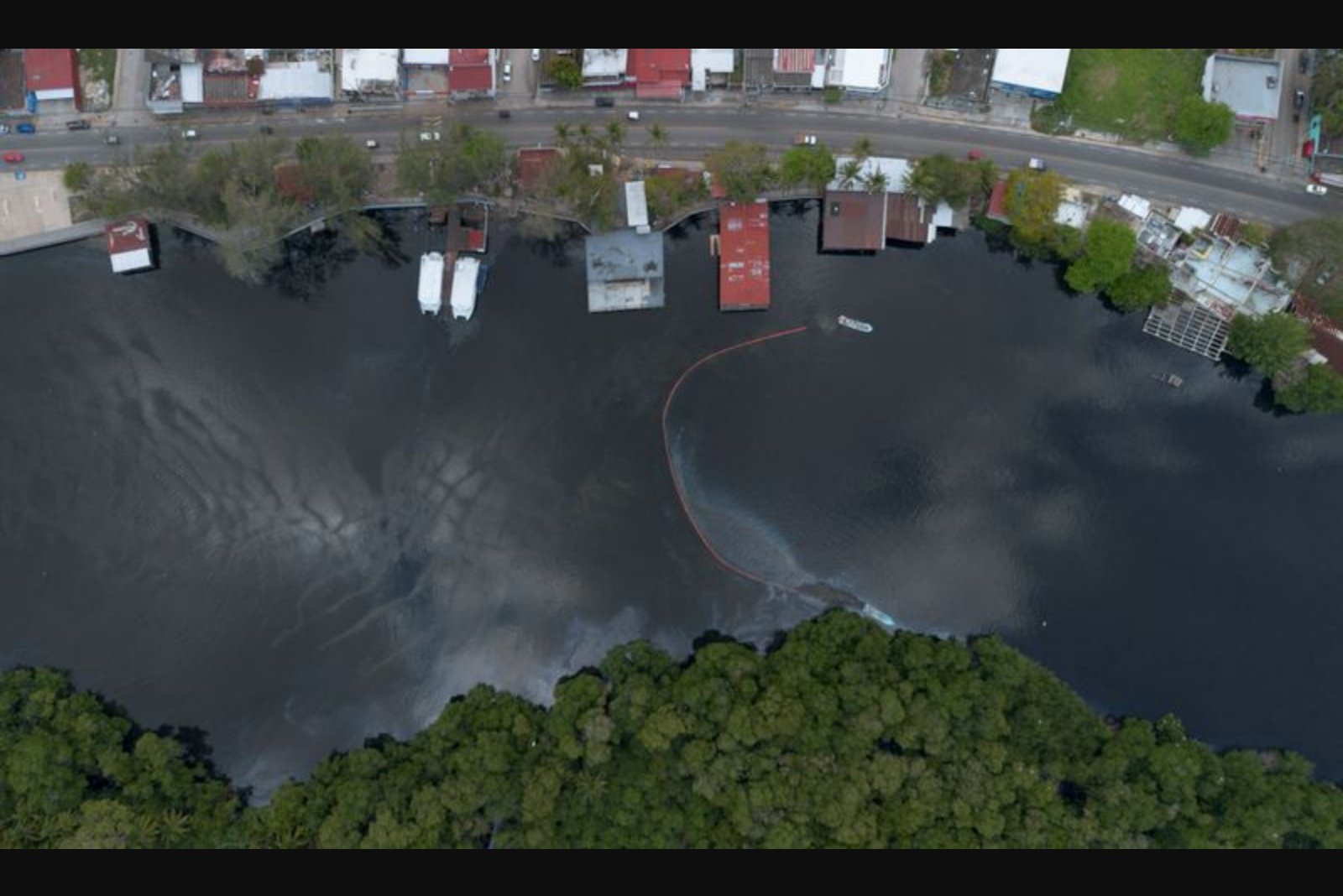
Pemex said it has removed 549 cubic meters of fossil fuels - the equivalent of 3,453 barrels - from strategic areas within or adjacent to the refinery. The company has also placed containment barriers along the Rio Seco, which encircles the refinery and empties into the Mecoacan lagoon, an important fishing area for local communities harvesting oysters.
Biologist Alvaro Hernandez highlighted ongoing concerns about the movement of contamination through waterways, saying, "The currents are deceptive, and it is possible that uncontrolled waste could reach the lagoon." Despite these warnings, Hernandez noted that affected fishermen intend to continue selling their catch during the upcoming Easter holidays because they cannot bear an extended loss of income resulting from the crisis.
The Olmeca incident is the most serious in a series of problems tied to the new refinery project. The facility has struggled with underproduction, budget overruns and delays in reaching operational targets. The refinery's official production capacity is 340,000 barrels per day, a level it has not achieved as government efforts to ramp up output continue. The plant forms a central part of the Mexican administration's strategy to increase domestic refining and reduce reliance on imports.
This event follows another oil release reported in early March off the coasts of Tabasco and Veracruz. President Claudia Sheinbaum has said investigators had not yet identified the company responsible for that spill, and environmental authorities were still determining the cause. Authorities had previously suggested the spill might stem from an oil tanker off Tabasco, a theory that some experts are beginning to question in light of the scale of the damage. At the time of reporting, the government agency overseeing environmental matters in the energy sector stated it did not have an estimate of the area affected by that earlier release.
Environmental and community groups have documented tangible impacts along Veracruz's northern coastline. The Gulf of Mexico Reef Corridor Network, which represents fishermen's associations, indigenous organizations and environmentalists, reported oil presence along the coasts of Tuxpan and Cazones. The network said at least seven sea turtles, two dolphins, two manatees, and one pelican have been found affected by the oil, with most of those animals discovered dead.
The network also reported damage to red, black, and white mangroves in Laguna del Ostion, Veracruz. These mangrove stands are a distinct ecosystem that supports species such as the hairy crab and the blue crab - the latter identified as a protected species - and provides habitat for migratory birds and otters.
Pemex did not immediately provide further comment beyond its statement detailing the cause of the fire, the human casualties, and the volume of fuel recovered as of Sunday. Containment efforts at the refinery site and along the Rio Seco are in place, but local biologists and community leaders continue to express concern about the potential for contamination to move into adjacent waterways and coastal zones.
The human toll and the environmental damage underscore a series of operational and project challenges tied to the Olmeca refinery. Authorities and affected communities remain focused on cleanup efforts and on monitoring potential impacts to fisheries and coastal ecosystems as investigations into earlier spills and the March 17 incident proceed.
Reporting note: The situation is evolving; authorities have provided the cleanup volume recovered and described containment measures, while environmental groups and local residents report wildlife mortality and impacts to mangrove habitats.