
Chevron Chief Executive Officer Mike Wirth said on Monday that futures markets for crude oil are not fully reflecting the real-world disruption stemming from the closure of the Strait of Hormuz.
Speaking at S&P Global's CERAWeek conference in Houston, Texas, Wirth emphasized a gap between paper markets and the physical movement of oil. "There are very real, physical manifestations of the closure of the Strait of Hormuz that are working their way around the world and through the system that I don't think are fully priced into the futures curves on oil," he said.
Wirth noted that market pricing appears to be based on limited information and perception, rather than the actual flow of barrels. He said that "substantial volumes of oil and gas are currently not flowing into the market," and that this episode differs from prior incidents in its physical supply consequences.
Market indicators cited during his remarks include the U.S. oil contract for August delivery trading around $80 per barrel - a level that, according to Wirth, suggests traders expect the disruption to ease over the coming weeks and months rather than remain prolonged.
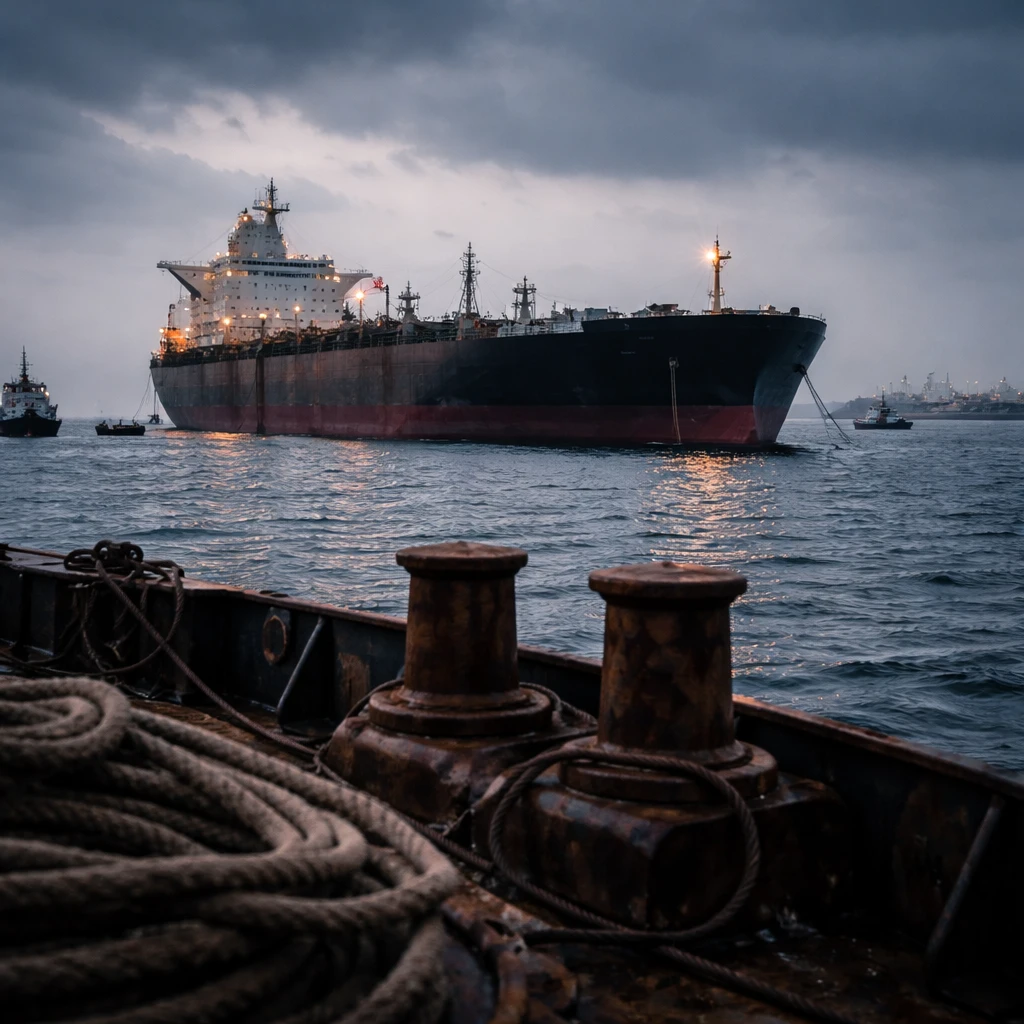
Wirth outlined several factors tightening physical supply: roughly 20% of global oil supplies had been flowing through the Strait of Hormuz before the war started; oil tanker traffic has essentially stopped due to Iranian attacks on commercial shipping; Gulf Arab producers have dialed back output because they are unable to export through the strait; and Iranian missile and drone strikes have damaged energy infrastructure in the Middle East. He also said some governments are adopting policies to retain stocks domestically and limit exports.
On inventories, Wirth cautioned that even if the strait reopens, rebuilding stocks will take time. He added that uncertainty remains about how quickly production can be restored to prior levels.
Prices moved sharply in recent trading. Oil fell 9% on Monday after President Donald Trump told CNBC that he was "very intent on making a deal with Iran" and said he postponed strikes on Iran's power plants for five days following talks he described as productive.
Wirth's comments highlight a divergence between futures curves and on-the-ground supply conditions, drawing attention to shipping disruptions, regional production curbs tied to export pathways, damage to energy assets, and policy decisions to hold domestic stocks. Those dynamics are feeding into both market perception and the complex task of assessing how quickly physical supply and inventories can normalize.
- Conference: S&P Global's CERAWeek in Houston, Texas.
- Futures level cited: U.S. August contract trading around $80 per barrel.
- Flow impact: About 20% of world oil supplies moved through the Strait of Hormuz before the war; tanker traffic has largely halted.