
Overview
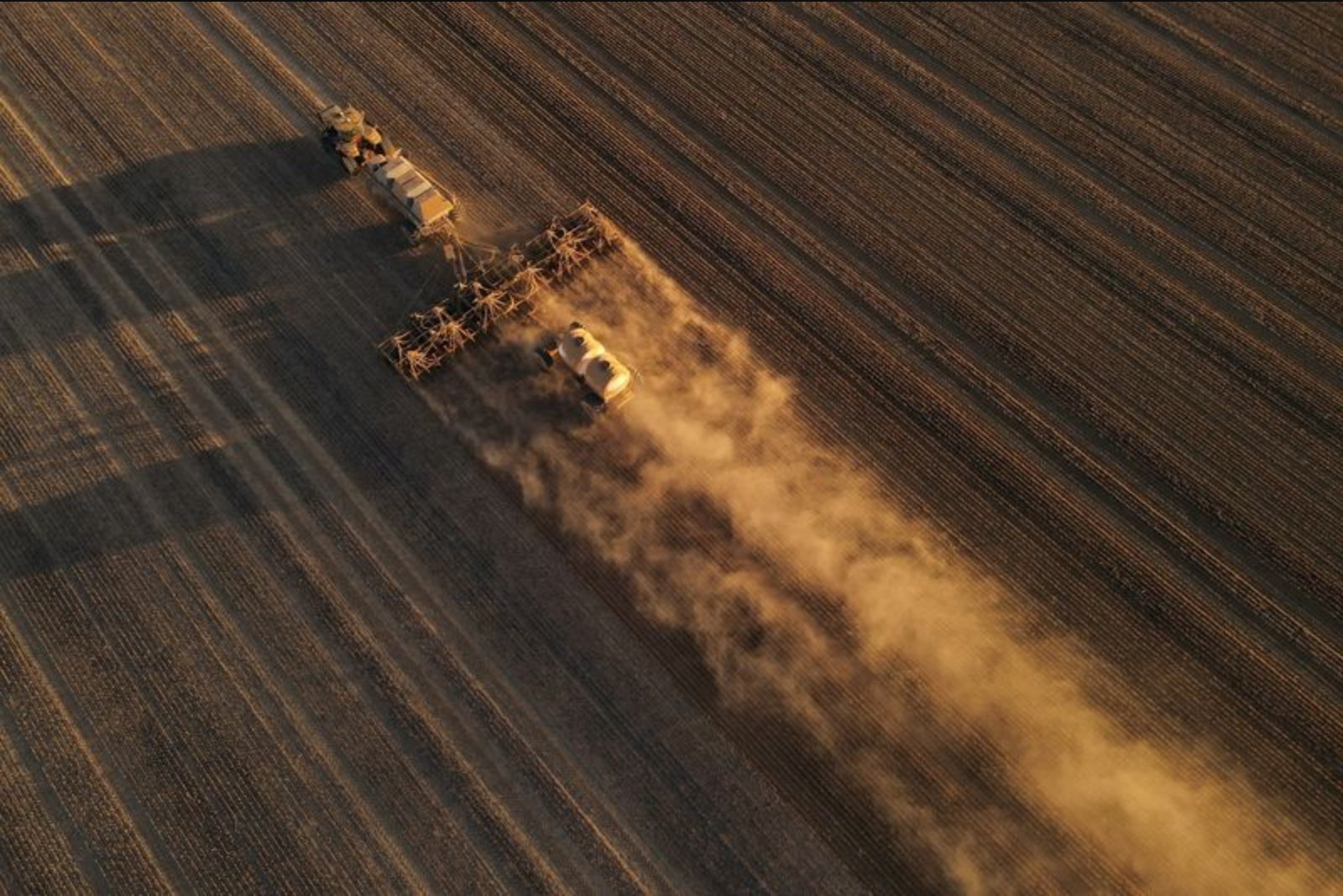
As broad-scale planting prepares to accelerate across much of Australia this month, farmers are recalibrating cropping plans in response to a sharp rise in fertiliser and fuel costs tied to the Iran war. The cost squeeze is prompting some growers to favour crops that demand less nitrogen and to curb fertiliser application during critical early-growth stages.
Price signals and farmer responses
Urea in Australia was quoted at around A$1,350 per ton this week, roughly $928, representing an increase of about 60% since the beginning of the U.S.-Israeli war with Iran, analysts reported. Diesel prices in Australia have also jumped, up 88% over the same period.
Against this backdrop, agricultural analysts and market participants say farmers are adjusting planting choices. "Farmers are trying to reduce fertiliser application and switching planting from nitrogen hungry crops like wheat and canola into feed barley," said Dennis Voznesenski, an agricultural analyst at Commonwealth Bank of Australia. "Some are also reducing planted area, but this so far is minimal," he added.
Market sources indicate that wheat plantings could fall by 10% to 12% from last year's 12.4 million hectares given current input cost pressures, according to an agricultural broker and an analyst who declined to be named. Cultivation of canola is also expected to decline despite the crop's comparatively higher returns, the two sources said.
Australia's position in global markets
Australia ranks as the world's fourth-largest wheat exporter and the second-largest supplier of canola, sending shipments across Asia, the Middle East and Europe. The country also exports crops including barley, chickpeas and pulses. Shifts in Australian planting thus have implications for importers that rely on its commodity flows.
Supply chain pinch points
Fertiliser availability has become a global concern as planting seasons begin in key countries. The Strait of Hormuz - which carries 30% of globally traded fertilisers - has been severely disrupted by the Iran war, creating a choke-point for flows. Bank of America warned that the conflict threatens 65% to 70% of global supplies of urea, with prices already up 30% to 40% on that front.
Beyond maritime disruption, policy responses from major producers have tightened flows. China has curbed fertiliser exports, and India is seeking alternative sources to shore up supplies for summer-sown crops. U.S. planting intentions also reflect the wider input-cost environment - the U.S. Department of Agriculture said this week that U.S. farmers plan to plant less corn and more soybeans in 2026 than last year.
"Australia typically relies on China for urea, but export curbs have limited shipments," said StoneX analyst Josh Linville. "Buyers turned to Indonesia, only to face further constraints there and by the time they sought supplies from the Middle East, the war had already started and the Strait of Hormuz had closed."
Crop timing and practical implications on farms
Farmers need fertiliser at the start of planting as well as during development and pre-maturity stages. Crops sown in April and May are generally harvested in November and December, making timely access to inputs essential for productive seasons. Reduced fertiliser application or shifts to lower-nitrogen crops will influence yields, crop composition and seasonal export volumes.
"It is a big issue as the cost of farming has risen sharply in the last one month," said Tobin Gorey, founder of commodities consultancy Cornucopia in Sydney.
What this means ahead
Growers and supply-chain participants are navigating a period of elevated input prices and constrained availability. Decisions made now on crop mix and fertiliser use will determine not only farm-level economics but also the composition of shipments from one of the world's major grain and oilseed suppliers later in the year. The interplay of higher urea and diesel costs, export curbs and maritime disruption is the immediate factor shaping planting choices in Australia.
Currency note: $1 = 1.4543 Australian dollars.