
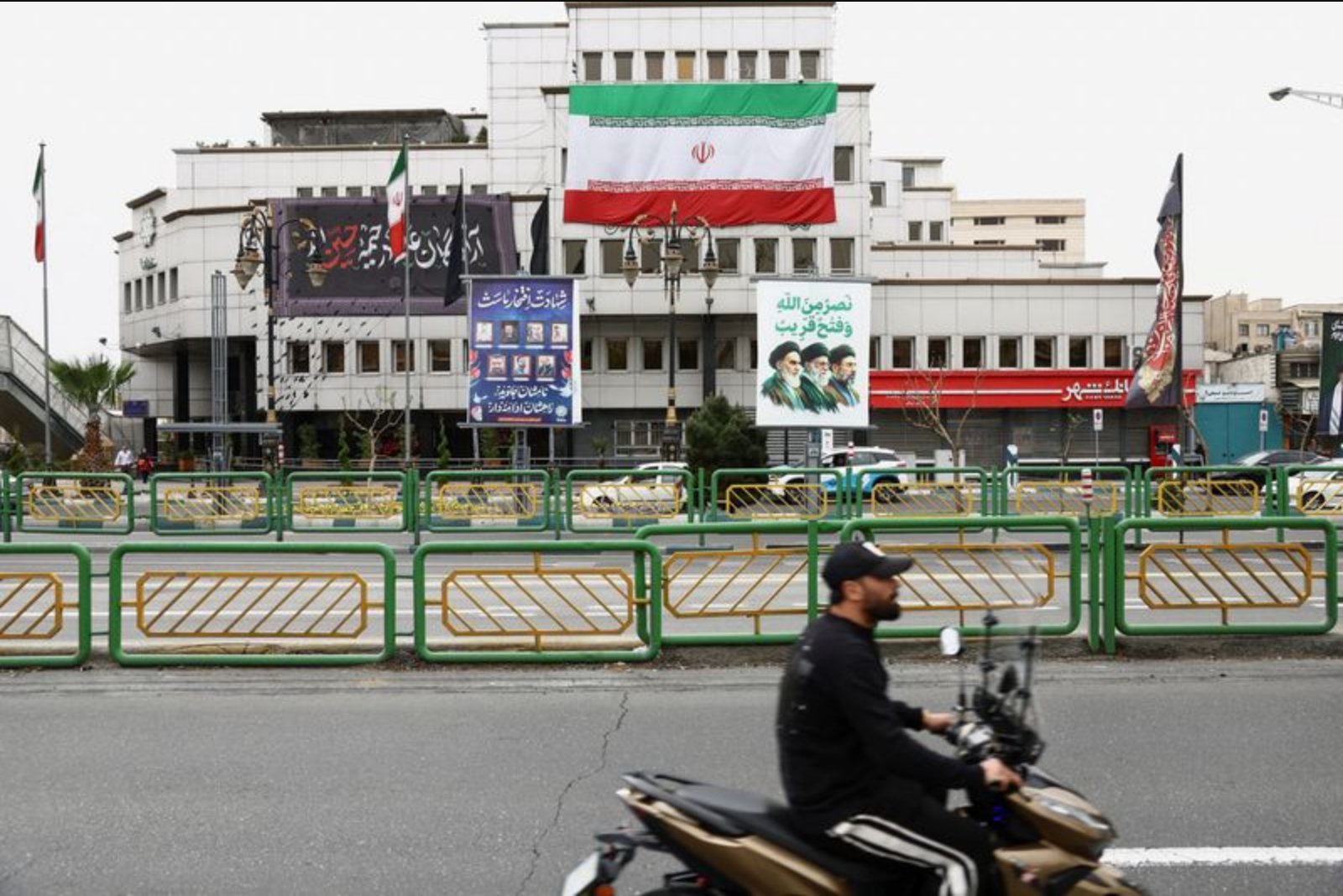
Iran lost its long-serving supreme leader Ayatollah Ali Khamenei and a number of other top figures and Revolutionary Guards commanders in early strikes after the war that began on February 28. Yet the governing framework fashioned after the 1979 revolution has continued to function. The system’s multiple institutions and a shared commitment to the survival of the theocratic order, rather than dependence on a handful of individuals, are allowing Tehran to sustain strategic decision-making and operational activity.
Institutional design and continuity
The Islamic Republic’s constitution and political architecture concentrate ultimate authority in the office of the supreme leader under the doctrine of velayat-e faqih - or 'rule of the Islamic jurist'. Under that doctrine, the supreme leader acts as a learned cleric who wields temporal power purportedly on behalf of the 12th imam. The office of the supreme leader, known as the bayt, maintains a substantial staff that closely monitors other branches of government, enabling the leader to intervene directly across the bureaucracy.
With the death of Ayatollah Ali Khamenei - who held the post since 1989 and commanded near-unquestioning obedience - the mantle of supreme leader has passed to his son, Mojtaba Khamenei. Mojtaba has formally inherited the office’s extensive powers but does not automatically command the same level of authority his father did. Observers have reported that he was wounded in the strikes and state television referred to him as a 'janbaz', or 'wounded veteran', of the current conflict. More than three weeks after his elevation he had not appeared in photographs or videos circulated to Iranians and had issued only two written statements, leaving questions about his visibility and condition.
The Revolutionary Guards’ role deepens
The Islamic Revolutionary Guards Corps has steadily expanded its influence over decades, and the current war has further pushed the corps to the center of strategic decision-making. The Guards were built to survive leadership decapitation: their organisational structure is described as a mosaic, with succession plans for each commander and units trained to operate independently under standing orders. Early in the campaign a number of senior Guards commanders were killed - following an earlier list of senior officers struck last year - but replacements have been named and other experienced leaders have stepped up to manage a complex war effort.
This depth of command reflects the corps’ historical role, including its central part in the 1980-88 Iran-Iraq war and in supporting proxy forces and allied militias in conflicts across the Middle East over many years. Those institutional experiences have reportedly made the Guards capable of continuing sustained operations despite losses among senior ranks.
Political leadership and internal dynamics
Alongside clerical rule and the Guards, Iran’s political institutions - notably the presidency and the parliament - remain relevant in running state affairs. The killing of Ali Larijani, the late main adviser to the previous supreme leader, represented a significant loss to the ruling establishment. Larijani’s breadth of experience, his ability to navigate between Iran’s power centers, and his negotiating skills with external actors were notable. While other experienced political actors remain, those most visible to succeed Larijani and other assassinated officials may be more hardline than many of the figures who were killed.
The death of Revolutionary Guards naval head Alireza Tangsiri, who had led the force since 2018 and was involved in actions including the closure of the Strait of Hormuz, was another consequential loss for Tehran.
Who remains in positions of influence
- Ahmad Vahidi - Appointed as the Guards’ overall commander after two predecessors were killed, Vahidi is a long-standing and influential figure within the corps. He is a veteran of the Iran-Iraq war, has led the Qods Force, served as defence minister and played a role in quelling internal dissent.
- Esmail Qaani - As head of the IRGC’s Qods Force, Qaani has overseen Iran’s relationships with proxy groups and allied forces across the region since taking over after Qassem Soleimani’s death in 2020. He is a secretive operator who manages those external ties.
- Mohammad Baqer Qalibaf - The parliament speaker, a former Guards commander, Tehran mayor and former presidential candidate, Qalibaf stands out as perhaps the most significant political figure remaining. He has been a visible voice articulating Iran’s position as the war has unfolded and was reported to have been engaged in negotiations with the U.S. in recent days.
- Ayatollah Gholamhossein Mohseni-Ejei - As head of the judiciary and a former intelligence chief, Mohseni-Ejei is widely regarded as a hardliner; he was sanctioned for his role in repressing mass protests in 2009.
- Masoud Pezeshkian - The president, while occupying a role that is institutionally less powerful than it once was, remains the most senior directly elected official, providing him a platform and a voice in state affairs. His attempt to apologise to Gulf states after Iranian attacks, and the subsequent partial retraction, illustrated the limits of his influence relative to the Guards.
- Saeed Jalili - A former chief of the Supreme National Security Council, an Iran-Iraq war veteran and a staunch hardliner, Jalili was the losing candidate in the 2024 presidential race and is noted for his uncompromising stance as a nuclear negotiator.
- Ayatollah Alireza Arafi - A senior member of the Guardian Council, Arafi was among the three clerics chosen to be on the interim council that ran Iran after the death of the former supreme leader, reflecting a high level of trust.
- Abbas Araqchi - The foreign minister and an experienced diplomat, Araqchi has handled high-stakes negotiations with Western adversaries as well as relations with Russia, China and Iran’s Arab neighbours.
Operational resilience and strategic implications
The cumulative picture is of an Iranian state that has absorbed high-profile losses yet retained the ability to conduct a coordinated war effort. The IRGC’s organisational features and the presence of surviving, experienced political and clerical figures have together produced operational continuity. Still, the authority dynamics have shifted: the new supreme leader holds the formal prerogatives of the office, but his public absence and limited communications to date suggest a different centre of gravity in decision-making, with the Guards occupying a more prominent operational and strategic role.
Given how key individuals have been replaced quickly by other experienced personnel, the system's survival has relied on institutional mechanisms rather than single-person control. That quality has been a central design feature of Iran’s post-1979 governance model.
Conclusion
Iran’s governing structure has demonstrated continuity in the face of decapitation strikes that removed its most senior leaders. The new supreme leader officially possesses the office’s extensive powers but does not yet display the unquestioned authority of his predecessor. The Islamic Revolutionary Guards Corps, with deep command reserves and an organisational model intended to withstand losses, has assumed an intensified centrality in operational and strategic affairs. Political institutions and experienced officials continue to play roles, though the mix of actors now visible suggests a tilt toward hardline figures in some key positions. How these dynamics will evolve remains contingent on visible leadership, internal alignments and the capacity of surviving institutions to coordinate policy in a high-stress wartime environment.