
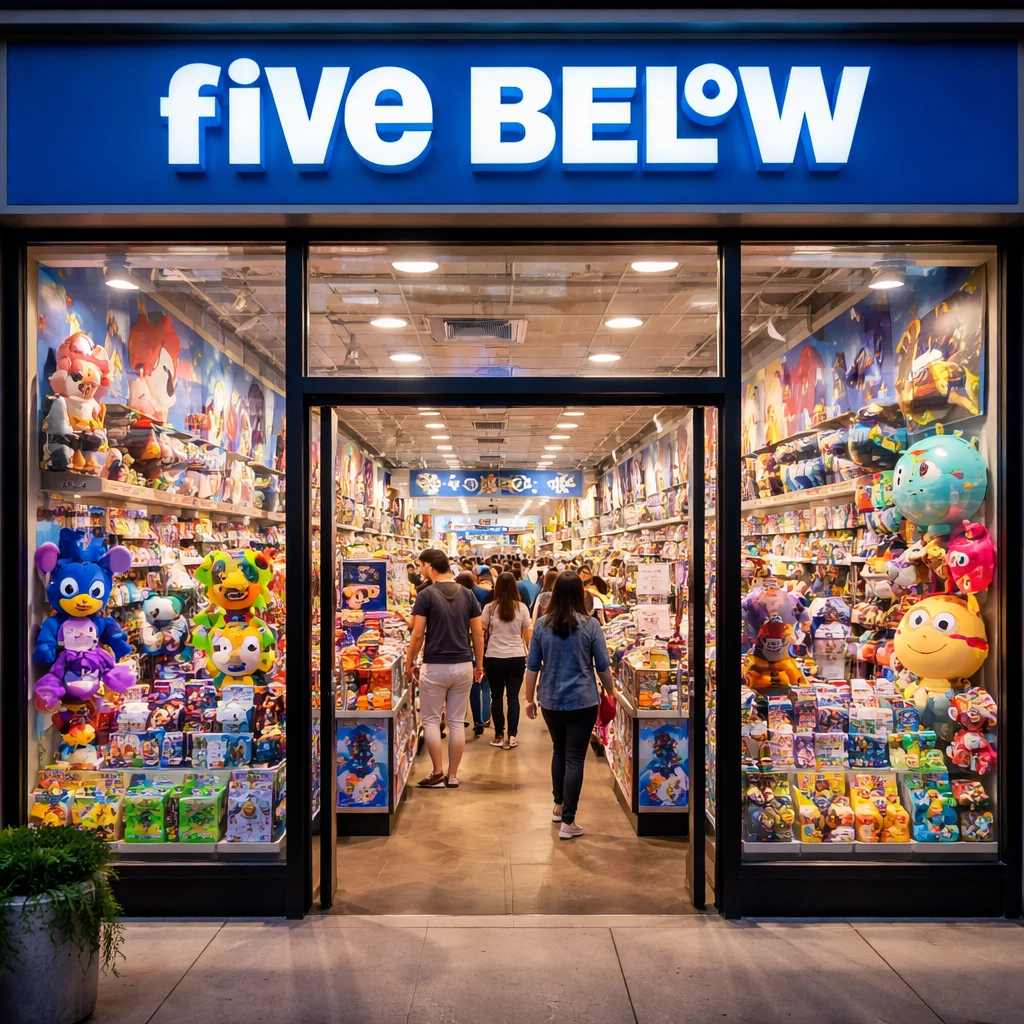
Goldman Sachs has reiterated a Buy rating on Five Below with a price objective of $231.00, representing roughly a 25% premium to the retailer's current share price of $185.42. The firm highlights movie licensing tied to a heavy 2026 film schedule as an underrecognized lever that could drive incremental traffic and lift average transaction values.
According to Goldman Sachs, the strategy of rolling out licensed assortments across entertainment properties can be a meaningful catalyst for foot traffic and higher basket sizes. The bank also lists Five Below among its five most debated stocks, signaling elevated investor discussion around the retailer's growth trajectory and execution.
The company has delivered solid top-line momentum, with revenue growing 15.78% over the past twelve months. Separately, 18 analysts have raised their earnings expectations for the near term, a reflection of heightened optimism among the sell side about Five Below's ongoing performance.
Goldman Sachs draws attention to 2026's movie pipeline, particularly the second half of the year, noting high-profile releases such as Super Mario Galaxy, Minions, and Avengers as potential merchandising opportunities. The bank suggests these films could help Five Below maintain comparable sales growth even as the retailer laps strong prior-year comparisons and navigates the effects of price increases.
The brokerage also points to the retailer's recent track record: a roughly 95.22% total return in the past year, which has coincided with a series of successful holiday merchandising efforts. Goldman's view is supported by the retailer's earlier Wicked licensing campaign, which the firm cites as evidence that movie tie-ins can drive traffic and sustain higher price points in the short to medium term.
Goldman Sachs notes that interest in movie merchandise generally runs about three to four months following a release, though franchises with broad, enduring appeal can extend demand beyond a film's initial window. At present, licensing accounts for only a low-single-digit to mid-single-digit share of Five Below's total sales, suggesting room for this channel to expand if management continues to refine its licensing strategy.
Other Wall Street firms have adjusted their outlooks following the retailer's recent seasonal performance. UBS raised its price target to $255, flagging a strong fourth-quarter showing and projecting a 14.5% increase in comparable sales. Truist Securities also lifted its target to $236, citing a 14.5% comparable-sales gain and crediting effective marketing and inventory management as drivers of the result. Guggenheim set a new target at $225, characterizing the holiday period as the company's strongest to date.
Craig-Hallum moved its target to $240, basing the view on a fiscal-year-2027 earnings-per-share estimate of $8.00. Bernstein raised its price target to $195 while maintaining a Market Perform rating, noting the company’s initiatives in merchandising and marketing. Most of these firms retained Buy ratings on the stock, with Bernstein the notable exception in maintaining Market Perform.
Together, the revisions and unchanged Buy ratings from the broker community reflect a broadly positive reception to Five Below's recent sales momentum and strategic choices in merchandising and marketing.
Summary
Goldman Sachs reaffirmed a Buy rating on Five Below with a $231 price target, seeing movie licensing tied to a strong 2026 film slate as an underappreciated growth driver. The retailer has posted 15.78% revenue growth over the past year and a near 95.22% price return, while multiple brokers have raised price targets after robust holiday sales and comparable-sales gains.
Key points
- Goldman Sachs maintains a $231 price target on Five Below, implying a 25% upside from $185.42.
- Movie licensing tied to the 2026 film pipeline is seen as a lever for traffic and higher average transaction values; licensing currently represents low-single-digit to mid-single-digit percent of sales.
- Several brokerages increased price targets following strong holiday performance and reported 14.5% comparable-sales improvements from UBS and Truist.
Risks and uncertainties
- Reliance on the 2026 film slate to materially contribute to sales - if the merchandising lift from the announced films underperforms, traffic and average transaction values may not rise as expected. This affects retail and consumer discretionary sectors.
- Licensing represents a relatively small share of total sales today - expansion requires successful execution and customer uptake, which is not guaranteed and impacts retail merchandising and branded consumer products.
- The retailer will be lapping strong prior-year comparisons and price increases; maintaining comparable-sales momentum will be challenging under tougher year-over-year comparisons, a risk for retailers and the broader consumer discretionary sector.
Investors will likely monitor how Five Below scales licensing programs from a small base, the duration of merchandise interest around film releases, and whether upcoming movie tie-ins can sustain comp growth into 2026. Analyst revisions and higher price targets from multiple firms underscore the market's focus on the retailer's merchandising mix, inventory execution, and promotional cadence as determinants of near-term performance.