
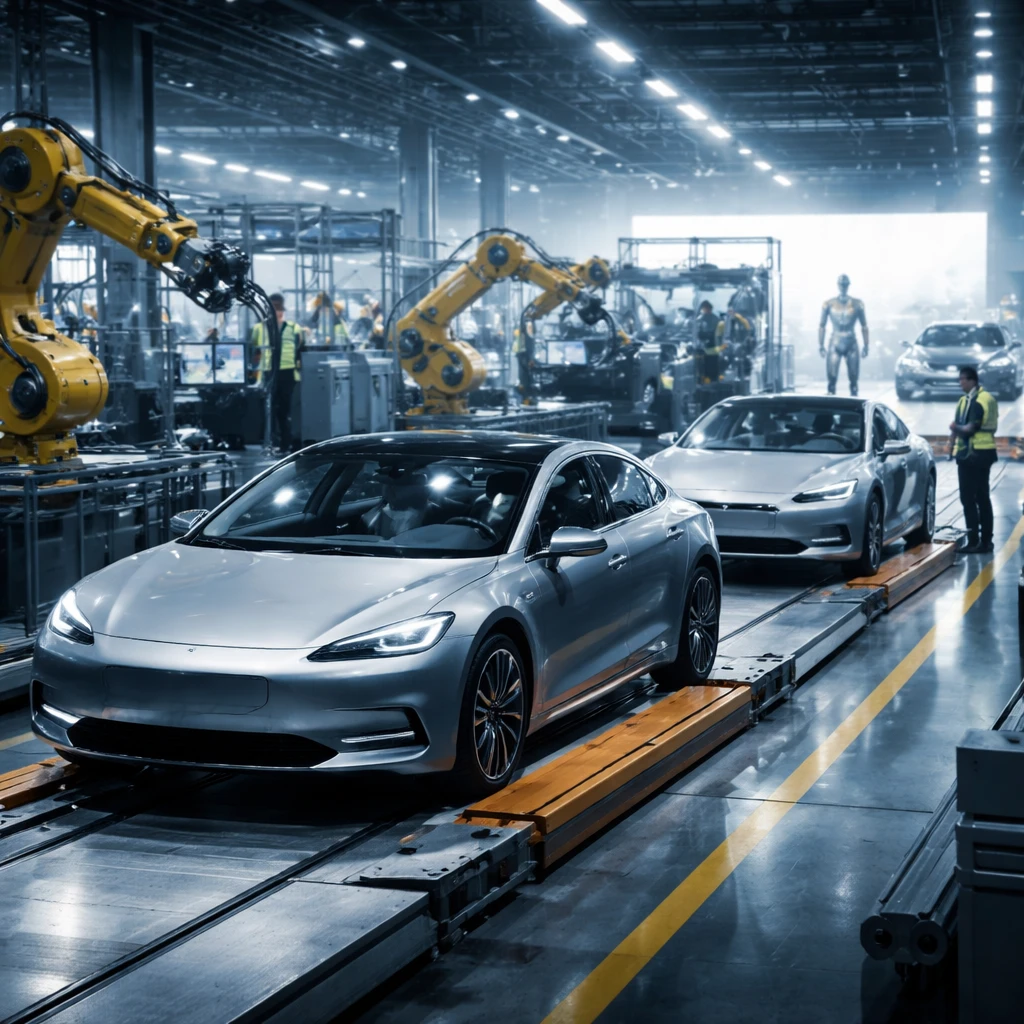
Barclays has reiterated an Equalweight recommendation and preserved a $360.00 price target on Tesla (TSLA) following the automaker's announcement that production of the Model S and Model X will cease by next quarter. The research note highlights that, although the two models accounted for only 2% of Tesla's volume in 2025, their discontinuation carries symbolic weight for the company's strategic direction.
Barclays frames the end of S/X production as a "symbolic baton pass" - signaling a transition from traditional automotive manufacturing to an emphasis on what the bank describes as Physical AI. The firm says Tesla is redirecting its core growth priorities toward autonomy - including Robotaxi and Full Self-Driving (FSD) initiatives - and robotics, asserting that Tesla "is not an auto company."
The research brief also drew attention to a substantial planned increase in capital expenditures. Barclays projects Tesla's capex will surge to more than $20 billion in 2026, compared with roughly $9 billion in 2025. That elevated spending projection does not yet incorporate Tesla's potential "TeraFab" chip production facility, implying capex could remain elevated for multiple years. InvestingPro data cited in the note indicates Tesla holds more cash than debt on its balance sheet, providing some cushion for these investments.
Barclays warned that the investment program is likely to produce negative free cash flow in the near term, but nonetheless observed that Tesla stock "is likely to remain frothy." The note points out the stock was trading at roughly a 200x 2026 price-to-earnings multiple, a level Barclays identified as making Tesla one of only two companies worldwide with a market capitalization above $100 billion and a P/E ratio exceeding 150x.
InvestingPro figures referenced in the analysis show an even higher current P/E of nearly 300 and a market capitalization of $1.43 trillion. The firm’s data also indicate relatively weak gross profit margins at 17.01% and notable share-price volatility with a beta of 1.84.
On results, Tesla reported fourth-quarter revenue of $25 billion and earnings per share of $0.50, essentially in line with consensus estimates of $25.1 billion in revenue and $0.45 in EPS. The company’s automotive gross margin, excluding regulatory credits, improved to 17.9%, a 250 basis point increase from the prior quarter.
Analysts across the industry reacted to the earnings and strategic signals with a range of target changes and reiterated ratings. Mizuho raised its price target to $540 and kept an Outperform rating. Goldman Sachs trimmed its target to $405 from $420, citing Tesla's growing emphasis on artificial intelligence programs such as FSD and robotaxis. Baird reiterated an Outperform rating while noting the company's doubled capex plans for 2026. RBC Capital reaffirmed a $500 price target and an Outperform stance, highlighting the planned increase in capital spending from about $9 billion in 2025 to over $20 billion in 2026. Jefferies maintained a Hold rating with a $300 target and described the recent earnings call as notable, pointing to a healthy core auto margin and cash position.
Barclays' maintained Equalweight rating and $360 target sit well below the prevailing market price, underscoring the firm's view that recent investor enthusiasm has driven the stock above what it considers fair value. The research note pairs that valuation assessment with the expectation of sustained heavy investment and an active pivot toward autonomy and robotics as central to Tesla's growth strategy.
Key takeaways:
- Barclays reiterates Equalweight and $360 price target as Tesla phases out Model S and Model X and shifts focus to autonomy and robots.
- Tesla is forecast to elevate capital expenditures to more than $20 billion in 2026, up from about $9 billion in 2025; this does not yet include a potential TeraFab chip facility.
- Despite likely near-term negative free cash flow, Tesla is trading at premium valuation multiples and currently shows a high P/E, weak gross profit margins, and elevated volatility.
Sectors affected:
- Automotive - shift in product mix and manufacturing footprint as Model S and Model X are phased out.
- Technology and AI - increased emphasis on autonomy, FSD, robotaxis, and robotics.
- Semiconductor/capex-intensive industries - possible implications from a prospective TeraFab and sustained high capital spending.