
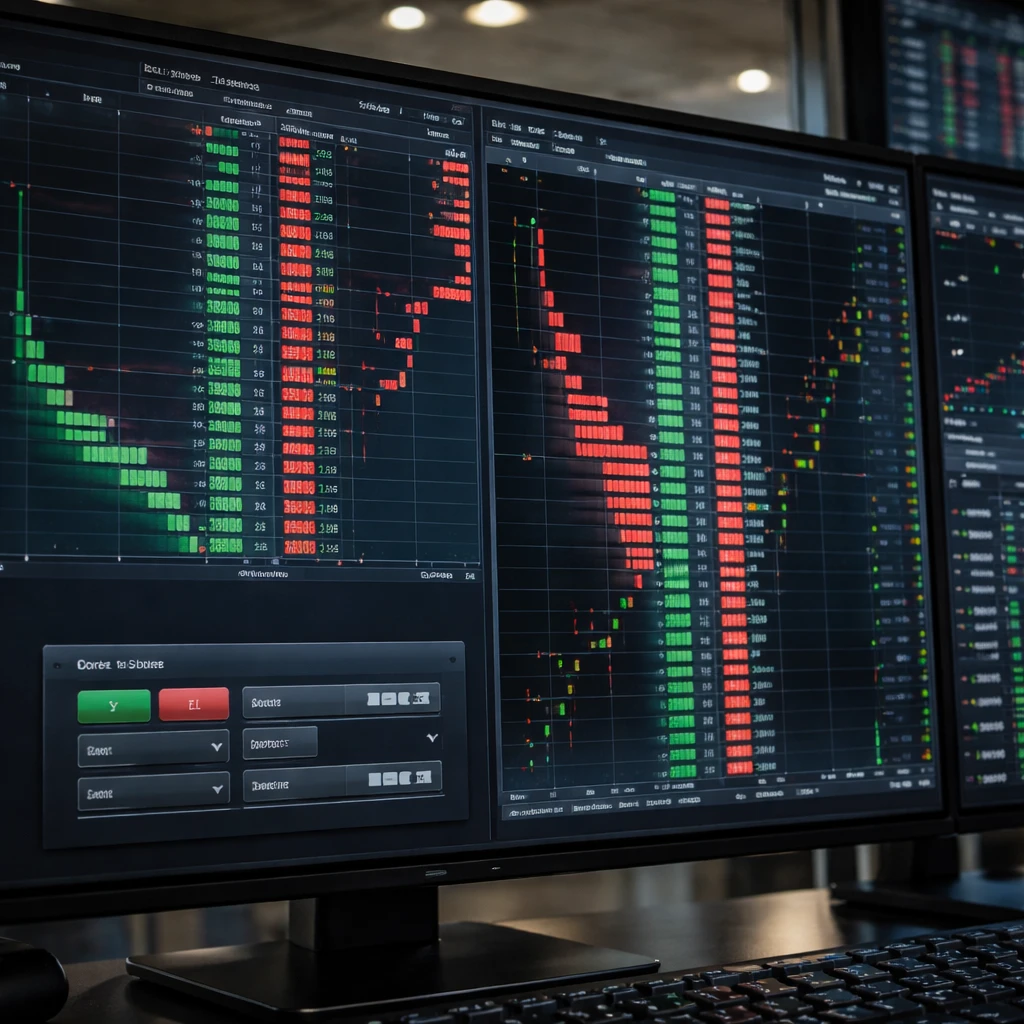
Order execution is a mechanical process that converts an intention to buy or sell into an actual trade. It sits at the intersection of human decisions, platform settings, and market microstructure. Small missteps at this stage can convert an otherwise sensible plan into avoidable cost. This article examines common order execution mistakes, why they arise, and how they manifest in real venues. The focus is on order types, time-in-force instructions, routing, and the mechanics of fills. No trading strategies are discussed, and nothing here should be taken as investment advice.
What Counts as an Order Execution Mistake
A common order execution mistake is an error in how an order is specified, routed, or timed that leads to an unintended price, size, sequence, or fee outcome. The decision to buy or sell is separate from the execution of that decision. Execution mistakes are about the path between an idea and the printed fill. Typical categories include:
- Selecting the wrong order type relative to liquidity conditions, such as submitting a market order into a thin book.
- Misunderstanding stop, stop-limit, or time-in-force instructions, which can produce unexpected triggers or cancellations.
- Ignoring the bid-ask spread, queue depth, and tick size, which shape price and fill probability.
- Overlooking venue differences, routing behavior, fees, and rebates that alter effective cost.
- Operational errors such as wrong side, wrong quantity, or orders submitted during a trading halt.
Why These Mistakes Occur
Markets aggregate many participants and multiple venues under precise matching rules. Errors occur because:
- Microstructure is detailed. Price-time priority, maker-taker fees, auctions, hidden liquidity, and short sale restrictions create subtle effects that are easy to misread.
- Interfaces compress complexity. A single ticket often hides flags such as post-only, reduce-only, routing preferences, and time-in-force behaviors.
- Liquidity varies over time. Depth can change dramatically around the open, the close, and news releases. An order type that behaves well in stable conditions can behave very differently in a gap or during a halt reopening.
- Latency and data gaps exist. Quotes may be delayed, consolidated feeds may differ from direct feeds, and a fast tape can move between click and acknowledgement.
- Human factors appear. Fat-finger errors, symbol confusion, decimal placement, and confirmation bias all surface at the moment of execution.
How Orders Reach the Market
A brief map helps to ground the discussion. An order begins on a ticket where the side, quantity, price, and instructions are set. It passes through broker checks for risk limits and regulatory rules. The order may be routed to an exchange, an alternative trading system, or an internalizer. Matching engines follow deterministic rules, commonly price-time priority. Visible orders at a given price join a queue, and fills are allocated to the earliest resting orders first. Marketable orders that cross the spread execute against the best available prices until filled or until instructions prevent further execution. Every detail in the ticket affects this journey.
Common Mistakes and How They Show Up
Using Market Orders Without Regard to Liquidity
A market order instructs immediate execution at the best available prices. In liquid instruments with tight spreads, the realized price often tracks displayed quotes. In illiquid instruments, or during volatile periods, a market order can walk the book and pay multiple price levels. The resulting slippage is simply the difference between the expected price at submission and the average fill price across levels. The mistake is not the use of a market order itself, but the use of a market order without regard to depth, volatility, or the presence of auctions and halts.
Why this exists is straightforward. Order books have finite depth at each price, and best quotes are not promises for unlimited size. When your size exceeds the depth at the top, the matching engine executes remaining quantity at the next available levels. Hidden liquidity and midpoint venues can blunt this effect, but they are not guaranteed.
Confusing Limit, Stop, and Stop-Limit Instructions
A limit order sets a maximum buy price or a minimum sell price. It will not trade worse than the limit, but it may not fill. A stop order is a trigger that converts into a market order once the stop price is touched or crossed. A stop-limit order converts into a limit order at the stop price, which then seeks execution subject to the limit constraint. Confusion among these leads to two common errors:
- Stop becomes market during a gap. A sell stop below the last trade can activate after a gap down and execute across levels with little or no liquidity. Traders often expect a stop to protect a specific price, but the stop only guarantees activation, not a particular fill.
- Stop-limit does not execute when protection meets reality. The stop triggers, the limit posts, and price quickly trades through the limit without available size. The order remains unfilled and the position persists in a fast move.
These behaviors arise from the simple rule that stops control when an order enters the market, and limits control the worst acceptable price. They handle different risks and can produce very different outcomes during discontinuous moves.
Misaligned Time-in-Force With Session Behavior
Time-in-force instructions govern how long an order is active. Common settings include day, good-till-canceled, immediate-or-cancel, and fill-or-kill. Mistakes appear when the instruction interacts with session boundaries or venue rules in unexpected ways.
- Day orders expire at the session close. An order left to rest may vanish before an after-hours print, resulting in a missed fill that was assumed to persist.
- IOC and FOK reduce or eliminate partial fills. Useful when partial size is undesirable, but they also reduce execution probability. In thin books this can lead to repeated cancellations without progress.
- Pre-market or after-hours restrictions. Some venues restrict order types or will not accept stop orders outside the regular session. Submitting incompatible instructions results in rejection or unexpected queuing until the next eligible session.
Ignoring the Bid-Ask Spread and Depth
The spread is the immediate cost of crossing. A tight spread with ample depth may make marketable orders relatively inexpensive. A wide spread or shallow depth can make the same order materially costly. Two related mistakes are common:
- Focusing on the last trade instead of the inside market. Last trade can be stale or far from the current inside. Anchoring on it leads to misplaced limits or false expectations about execution probability.
- Assuming equal depth across sides. The bid ladder and ask ladder can be asymmetric. A passive buy that joins a long queue at a popular round number may fill slowly, while the same price on the offer can clear quickly. Queue length matters for timing.
Expecting Single Fills for Large or Odd Sizes
Order books are fragmented across venues and often display only a slice of real interest. Large orders commonly fill in pieces across prices and venues. Odd-lot orders may have different display rules and priority in some markets. The mistake is assuming that print size will match order size in a single event. Partial fills affect average price and can interact with time-in-force flags if the remaining balance cancels prematurely.
Overlooking Tick Size, Lot Size, and Price Increments
Every instrument trades in discrete increments. Submitting a price that violates tick size will lead to rejection or auto-adjustment by the broker. Small differences in tick size can shift queue position because all orders at the same price share priority based on time. Joining at a crowded price level may place an order far back in the queue. Minimum lot sizes and round-lot definitions also affect visibility and priority in some venues. Ignoring these details changes both fill probability and timing.
Not Accounting for Fees, Rebates, and Minimum Charges
Execution cost is not only price. Explicit costs include commissions, exchange fees, regulatory fees, and in some markets, maker-taker rebates or charges. Many platforms apply minimum ticket charges that dominate small orders. A trade that looks efficient on price can become inefficient once fees and minimums are included. The mistake is analyzing only the gross price improvement without the net effect of explicit costs.
Assuming Routing Is Neutral
Routing determines where the order is sent and how it interacts with internalization, exchanges, and alternative trading systems. Different venues have different speed, fees, and hidden-liquidity characteristics. Some routers prioritize speed to first fill, while others attempt to capture rebates or midpoint fills. In fragmented markets, quotes across venues are consolidated, but execution quality still depends on where your order is first posted or first executed. Assuming all routers and venues behave identically can produce consistent but misunderstood differences in fill quality and slippage.
Placing Orders Into Auctions, Halts, or Limit-Up Limit-Down States
Opening and closing auctions follow special matching rules. Order types allowed and the priority logic differ from continuous trading. During halts or limit-up limit-down states, execution may be paused or constrained. Submitting standard instructions at these times can queue an order without the expected priority or lead to rejections. The mistake arises from treating these periods as equivalent to continuous trading.
Relying on Delayed or Stale Data
Some feeds are delayed by default. Even real-time feeds can become stale during fast conditions. A ticket built off stale quotes will submit prices that are no longer near the market. The result is unexpected non-fills for passive orders and larger-than-expected slippage for marketable orders. Staleness also affects stop triggers if the reference price in the platform lags the venue price.
Wrong Side, Wrong Symbol, Wrong Quantity
Operational errors are among the most costly and most preventable. Submitting buy instead of sell, confusing a parent symbol with a related class, or entering an extra zero in quantity can transform the intention of a trade. Decimal placement errors are common in instruments quoted in sub-dollar or fractional increments. The matching engine will process what is submitted, not what was intended.
Misunderstanding Short-Sale Constraints and Borrow Availability
Short sales can be subject to additional rules. Some markets impose price tests or restrictions after a decline. Borrow availability and locate requirements can constrain whether a short sale can be executed at all. Submitting a sell-short order without borrow may result in rejection or later buy-in risk. Treating a short sale like a standard sell order can misstate execution probability and timing.
Confusing Post-Only, Reduce-Only, and Display Flags
Advanced flags alter how an order interacts with the book. Post-only prevents the order from executing immediately by canceling if it would cross. Reduce-only allows only reductions of an existing position. Hidden or iceberg flags affect display and priority. Misapplied flags can cancel orders that were meant to execute, or hide orders that were meant to display to attract counterparties. The mistake is using advanced flags without understanding their interaction with the book and with the router.
Overlooking Currency and Settlement Effects
Cross-border trades introduce foreign exchange conversion and settlement calendars. Executing in a foreign currency can embed an additional spread and fee layer. Holidays and settlement conventions may differ, affecting when funds or securities are available. Treating international execution as a simple mirror of domestic practice can yield timing mismatches and costs that appear only at settlement.
Why Markets Produce These Outcomes
Each of the mistakes above traces to specific rules and constraints:
- Price-time priority. Visible orders at a given price fill in queue order. Joining late at a popular level lengthens expected time to fill.
- Discreteness of price and size. Tick sizes and round lots create steps in both price and visibility that shape execution probability.
- Fragmentation and auctions. Multiple venues and special auction periods add diversity to matching behavior and eligibility of order types.
- Inventory and regulatory limits. Short-sale rules, borrow constraints, and venue halts impose binding constraints on when and how orders can execute.
- Cost structures. Fees and rebates are part of the microstructure and can change the net outcome of choices that look equivalent on gross price alone.
Real-World Contexts and Illustrative Examples
Example 1: A Market Order in a Thin After-Hours Book
Consider a trader who submits a small market buy after the close in a stock that trades actively during the day but sparsely after hours. The consolidated quote shows a 15 cent spread and only a few hundred shares at the best offer. The order is for several thousand shares. The execution walks through multiple price levels because each level has limited size. The average price paid is much higher than the displayed best offer. The mistake is not the desire to buy, but the assumption that after-hours liquidity resembles the regular session.
Example 2: A Stop Order Through an Overnight Gap
A protective sell stop is set just below a previous day close. Overnight news leads to a negative open far below the stop. At the open, the stop triggers and converts into a market order into an already falling tape. There is no trade at the stop price because the market jumped over it. The final fill is materially lower than the stop level. The gap and the order definition explain the outcome.
Example 3: A Day Limit Order That Expires Before After-Hours Print
A limit sell order rests near the close with time-in-force set to day. It remains unfilled at the bell and expires. Minutes later, after-hours trading prints through the limit price, but the order is no longer active. The trader expected persistence into the evening session, which was not part of the day instruction. The venue followed the instruction precisely.
Example 4: Queue Position at a Round Number
A participant submits a passive buy limit at a round number where many others also post. The order joins far back in a long queue. During the session, price touches the level several times, but only the earliest orders at that price receive fills. The participant never reaches the front of the queue. The visible interaction between round numbers, tick size, and price-time priority explains the non-fill.
Example 5: Routing and Fee Interaction
Two similar orders are submitted through different routers. One executes immediately at the inside with a small fee. The other seeks midpoint liquidity, partially fills, and then completes at a different venue with a rebate that reduces net cost but adds delay. Both outcomes are valid. The difference arises from router preferences and venue characteristics, not from the underlying instrument.
Diagnosing Execution Quality
Execution quality can be described with simple components that connect directly to the mistakes above:
- Spread cost. The cost of crossing from bid to ask or ask to bid at the time of execution. For passive orders, this term can be negative if the order earns the spread by providing liquidity.
- Market impact. The price movement caused by the order itself as it consumes liquidity or signals interest. Walking the book is an observable form of impact.
- Timing cost. Adverse price movement between decision and execution, including delays from queue position, session boundaries, or router detours.
- Fees and rebates. Explicit costs that vary by venue, order flag, and side of the trade.
- Residual risk. The portion of an order that remains unfilled or that executes at times or places different from what was intended.
Post-trade analysis often attributes slippage to these components. Linking the cost to a specific detail in the order ticket is a reliable way to understand whether an execution mistake occurred or whether the outcome was an expected consequence of the chosen instruction.
Platform and Data Considerations
Differences across platforms and data feeds influence execution outcomes. Some platforms default to marketable limit orders instead of pure market orders. Others default to day time-in-force rather than good-till-canceled. The design of confirmations, the display of available routes, and whether quotes include depth beyond the top of book all affect user expectations. When quotes are consolidated, the top of book may show a national best bid and offer that aggregates across venues, yet your posted order will sit on a single venue and inherit that venue’s queue position and fee schedule. These facts can convert a correct prediction of direction into a poor realized price if they are not accounted for at entry.
Regulatory and Venue Rules That Interact With Orders
Execution is constrained by rules that vary by instrument and market:
- Short sale price tests and locates. Sell-short orders may be restricted after declines, or require confirmed borrow. These conditions affect eligibility and timing.
- Limit-up limit-down and circuit breakers. Price bands can pause execution or force auctions. Orders can queue or be canceled during these periods depending on instructions.
- Corporate actions and symbol changes. Splits, dividends, and ticker changes alter reference prices and quantities. Open orders may be adjusted or purged according to venue policies.
- Opening and closing auctions. Special order types and cutoff times apply. Auction imbalances can move the indicative price relative to continuous trading.
Mistakes often arise when a general assumption about trading is applied to a special regime without verifying the rules that govern it.
Human Factors and Operational Controls
Execution errors frequently trace to human factors. Examples include hurried entries near the close, copying orders across symbols with similar tickers, or typing share counts under time pressure. Many professionals use checklists and confirmation dialogs to reduce these risks. Some brokers provide pre-trade checks, maximum order size limits, or cancel-all hotkeys. These are process controls rather than market predictions. They target the class of errors that come from the interface rather than from the market.
Putting It All Together in Practice
In practice, minimizing execution mistakes begins with precise definitions. A market order is a command to execute now. A limit order is a command to respect a price. A stop is a trigger, not a price guarantee. Time-in-force defines how long the command is valid. Routing and venue selection determine where the command is carried out. Fees and rebates affect the net outcome. Liquidity and volatility are the environment in which all of this occurs.
When an outcome is surprising, the first place to look is the order ticket and the venue rules, followed by the state of the order book at the time of submission. If the ticket and rules explain the result, the event is a property of the instruction rather than an unpredictable anomaly. That framing keeps the focus on mechanical clarity and reduces the tendency to confuse operational errors with market behavior.
Key Takeaways
- Execution mistakes arise from mis-specified order instructions, misunderstood venue rules, or mismatched expectations about liquidity and timing.
- Market, limit, stop, and stop-limit orders behave differently during gaps, auctions, and halts, which can produce fills far from expectations.
- Spread, depth, tick size, and queue priority determine both price and probability of fill, especially for larger or passive orders.
- Routing choices, fees, and rebates change the effective cost of an execution even when the printed price looks similar.
- Operational diligence on side, symbol, size, time-in-force, and session alignment prevents many costly but avoidable errors.