
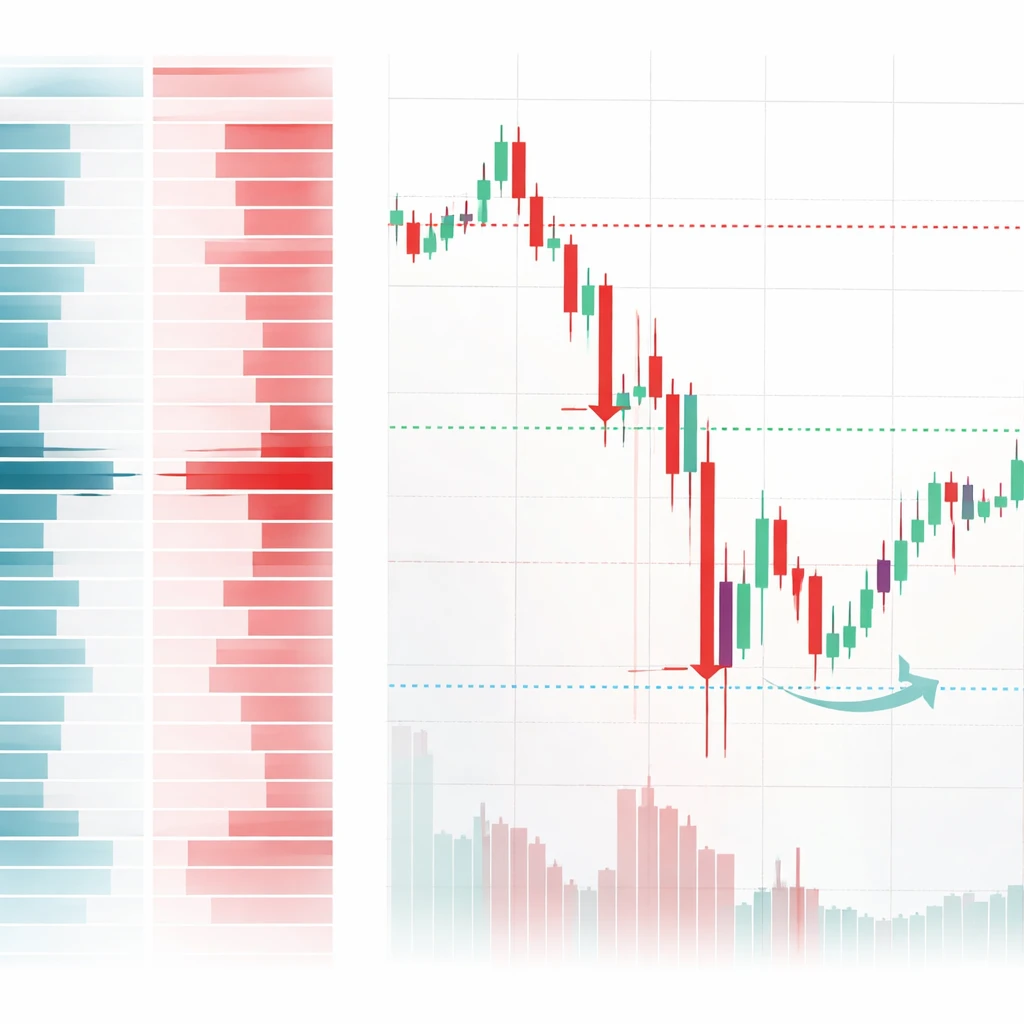
Risk and reward estimates are only as reliable as the assumptions behind them. Slippage is one of the most important and least intuitive assumptions that alters those estimates. It represents the difference between the price a trader intends to transact and the price actually obtained. Even modest slippage can widen realized losses, shrink realized gains, and change the break-even profile of a method. Understanding this mechanism is central to protecting trading capital and maintaining long-term survivability.
Defining Slippage and Its Benchmarks
Slippage is the execution price shortfall relative to a chosen benchmark. The concept is simple but requires care in definition.
Common benchmarks include:
- Decision or arrival price: the price when the decision to trade is made.
- Quoted midprice: the midpoint between the best bid and best ask at the time of the decision.
- Expected stop or target level: the price level that triggers an exit, often converted into a marketable order.
- VWAP or auction price: for institutional contexts where participation over time or at the open/close is intended.
Slippage can be positive or negative. For a buy order, positive slippage means paying more than the benchmark, which is adverse. Negative slippage would mean paying less than the benchmark, which is favorable. In practice, adverse slippage tends to be more frequent in stressed conditions, particularly around stop executions, because liquidity can recede just when it is most needed.
How Slippage Enters the Risk/Reward Equation
Risk and reward are usually planned in advance. Consider a long position with a planned entry at E0, a stop at S0 below E0, and a target at T0 above E0. The intended per-unit risk is R0 equal to E0 minus S0. The intended per-unit reward is W0 equal to T0 minus E0.
Now add three forms of slippage:
- Entry slippage, denoted se. The realized entry is E equal to E0 plus se.
- Stop slippage, denoted ss. If the stop is triggered and executed worse than S0, the realized stop is S equal to S0 minus ss for a long. This increases the loss magnitude.
- Target slippage, denoted st. If the profit-taking order fills worse than T0, the realized target is T equal to T0 minus st for a long.
From these definitions, the realized loss per unit if the stop is hit becomes L equal to E minus S, which simplifies to R0 plus se plus ss. The realized gain per unit if the target is reached becomes G equal to T minus E, which simplifies to W0 minus st minus se.
Two conclusions follow immediately. First, adverse entry slippage hurts both sides by increasing loss and reducing gain. Second, asymmetric exit slippage typically makes losses larger than planned and gains smaller than planned. The same logic holds for short positions with signs reversed, where slippage that moves the fill away from the planned price is adverse.
Why Slippage Is Critical to Risk Control
Risk control is about limiting the size and frequency of adverse outcomes to preserve capital. Slippage affects both the size of losses and the distribution of outcomes, which makes it central to any risk framework.
Expectancy provides a succinct lens. Let p be the probability of a gain, and 1 minus p the probability of a loss. Planned expectancy per unit is p times W0 minus (1 minus p) times R0. With slippage, the relevant quantities become W0 minus st minus se for winners and R0 plus se plus ss for losers. Even if the hit rate p does not change, the expectancy compresses because winners are reduced and losers are enlarged.
The break-even win rate illustrates the same point. Without slippage, the break-even win rate p* equals R0 divided by R0 plus W0. With slippage, the effective win size shrinks and the loss size grows, so p* increases. A method that appeared comfortably profitable under idealized fills can move to marginal or negative expectancy once realistic slippage is introduced.
Slippage also increases variance. Losses become more variable because some stops slip more than others, especially during volatile moves and gaps. Higher variance deepens drawdowns for the same average expectancy and reduces geometric growth potential. The long-term capital path is therefore sensitive not only to average slippage but also to its distribution, including tail events.
Sources of Slippage in Real Markets
Slippage arises from several microstructure and behavioral factors that interact.
- Bid-ask spread: Executing at the quoted offer when buying or at the bid when selling incurs the spread. This is not the only source of slippage, but it is the baseline cost.
- Depth and liquidity: Thin order books mean less quantity is available at the top of the book. Market orders and marketable limit orders can walk the book and experience price impact.
- Volatility and news: Fast prices produce rapid quote updates and cancellations. Stops convert to marketable orders when triggered and may fill several ticks or more away from the stop level.
- Order type and routing: Market orders prioritize immediacy over price. Limit orders prioritize price but risk missing. Smart order routing across venues can affect queue position and fill quality.
- Time of day: Slippage is often higher at the open and around the close, and around scheduled announcements, when liquidity is transient and spreads can widen.
- Own order size: Larger orders relative to average trade size exert more impact and can incur partial fills across multiple price levels.
Practical Scenarios That Alter Planned Risk/Reward
Slippage is not uniform across strategies or time horizons. The impact depends on the ratio of slippage to the planned stop distance and target distance.
Tight-stop intraday approach: Suppose a plan uses a stop that is 5 ticks away from entry with a target 10 ticks away. If average entry slippage is one tick and average stop slippage during fast moves is two ticks, then the realized loss on stopouts can be 5 plus 1 plus 2 equals 8 ticks. The realized gain on targets might be 10 minus 1 minus 1 equals 8 ticks if targets also slip one tick on exit. A clean 2 to 1 plan has become roughly 1 to 1 before fees. Any further deterioration raises the break-even win rate materially.
Swing approach across news or overnight: Consider a plan with a 3 percent stop and a 6 percent target. Overnight gaps can produce stop fills that are several tenths of a percent beyond the stop. If average stop slippage is 0.4 percent during gaps and entry slippage is 0.1 percent, the realized loss becomes 3.5 percent while realized winners might be closer to 5.7 percent if targets slip 0.2 percent and entry slips 0.1 percent. The reward-to-risk ratio compresses from 2.0 to approximately 1.63. Over many trades this reduces compounded growth and increases drawdown risk.
Partial fill and impact scenario: A buy order seeking 5,000 units encounters only 1,500 at the top of the book and the remainder spills into higher offers. The average fill ends up several ticks above the decision price. If the stop triggers during a rush of market sell orders, the exit can traverse multiple bid levels, enlarging the loss further. Position size interacts with slippage in this way, which is why realized outcomes can diverge sharply from small-scale backtests.
Measuring Slippage with Implementation Shortfall
To quantify slippage, many practitioners use implementation shortfall. The method records the decision benchmark and compares it with the volume-weighted average execution price, inclusive of explicit fees and rebates if desired.
For a buy order, implementation shortfall equals the average execution price minus the benchmark. For a sell order, it equals the benchmark minus the average execution price. Aggregating this across entries and exits gives a round-trip measure that can be compared with planned risk and reward distances.
Measurement choices matter. Using the last trade price as the benchmark can understate slippage during wide spreads. The quoted mid or a short time-weighted mid is usually a more stable comparator for arrival price. Stop and target slippage can be measured relative to the stop or target level rather than the original arrival price, which isolates the exit dynamic. Expressing slippage in basis points, ticks, or as a fraction of the planned stop distance helps link it directly to the risk/reward framework.
Modeling Slippage in Risk/Reward Planning
Slippage is not a single number. It is a distribution that varies with market state. Modeling it explicitly provides a more accurate picture of potential outcomes.
A simple approach is to define typical values for entry, target, and stop slippage under normal conditions, and separate values for stressed conditions such as high volatility sessions. A more informative approach is to use empirical distributions from actual fills and simulate how those distributions transform planned risk and reward. The realized loss per unit becomes the planned stop distance plus random entry and stop slippage. The realized gain per unit becomes the planned target distance minus random entry and target slippage. Running these transforms through a strategy’s historical trade path reveals how expectancy and drawdown characteristics change.
The tail of the slippage distribution can be especially consequential. A small number of large negative slippage events, often associated with gaps or thin liquidity, may dominate the drawdown profile. This is one reason why long-term survivability depends on robust assumptions about worst-case slippage, not only averages.
Break-even Win Rate Under Slippage: A Numerical Illustration
Suppose the planned parameters are R0 equal to 1 unit of loss if stopped and W0 equal to 2 units of gain if the target is hit. The planned break-even win rate is 1 divided by 3, or about 33.3 percent. Now assume average entry slippage of 0.1 units, average stop slippage of 0.2 units, and average target slippage of 0.1 units.
The realized loss per losing trade becomes 1 plus 0.1 plus 0.2 equals 1.3 units. The realized gain per winning trade becomes 2 minus 0.1 minus 0.1 equals 1.8 units. The new break-even win rate is 1.3 divided by 1.3 plus 1.8, which equals 1.3 divided by 3.1, or about 41.9 percent. The method now requires a meaningfully higher hit rate to break even, solely due to slippage.
This example omits commissions and fees. Including explicit costs would raise the break-even threshold further. The algebra shows why consistent underestimation of slippage results in disappointing realized performance despite apparently sound planning.
Asymmetry and Adverse Selection
Slippage is not symmetrical across trade outcomes. Stops tend to trigger during adverse price moves when liquidity is thin and other market participants are also attempting to exit. This produces larger average slippage on stops than on entries, and often larger than on targets. In addition, a limit order that appears to improve price may experience adverse selection. It tends to be filled when the other side has superior information or urgency, which can translate into higher subsequent loss probability.
These effects cause realized loss distributions to be skewed. Occasional large slips on exits can dominate downside variance, which in turn affects position sizing frameworks that assume stable loss sizes. Awareness of this asymmetry is important when interpreting historical performance and building forward assumptions.
Common Misconceptions and Pitfalls
- Ignoring exit slippage: Many plans include spread and a small entry slip but assume precise stop and target execution. In practice, exits often slip more than entries.
- Assuming limit orders eliminate slippage: A limit may reduce price concessions but introduces miss risk. Partial fills and queue position can still produce effective slippage relative to the decision price.
- Using the last traded price as a fill proxy in backtests: This tends to underestimate slippage whenever spreads are wider than one tick or when volatility is elevated.
- Not scaling slippage with volatility and liquidity: Fixed tick assumptions break down across regimes. Earnings, macro releases, and openings usually show different slippage behavior.
- Overlooking own impact: Backtests that do not account for order size relative to market volume typically understate slippage, especially in small-cap equities, micro-cap futures hours, or thin crypto pairs.
- Forgetting round-trip aggregation: Focusing on entry only can obscure the cumulative effect of entry plus exit. Risk/Reward planning should reflect both legs.
Linking Slippage to Capital Preservation and Survivability
Long-term survivability depends on limiting drawdowns and preserving optionality. Slippage undermines both if left unmodeled. Larger effective losses shorten the distance to risk limits. A higher break-even win rate compresses margin for error. Increased variance lengthens recovery times from drawdowns and heightens the probability of ruin for a given capital buffer.
Geometric compounding is sensitive to variance. Two methods with the same arithmetic mean return can have different long-run outcomes if one carries larger variance from slippage. The reduction in compound growth due to variability is sometimes called volatility drag. Slippage contributes to this drag by introducing more dispersion in both win and loss realizations.
Finally, fat-tailed slippage events act as stress tests. A handful of severe gaps through stops can negate many small gains. Viewing slippage as part of the tail risk budget helps align position sizing and risk limits with realistic worst-case outcomes.
Integrating Slippage into Risk/Reward Analysis
Risk/Reward analysis is most informative when slippage is embedded at every step. The following practices are commonly used in professional contexts to make estimates more realistic, without suggesting any particular trading approach.
- Embed slippage in planned distances: Treat stop distance as planned stop plus expected entry plus expected stop slippage. Treat target distance as planned target minus expected entry minus expected target slippage. This reframes the plan in realized rather than idealized terms.
- Use distributions rather than constants: Capture typical, stressed, and tail scenarios for each leg of the trade. Evaluate expectancy and drawdowns across these scenarios, not only at the mean.
- Differentiate by context: Separate assumptions for opening trades, midday trades, and events. Maintain a high-volatility parameter set that can be switched in when conditions change.
- Monitor implementation shortfall continuously: Compare realized slippage against assumptions and update the model when deviations persist.
Worked Example: From Plan to Realization
Assume a plan for a liquid instrument with the following parameters:
Planned entry E0 at 100.00, stop S0 at 99.00, and target T0 at 102.00. Planned risk per unit equals 1.00. Planned reward per unit equals 2.00.
Historical analysis suggests average entry slippage of 0.05, average stop slippage of 0.10, and average target slippage of 0.03 under normal conditions. Under stressed conditions, these might widen to 0.10, 0.30, and 0.08 respectively.
Normal conditions: Realized loss per losing trade becomes 1.00 plus 0.05 plus 0.10 equals 1.15. Realized gain per winning trade becomes 2.00 minus 0.03 minus 0.05 equals 1.92. The effective reward-to-risk ratio is 1.92 divided by 1.15, approximately 1.67. The break-even win rate rises from 1 divided by 3 to 1.15 divided by 3.07, about 37.5 percent.
Stressed conditions: Realized loss becomes 1.00 plus 0.10 plus 0.30 equals 1.40. Realized gain becomes 2.00 minus 0.08 minus 0.10 equals 1.82. The ratio compresses to about 1.30. The break-even win rate increases to roughly 43.5 percent. A plan that comfortably clears 40 percent win rate in calm markets may struggle if trades are executed during stress without adjusting assumptions.
Note that all values above exclude commissions, fees, and potential rebates. Adding explicit costs reduces the effective reward-to-risk ratio further.
Stop Types and Exit Mechanics
Stop orders are often central to risk control, yet they are also where slippage is most pronounced. A stop that triggers becomes a marketable order, which then consumes available liquidity at the bid for a long position or at the ask for a short position. In fast declines, bids can disappear faster than the order can be filled, creating a gap between the stop level and the execution price.
Stop-limit orders replace market certainty with execution uncertainty. They can reduce slippage but may fail to fill if the price trades through the limit without available liquidity at that level. The trade-off is between price control and fill certainty. Regardless of stop type, the effective risk budget should account for partial fills, queue priority, and the chance that execution occurs at multiple levels.
Venue, Routing, and Microstructure Considerations
Different markets and venues exhibit different slippage profiles. Fragmented equity markets rely on routers that decide where to send orders. Futures centralize trading but can still show queue-related effects and depth variability. Some crypto venues have periodic liquidity droughts or sudden surges. Payment for order flow, internalization, and dark pools can improve or worsen fill quality depending on the order type and size. These microstructure features influence both the average and the tail of the slippage distribution and therefore should be reflected in assumptions about risk and reward.
Interpreting Backtests in Light of Slippage
Backtests that ignore slippage tend to overstate reward-to-risk ratios and understate drawdowns. Several adjustments help interpretation, while avoiding any prescriptive trading advice.
- Apply realistic transaction cost models that include spread, entry slippage, exit slippage, and fees. Avoid using last price as the execution proxy when spreads are nontrivial.
- Stress-test the model by expanding slippage parameters during historical high-volatility windows. Examine whether performance remains acceptable.
- Compare simulated fills with actual small-scale live fills to calibrate assumptions. Small differences per trade aggregate meaningfully over time.
The Role of Slippage in Position Sizing and Capital Limits
Position sizing frameworks often rely on a planned maximum loss per trade or per day. If slippage increases the realized loss beyond the plan, the sizing framework underestimates peak drawdown potential. The difference between planned and realized risk can be amplified by serial correlation in market stress, where multiple stopouts occur on the same day with elevated slippage. Incorporating slippage into the risk budget helps align position size, loss limits, and capital buffers with actual market behavior.
Positive Slippage and Realistic Expectations
Positive slippage can occur. For example, a buy limit order that rests below the market and is filled on a brief downtick improves entry. Targets sometimes fill better than anticipated during rapid rallies. While these events help, relying on them in planning can be misleading. Adverse slippage at stops tends to be larger and more frequent during stress than favorable slippage at entries and targets. Planning that fully credits occasional favorable slips while downplaying adverse tails typically overstates reward-to-risk quality.
Bringing It Together
Slippage is not a peripheral nuisance. It is a core parameter that shapes realized risk and reward. The mechanics are straightforward. Entry slippage raises the cost basis and tightens the path to profits. Stop slippage widens losses at the worst possible moments. Target slippage trims winners. Collectively, these effects raise the break-even win rate, increase variance, and pressure long-term capital preservation.
Robust risk management treats slippage as an essential input. Defining it precisely, measuring it empirically, modeling its distribution across regimes, and embedding it in Risk/Reward calculations create a more honest picture of what a method can deliver. This improves the chances of aligning expectations with realizations, which is the foundation of durability in any trading endeavor.
Key Takeaways
- Slippage is the difference between intended and realized execution prices, measured against a clear benchmark such as arrival price or the stop/target level.
- Adverse slippage increases realized losses and decreases realized gains, which raises the break-even win rate and compresses expectancy.
- Exit slippage at stops is often larger and more variable than entry slippage, especially during volatile or illiquid periods.
- Modeling slippage as a distribution, not a constant, provides a more accurate view of drawdowns, tail risk, and long-term survivability.
- Backtests and plans that do not embed realistic slippage assumptions typically overstate reward-to-risk ratios and understate capital risk.