
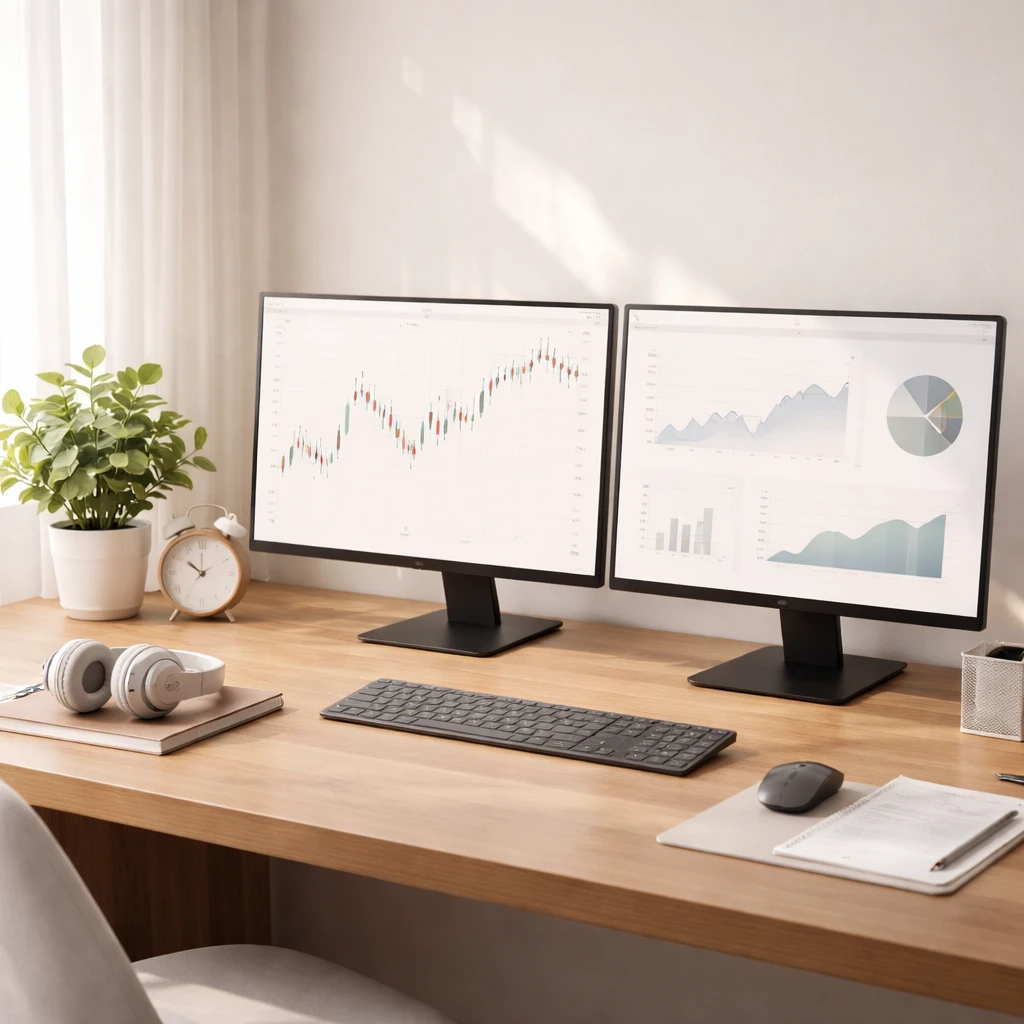
Discipline in markets is often described as a personal trait. In practice it is far more situational. The same individual can behave methodically in one context and erratically in another. Environment design for discipline is the systematic shaping of the contexts that surround decisions, so that desirable actions become easier and undesirable actions become harder. By constructing the right physical, digital, temporal, and social environment, consistency becomes a product of design rather than momentary willpower.
What Environment Design for Discipline Means
Environment design refers to the arrangement of cues, constraints, defaults, and feedback within the spaces where decisions occur. It recognizes that choices are not made in a neutral vacuum. Attention, emotion, and memory are highly sensitive to what is visible, available, and salient at the moment of action. A well designed environment reduces the cognitive effort required to follow a sound process and increases the effort required to deviate impulsively.
In contrast to exhortations to try harder, environment design treats discipline as a function of conditions. It borrows from behavioral economics, human factors engineering, and habit psychology. The core mechanisms are simple:
- Reduce friction on desired behaviors.
- Increase friction on undesired behaviors.
- Make important cues and information more salient, and make noise less salient.
- Use defaults and checklists to structure complex sequences of steps.
- Create feedback loops that reward adherence to process rather than short term outcomes.
Why This Matters in Trading and Investing
Markets present uncertainty, time pressure, and continuous streams of new information. These conditions burden working memory and increase reliance on heuristics. Under load, attention narrows, affect intensifies, and people tend to overweight recent events. Environment design helps counter these tendencies by aligning context with process. It is not a trading strategy. It is the scaffolding that supports whatever process the trader already uses.
Three features of market work make environment design particularly relevant:
- Information abundance: There is more data than any person can process. Without structure, attention can fragment, and choices can be driven by the most salient headline instead of the most relevant evidence.
- Intermittent reinforcement: Erratic feedback can reward poor process on some days and punish good process on others. A well designed environment buffers short term noise by keeping focus on repeatable behaviors.
- Emotional volatility: Gains and losses evoke strong physiological responses. Environmental controls can modulate exposure to triggers that amplify fear, euphoria, or regret.
Decision-Making Under Uncertainty
Under uncertainty, decision quality depends on how well one manages cognitive load, time allocation, and emotional arousal. Several mechanisms are central:
- Dual process dynamics: Fast, intuitive responses are efficient but can be biased. Slow, deliberative reasoning is more reliable but costly in time and effort. Environment design inserts cues that prompt deliberation when stakes or ambiguity are high, and it standardizes routine actions to conserve resources.
- Bounded attention: Human attention is selective. What is visible and easy to act on often dominates. By shaping visibility and ease of action, the environment becomes a choice architecture that nudges attention toward relevant variables.
- Affect and arousal: Elevated arousal can narrow attention to immediate cues and increase risk seeking after losses or risk aversion after gains. Physical and digital settings can be arranged to dampen unnecessary arousal and introduce brief pauses before commitment.
- Noise and variability: Idiosyncratic fluctuations in judgment, sometimes called noise, can be reduced by procedural structure. Checklists, standardized notes, and predefined evaluation windows decrease variability that is unrelated to information.
Principles of Effective Environment Design
Friction Management
Friction is the small cost or effort required to perform an action. It shapes behavior reliably. To support discipline, reduce friction on routine process steps and add modest friction to impulsive deviations. For example, if frequent context switching undermines analysis, remove nonessential notification sources during analysis windows. If impulsive clicks are a recurring problem, require an extra confirmation step that includes a brief note about rationale.
Defaults and Choice Architecture
Defaults anchor behavior, especially when attention is stretched. In a digital workspace, default views can show the information that aligns with the current task and hide unrelated metrics. Default time blocks for analysis, review, and rest provide temporal structure that reduces ad hoc decisions about when to work, which often drift toward either overwork or distraction.
Cues and Salience
What is salient guides attention. Physical cues such as a visible checklist pad on the desk, or a sticky note near the screen with three evaluation questions, can trigger desired steps. Salient cues should be few and specific. Excessive cueing becomes noise and loses effect.
Feedback Loops
Feedback should emphasize adherence to process rather than immediate outcomes. A daily log that records whether analysis steps were completed, or whether decisions were made within scheduled windows, provides rapid feedback on discipline. Aggregate process metrics weekly to separate signal from day to day variation.
Commitment Devices
Commitment devices help align short term impulses with long term goals. Examples include a cooling off interval before any discretionary change outside the plan, or an accountability review with a colleague at the end of the week. These devices do not eliminate flexibility. They slow unplanned changes enough to allow deliberation.
Designing the Physical Environment
The physical workspace influences arousal, fatigue, and error rates. Thoughtful adjustments can make disciplined work the path of least resistance.
- Layout simplicity: Keep the immediate visual field limited to what is required for the current task. Multiple monitors can be effective when each has a defined role. Avoid overlapping windows that invite rapid toggling.
- Lighting and posture: Natural light, moderate brightness, and a comfortable posture reduce fatigue. A small difference in comfort can compound over many hours, affecting patience and attention.
- Priming with setup rituals: A brief setup ritual at the start of a session, such as opening the analysis notebook, turning on a timer, and reading a two line intention statement, creates a contextual cue for focused work.
- Minimizing triggers: Visible profit and loss figures, social media feeds, or non work messages can act as triggers for emotional reactions. Keep such elements out of sight during decision windows unless they are required for the task.
- Accessibility of materials: Pens, a checklist pad, headphones, and a water bottle within arm’s reach reduce micro interruptions that lead to task switching.
Designing the Digital Environment
The digital interface is where many micro decisions occur. Small design choices can meaningfully alter behavior.
- Interface simplification: Configure the primary screen to show only relevant instruments and time frames for the current decision horizon. Group watchlists by purpose and hide lists that are not in use.
- Permissioned actions: Use platform settings that require a brief note, tag, or checklist confirmation before finalizing an action. The note can be as short as one sentence, enough to invoke deliberation.
- Alert architecture: Replace constant scanning with objective alerts. Alerts should be precise and few, tied to predefined conditions rather than vague thresholds.
- Hide volatile anchors: If frequent checking of unrealized profit and loss leads to erratic decisions, use display settings that de emphasize or hide real time figures during analysis, and review them only at defined intervals.
- Version control for changes: Maintain a simple log of setting changes and process tweaks. The act of logging reduces impulsive tinkering and creates a record for later evaluation.
Designing the Temporal Environment
Time structure is the backbone of consistency. Without it, decisions expand to fill whatever time is available, often with declining quality.
- Task batching: Separate analysis, decision, and review into distinct blocks. Mixing them encourages reactive shifts in criteria.
- Decision windows: Make decisions only within predefined windows that match the pace of the instruments you follow. Outside of those windows, focus on research or rest.
- Cooling off intervals: For any discretionary change that falls outside the usual process, insert a mandatory brief delay. Even two to five minutes can reduce spur of the moment actions when arousal is high.
- Energy alignment: Plan complex analysis for times of peak alertness. Use routine administrative tasks during lower energy periods. Personal circadian patterns matter more than fixed clock times.
- Recovery and boundaries: Include planned breaks and a firm daily stop time. Fatigue is a powerful driver of inconsistency.
Designing the Social Environment
Behavior is social even when work is solitary. Social structures can strengthen discipline or erode it.
- Accountability partner: A brief weekly call with a peer to review process metrics and one improvement experiment can sustain adherence. The conversation should be about process, not performance bragging or regret.
- Norms and language: Use language that emphasizes behaviors within control, such as preparation, adherence to checklists, and quality of notes. This frames success around process rather than short term results.
- Boundaries with social media: If online communities are useful for learning, consume them outside of decision windows. Treat them as education, not as live decision inputs.
Process Tools That Support Environment Design
Several simple tools tend to work well across contexts. They are mindset oriented and adaptable.
- Pre decision checklist: A concise checklist prompts the evaluation steps that are easy to skip under pressure. Keep it short enough to use every time.
- If then plans: Implementation intentions translate rules into cues. For example, if a headline appears during a decision window, then pause and log it, then continue with the checklist. The cue links directly to a response.
- Journaling templates: Use a template that captures reasoning, context, and emotions at the time of decision. This provides material for later review that goes beyond outcomes.
- Pre mortem and post mortem: A pre mortem imagines that a decision has gone poorly and asks what factors could have caused it. A post mortem reviews process execution regardless of profit and loss. Both tools reduce hindsight distortion.
- Process dashboards: A simple dashboard with adherence metrics, number of impulsive deviations, and time in focused work offers immediate feedback on discipline.
How Environment Design Shapes Decisions Under Uncertainty
Uncertainty increases the temptation to substitute easy questions for hard ones. Instead of asking whether the evidence suffices, the mind may ask how it feels in the moment. The environment can counter this substitution in several ways:
- By structuring attention: Salient cues and simplified interfaces reduce noise and limit the influence of irrelevant stimuli.
- By pacing commitment: Cooling off intervals and confirmation prompts introduce small pauses that reinstate deliberation when arousal is high.
- By separating analysis from outcomes: Process feedback and journaling reduce the tendency to judge decision quality by short term results, which are partly random.
- By reducing cognitive load: Defaults and batching conserve working memory, which preserves capacity for critical evaluation.
Practical Examples
Example 1: Reducing Impulsive Actions with Minimal Friction
A trader notices that rapid toggling between a newsfeed and charts precedes most impulsive clicks. They experiment with a two device rule. The primary monitor shows only the instruments and time frames relevant to the current plan. A secondary tablet holds the newsfeed and is kept out of reach during decision windows. A platform setting requires a short rationale note before any discretionary action. Over a month, impulsive deviations recorded in the journal drop from several per week to near zero. The process was not punished or rewarded for outcomes. It was evaluated on adherence.
Example 2: Salience Management to Counter Recency
Another trader finds that the most recent price move dominates their thinking. They redesign the digital layout so that the default view centers on a longer context chart, while short term charts require an intentional click. Alerts mark objective levels so that scanning is unnecessary. During weekly reviews, they compare decisions made with the new layout to prior weeks and find fewer reactive choices that contradict the process notes.
Example 3: Temporal Boundaries and Energy Management
A practitioner struggles with fatigue driven errors late in the day. They shift complex analysis to a morning block and schedule lightweight administrative tasks for later hours. A strict stop time is set, with a short closing ritual to summarize the day and plan the next session. Error rates logged in the journal decline, and the individual reports greater patience during decision windows.
Example 4: Social Accountability Focused on Process
Two colleagues agree to a weekly check in that lasts 15 minutes. Each reports on three metrics only: percentage of sessions where the checklist was completed, number of impulsive deviations, and time spent in focused analysis. They discuss one small environment change to test in the coming week. The conversation avoids specific market calls. After several weeks, both demonstrate higher adherence and reduced variability in decision timing.
Measuring What Matters
Measurement converts discipline from a vague intention into observable behavior. Useful measures include:
- Adherence rate: Percentage of sessions where the checklist was completed before decisions.
- Decision timing: Proportion of decisions made within predefined windows.
- Impulsive deviations: Count of actions that bypassed standard steps, recorded transparently.
- Context switches: Number of times attention moved between unrelated tasks during a session.
- Time in focused work: Minutes spent in distraction free analysis blocks.
Track these metrics for several weeks before drawing conclusions. Process measures are inherently noisy day to day. Weekly or monthly aggregates are more informative.
Iterating the Environment
Environment design is not a one time project. Conditions change, technology evolves, and personal tendencies shift. An effective approach is to run small experiments:
- Change one variable at a time, such as introducing a cooling off interval or altering the default layout.
- Run the change for at least a week to observe effects on process metrics.
- Document observations briefly and decide whether to keep, modify, or discard the change.
Over time this creates a personalized system that supports discipline without constant exertion of willpower.
Balancing Control and Flexibility
Excessive constraints can create rigidity that impairs adaptation. The goal is not to eliminate discretion. It is to reserve discretion for moments that merit it. Several guidelines help maintain balance:
- Use friction to slow impulsive actions, not to block legitimate judgment.
- Allow for emergency overrides with an explicit note and later review.
- Periodically test whether any rule has become outdated by running a controlled relaxation of that rule.
Common Pitfalls
- Overcomplication: Too many rules or tools create their own chaos. Start with a few high leverage changes and build gradually.
- Outcome chasing: Adjusting the environment reactively after every win or loss embeds noise into the system. Evaluate changes on process metrics first.
- Neglecting recovery: Fatigue erodes all other interventions. Without adequate rest, even a well designed environment will not sustain discipline.
- Unclear ownership: If a change is everyone’s responsibility, it is no one’s. Assign personal ownership to each practice.
Well Being and Ethical Considerations
Environment design should support health and integrity. Surveillance like systems that provoke anxiety often backfire. Favor transparent, self chosen structures. Design for humane work hours, privacy, and honest record keeping. The objective is a stable platform for good decisions, not perfect control.
Building Consistency Through Habits
Habits emerge when a cue reliably triggers a routine that yields a reward. Environment design establishes stable cues and makes the routine easy to perform. The reward can be as simple as checking a box in a process tracker or ending the day with a concise summary that signals completion. Over time, the brain learns that following the process reduces uncertainty and conserves effort. Discipline becomes less about resisting impulses and more about executing familiar sequences in a supportive context.
Putting It All Together
Discipline is not only a matter of character. It is a property of well shaped circumstances. By managing friction, defaults, cues, and feedback across physical, digital, temporal, and social dimensions, a trader can make consistent behavior the default. This does not guarantee favorable outcomes in any specific instance. It does improve the reliability of decision making under uncertainty, which is the foundation of long term performance.
Key Takeaways
- Environment design makes disciplined behavior easier and impulsive behavior harder by shaping cues, defaults, and friction.
- Well structured physical, digital, temporal, and social settings reduce cognitive load and emotional reactivity during uncertainty.
- Process tools like checklists, if then plans, and brief cooling off intervals increase deliberation without eliminating flexibility.
- Measure adherence with simple metrics and iterate changes through small, time bound experiments.
- Consistency emerges when habits are anchored in supportive contexts, not in constant reliance on willpower.